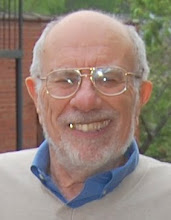
I have surfed the web until I am vertiginous, I have micro-inspected every sabermetrician's prognostications, I have offered up silent prayers to a non-existent deity, there are three hours until the results start coming in, and there is nothing for it but to play endless games of FreeCell while the minutes drag by.
Tomorrow, come what may, I will say something about the tasks facing progressives and lefties in America.
Tuesday, November 6, 2012


ANOTHER MILESTONE
The five thousandth comment has just been posted on this blog! How's that for a conversation?
Monday, November 5, 2012
DO I RESPOND TO SERIOUS QUESTIONS OR WHAT?
In response to my call for attention to be paid [if I may
reference Arthur Miller] to the materials I have archived on box.net, Ben [I
shall keep private his last name] sent me an email with two very interesting
questions. Rather than reply in an
email, I have decided to post my responses here on this blog.
Here is Ben's first question:
"1) In "The Thought of Karl Marx"
(on box.net), you explain the
existence of profit in a capitalist economy by positing a fundamental
difference between laborers and owners: the owners can switch from (say) making
clothing to making steel if the rate of profit in the former industry is not
high enough, while the laborers cannot switch industries and thus must accept
pitiful wages. But you also say that your simple, illustrative model should be
modified to include "several labor sectors, each [. . .] with its own rate
of return." Given that modification, can't laborers switch from one type
of labor to another if the rate of profit is not high enough? Sure, this will
often be extremely difficult, but so long as it is not impossible haven't we
failed to locate a categorical difference between laborers and owners?"
This is a very acute question that raises an
interesting and important issue. A word
of explanation first. Ben is referring
to my attempt to reconstruct the Labor Theory of Value, which as I showed in Understanding Marx, cannot in the end be
sustained in the form in which Marx advanced it [I cannot summarize the reasons
here. See the tutorial or my book.] I
undertook a formal reconstruction of Marx's theory in my essay, "A
Critique and Reinterpretation of Marx's labor Theory of Value," in Philosophy and Public Affairs, Spring,
1981].
The central point of Marx's analysis is that
workers have been completely separated from ownership or control of the means
of production, and are therefore forced, in order to live, to sell their labor
[or labor-power, as Marx says] to those who do
own or control the means of production, which is to say capitalists.
Marx was looking at a world in which workers'
skills and knowledge, which they acquired through lengthy apprenticeships, were
being lost as machines took their place, reducing the working class more and
more to a homogeneous mass of semi-skilled workers capable of moving easily and
quickly from machine tending in one industry to machine tending in another. This homogenization of the labor force, which
Harry Braverman, in his great book Labor
and Monopoly Capital, called the "deskilling" of the work force, was,
Marx thought, being paralleled by a corresponding centralization of capital,
with countless small firms being gobbled up into huge conglomerates. Marx's formal analysis of exploitation rested
on these historical observations and empirical predictions.
But in fact the homogenization forecast by Marx
did not take place, and we now see a labor force that is permanently and very
significantly segmented and stratified.
Wages and salaries range extremely widely from minimum wage jobs to high
paid lavishly benefitted "upper middle class" jobs.
From an theoretical standpoint, we can
conceptualize this situation by observing that some workers succeed in
acquiring what economists now call "human capital," in the form of
formal educational credentials and other skills, on the basis of which they
acquire and keep high paying jobs. In effect,
these workers [or their parents] have invested in themselves, in order to
enable them to produce a different commodity to be sold in the marketplace,
namely skilled labor.
Now, if no exploitation were taking place, then we
would expect that the return to that investment in human capital would equal
the interest rate. But in fact it equals
much more than the interest rate, thereby indicating that those who have
carried out this self-investment are somehow snagging some of what it being
produced by those with less human capital.
In short, they are benefiting from exploitation.
But how can this be? How can the high paid workers be exploiting
lower paid workers, if they themselves are being exploited by the owners or
controllers of capital? The answer, as
Samuel Bowles and Herb Gintis argued in a lovely essay published thirty-five
years ago, is that in modern capitalist economies, a structure of relative
exploitation has arisen, in which a portion of the income of some workers is
acquired through the relative exploitation of lower-paid workers. [See "The Marxian Theory of Value and
Heterogeneous Labour: A Critique and Reformulation," Cambridge Journal of
Economics, Vol. 1, No. 2, pp. 173-192.] When I wrote the essay referenced above, I was
unaware of the Bowles and Gintis essay, even though at that time we were all colleagues
and friends at the University of Massachusetts Amherst.
So the answer to Ben's first question is that he
is right. In a modern capitalist
economy, the simple contrast between owners and workers must be replaced with a
more complex analysis according to which some persons are pure exploiters [Mitt
Romney comes to mind on this eve of the election], some persons are purely
exploited -- low-paid workers -- and some people are simultaneously exploited
and exploiters.
This, as I argue in my essay, The Future of
Socialism, is one of the reasons why despite the emergence within capitalist
firms of the structural developments needed for the transition to socialism,
that transition is unlikely to take place.
Labor solidarity is almost impossible with a segmented labor force.
Here is Ben's second question:
"(2) Before reading In
Defense of Anarchism, I took the problem of political obligation to be
determining whether the following thesis is true:
(a) That
the law says thus-and-such can be per se morally relevant; hence, a law
against X-ing can (all by itself) create an obligation to refrain from X-ing.
However,
you seem to take the problem of political obligation to be determining whether
a different thesis is true, namely:
(b) The
citizen can be morally obligated to refrain from individual decision making in
favor of simply doing what the law says because the law says it.
You argue
that relinquishing decision-making power in this way is inconsistent with the
duty to be autonomous, i.e. to give the moral law to oneself. Hence, you
conclude, (b) is false.
It does
not seem to follow that (a) is false. After all, it is not inconsistent with my
autonomy for me to make decisions in light of the morally relevant facts -
taking morally relevant facts into consideration is part of exercising moral
autonomy. And, as far as you say in your book, it is possible that one of the
morally relevant facts to be taken into account is the fact that the law says
thus-and-such. So, for all you say in your book, (a) is consistent with
individual autonomy and thus (a) might well be true. Do you agree, or do you think that the duty
to be autonomous means that (a) is false? And do you think that (b) is the more
interesting or important thesis?"
Once
again, a very astute question. It was
first posed to me in something like this form by Jeffrey Reiman, now the
William Fraser McDowell Professor of Philosophy at American University in Washington,
D. C. Two years after the publication of
In Defense of Anarchism in 1970,
Reiman, then a young man [of course] published a reply, entitled In Defense of Political Philosophy. I then brought out a second edition of In Defense in which I replied to his
arguments in a lengthy preface.
All of
this is readily available, so I will be brief.
I argued, following Max Weber, that the defining characteristic of any
state is its claim that it has a right in morals, not just in law, to issue
commands that its subjects have a moral obligation, not merely a legal
obligation, to obey. This, I said, is
that it means to say that a state is "legitimate." Justifications of the claim of legitimacy
range [again echoing Weber] from the religious assertion that the ruler has the
mandate of heaven to the modern thesis, central to all theories of democracy,
that the state rules with the authorization of the people.
Reiman
suggested that a defense of democracy needed no more than the restricted claim
that the commands of the democratic state create a "prima facie obligation" of obedience, one that had weight and
must be taken into account but can be outweighed by other considerations in
some circumstances. I argued that Reiman
had no grounds for asserting this, and that in fact his claim was essentially
indistinguishable from the customary state demand for absolute obedience. [It is worth remembering that this debate took
place during the Viet Nam War, when because of the draft young men were being
ordered to fight in a war to which they were morally opposed. The argument was explicitly made that even
those opposed to the war had a moral obligation to answer the draft call because
it issued from a democratically elected government. This was no merely academic debate!]
But at
the same time, I quite freely acknowledged the truth of another argument that
one might at first confuse with Reiman's argument. Indeed, I took account of it in my original
little book. When a state [any state,
whether a dictatorship, a monarchy, a theocracy, or a democracy] passes a law,
the mere existence of that law becomes a fact that may be relevant to my moral
deliberations. The law does not create a
prima facie obligation in me. But the existence of the law may. To take a simple and rather trivial example,
a concern for my own safety and the safety of others on the roads will lead me
to pay attention to the traffic rules even in a dictatorship or a theocracy,
because I may anticipate that others will be abiding by them, and that will
create in me expectations about which side of the road it is safest to drive
on.
Let us
return for a moment to the question that was on everyone's mind when my book
and Reiman's were published: Do young
men called to the army have a moral obligation to obey the state and present
themselves for induction? Keep in mind
that it was the most morally
thoughtful and sensitive young men who anguished most about this question. Imagine one such young man making a list of
the considerations, pro and con, in an attempt to determine where his
obligation lies. On the side of obeying,
he lists the fact that he will be liable to arrest and imprisonment if he
refuses induction. He also lists the
fact that if he refuses to obey, some other young man will be coerced into
serving in his place. On the side of refusing,
he lists the fact that he will almost certainly be required to kill people who,
he believes, have done nothing to deserve this.
He may also list on the side of refusing his belief that the war is one
more imperialist act by a United States that has chosen to take the place of
fading imperial powers like France and Great Britain on the world stage.
Now,
according to Reiman, when this young man has listed all the considerations pro
and con, and has assigned to them some weight in his deliberations, there is one more consideration that he is
supposed to enter in the lists on the side of obeying, namely the mere fact that the order to report
issues from a democratically elected government. This consideration, says Reiman, does not
trump all other considerations, because the obligation to obey is only a prima facie obligation. But it
has some non-zero weight all by itself, and therefore in a close calculation
can by itself tilt the balance in the other direction.
And that,
I say, is false. There is no good reason
to hold that view, and very good reason to reject it.
That, by
the way, is what I mean when I call myself an anarchist.
Okay,
Ben, those are my responses to your questions.
I hope they help.
WHY VOTE FOR OBAMA?
My son, Tobias, who teaches law at the Univer,sity of Pennsylvania, and who has worked closely with the White House on LGBT issues, has written an Op Ed for the UPenn newspaper, giving his reasons for supporting the president. Here is the link.
[This is the very first time I have figured out how to embed a link in my blog. A whole new world opens up to me!]
Friday, November 2, 2012
WELL IT'S ABOUT TIME
On October 21st, I put up a post on this blog, entitled
"Dyspepsia," that managed to be self-pitying and self-congratulatory
all at the same time -- not a bad trick.
On October 27th, "Magpie" responded by going to box.net,
reading one of the lengthy essays I had posted there [and to which I referred
so praisingly in my Dyspepsia post], and leaving a comment that concluded with
a question. Now, six days later, I am
finally getting around to responding.
Not exactly instant communication, but I have been busy obsessing over
the election.
The essay in question is entitled "Critique of
Keynes," and Magpie's question was, roughly, Why do I classify the
economic theories of the classical political economists [Smith, Ricardo, Marx]
as Microeconomics? An important
question, which I shall do my best to answer.
Microeconomics is the attempt, starting with a set of assumptions
and facts about individual consumers and producers or firms, to deduce or
compute certain facts about the economy as a whole, such as the relative prices
at which commodities exchange, the economy-wide rate of profit, the rate of
economic growth of the entire economy, the physical size and corresponding
value or price of the social surplus, and the share of the social surplus
received by each of the three great economic classes in the society -- workers,
entrepreneurs, and land owners.
Both classical Political Economy and the marginalist
theories introduced in the 1870's by Walras, Jevons, and Menger are, in this
sense of the term, microeconomic theories.
They differ in certain important respects with regard to the assumptions
with which they begin [and consequently with respect to the sort of mathematics
they use], but they both qualify as "microeconomic" precisely in the
sense that the reason from facts and assumptions about individual consumers and
producers [i.e., small facts or micro facts] to conclusions about the economy
as a whole.
The principal difference between the assumptions of the
classicals and the assumptions of those who came to be called neo-classicals is
that the classicals adopt the simplifying premise that at any time there is
only one technique of production for each commodity, whereas the neo-classicals
assume the availability of an infinity of alternative techniques, differing
from one another in such a fashion that they can be conceived as varying
continuously [hence as amenable to the ministrations of the Calculus.]
Is that any help?
Thursday, November 1, 2012
APOLOGIES
A little while ago, I complained that folks were not paying attention to my profound and brilliant analyses of subtle arcane questions, hem hem. Several folks responded by commenting on my profound and brilliant analyses of subtle arcane questions, and what did I do? I ignored them. Not so good.
Actually, I am going to respond, but things have heated up at Bennett, and what with this being the final days of the presidential campaign, I have been distracted. My apologies. I will attempt some responses in the next day or two.
Meanwhile, just a thought prompted by a TV ad. Back when I was a youth, there were no credit cards, except for the expensive and rather rare American Express card with its hefty fees. Folks paid cash. Many stores featured what they called "layaway plans" that allowed consumers to put down a little each week or month on a big ticket item [washing machine, icebox, sofa] until they had paid enough to take the item home. There were Christmas Clubs into which you could pay a little each week against the once-a-year expense of holiday presents for the kids.
Things began to change in the fifties and sixties, with the appearance of Mastercard and Visa. [Indeed, for a long time, some establishments refused to accept the older American Express card because it charged higher fees to merchants.] All of this pretty much passed over my head until one day in the late 60's when I was lying on the analyst's couch. In those days, my first wife, Cynthia, and I lived in Morningside Heights half a block from Columbia, where I taught. Cynthia was teaching at Manhattanville College in Westchester County, north of Manhattan. We had an old blue VW bug which we parked on 115th street at night and which she drove to her job each day. The bug was pretty reliable, but it developed its own bug, and I took it into the shop. Since Cynthia had no other way to get to work, I had to rent a car, and the rental office required me to put down a $50 security deposit before they would release the rental to me [$50 in those days was the equivalent of about $300 today.] I was complaining about this to my analyst, a strict Freudian who rarely said anything, when he broke his silence to ask, incredulously, whether I did not have a credit card. I went right out and got one.
The prosperity of the next forty years was built on the easy availability of consumer credit, which had the economically beneficial effect of converting stocks into flows, if I may use the slightly technical jargon of the Economics profession. Like cellphones, which in the lives of many have replaced landlines, credit cards and debit cards have replaced cash for ordinary Americans.
This morning, as I was watching the devastation of Sandy and its aftermath, I saw an ad for a bigbox store in which happy customers were embracing a new layaway plan as though it were a hi-tech innovation of the smoking twenty-teens. I cannot think of a more poignant symbol of the destruction of working class and middle class financial security in the United States as the consequence of the financial crisis and predatory exploitative practices of the rich.
Subscribe to:
Posts (Atom)