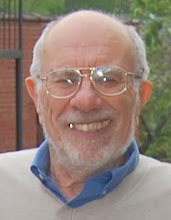
The cat woke me at 4, I went for my walk at 5, I have done my last stint of poll greeting, and now there is nothing to do but wait the five+ hours until the first results come in. Once the outcome is clear, I will of course say that I saw it all coming, and offer some confident views about what it all means. That, as I understand it, is the fundamental task of the blogger.
Lord, I wish I could nap in the afternoon.
Tuesday, November 6, 2018


Monday, November 5, 2018
WHY DO I TELL STORIES?
Thirty-six hours from now, the shape of the 2018 election
will be clear: a Blue Wave, a
nail-biter, or a disaster. I will spend
several hours tomorrow as a poll greeter, handing out sample blue ballots to
voters as they enter the polls to vote, but aside from that, there is nothing
for me to do but wait. This seems like a
good time, therefore, to talk about something rather personal that has nothing
at all to do with politics, viz, why
when I lecture I tell so many stories and make so many references to novels, television
shows, and other seemingly unserious matters.
Some students like this about me, some don’t, but they all notice it and
comment about it either in class or on end of semester student
evaluations. Why do I do it?
There is a simple answer, of course: because I like to. I am a natural story teller, a sort of
wannabe philosophical Garrison Keillor.
But there is also a very much deeper and more important reason [wouldn’t
you know?], one that goes to the heart of everything I have done for my entire
life. This strikes me as a good time to
explain.
As I have often remarked, I have a visceral negative
reaction to writers who seem to me to strive to make simple ideas as obscure
and complicated as possible. Hegel
strikes me that way. So does Judith
Butler, to mention a more recent example.
I have spent my career struggling to grapple with complicated ideas and
make them as simple as I can without losing any of their power or complexity. That is what I did in my very first book on
the Transcendental Analytic of the Critique
of Pure Reason, and it is what I strove to do with the famously difficult
first chapter of Capital in my little
book of lectures, Moneybags Must Be So
Lucky. The urge I feel to do this is
aesthetic as well as intellectual. I am
always trying to take a difficult idea and puzzle over it until it is perfectly
transparent to me, at which point I experience it as beautiful. Then, in my teaching or writing, I hold it up
to students or readers and show them how
beautiful it is. That is what I was
doing when, for my students at UMass, I went through John von Neumann’s elegant
proof of the Fundamental Theorem of Game Theory, even offering a proof of L. E.
J. Brouwer’s Fixed Point Theorem, on which von Neumann’s proof rests.
Now, I experience arguments as stories, each having a
natural beginning, development section, and end. And since what interests me is the logical
structure of the story, it does not matter to me whether the story is high art
of the sort that Literary Critics concern themselves with, or a soap opera,
which would be beneath their notice. It
is the structure that interests me. So
it is that only half facetiously, I sometimes compare Tolstoy’s great novel, War and Peace, to the soap opera The Young and the Restless, which Susie
and I watched faithfully for the first twenty years of our marriage. That is also why, when I am explaining to a doctoral
student how to write a doctoral dissertation, I compare it to Jack and the Beanstalk.
The besetting intellectual sin of students of high social
theory, and of their professors as well, is to wrap themselves in the jargon of
the trade and deploy it as though it were fashionable clothing or body
piercing, marking them as serious
thinkers. I hate that, I am phobic
about it, and my response is to tell stories about simple events and personal
experiences. Though they often do not realize
it, these simple stories have the same logical structure as the high-toned
jargon-laden theories they are mouthing.
By telling my stories, I am trying to get them to see the structure of
the arguments stripped of its jargon.
That is why I tell stories.
Also, of course, I like to.
Sunday, November 4, 2018
VAMPING 'TIL READY
As though waiting for the election were not hard enough, the
time changed this morning at 2 a.m., adding sixty more minutes to the wait. In addition, we forgot to tell out cat about
the time change, so she hopped up on the bed and woke us at three instead of
four. I have now fed the cat, checked my
email, taken my walk, worked on the jigsaw puzzle, had breakfast, and it is
still not yet ten. This must be what
Purgatory is like. [In Hell, the Devil
plays Mozart, if George Bernard Shaw is to be believed, so I could stand that.]
Herewith an idle speculation. Let us suppose there really is a Blue Wave,
washing the Democrats into control of the House but not quite the Senate. What will happen in the next two years,
assuming Trump survives and runs for re-election? I think we may be on the threshold of another
major party realignment, as big and consequential in its way as the realignment
that occurred more than half a century ago when the Dixiecrats left the
Democratic Party and reinvented themselves as Republicans. Over time, this transformed the Republican
Party into a Southern and Southwestern party, while the Democratic Party welcomed
Black and Latino voters and became a bicoastal party with outcroppings in the
plains states.
Trump has completely taken ownership of the Republican
Party, and no politician can choose to remain in the party without embracing
his brand of racism and xenophobia. Many
are uncomfortable with that, but as things stand, there is no place else for
them to go.
The natural evolution of this situation would be for the
Democratic Party to move to the right, declare itself a Big Tent, and welcome into
the fold former Republicans, seeking to create an unstoppable Party of National
Unity that would leave the Trump base out in the cold. This move would involve giving the energized
progressive base of the Democratic Party just enough crumbs to keep them from
defecting, while leaving control of the party in the hands of the descendants
of the Democratic Leadership Council, Bill Clinton’s creation. One can already see the moves in this
direction, in the fight for control of the DNC, lost by the progressives, in
the revival of Joe Biden’s presidential dreams, and in the writings of a goodly
number of opinion shapers.
I do not think I need to say how this makes me feel, but it
is, I believe, the natural structural logic of the American political system.
The war won’t be over on Wednesday. It will just be starting.
Saturday, November 3, 2018
KANT'S THREE QUESTIONS
We are now a bit more than eighty-two hours before the first
returns are reported, so it is time to draw some conclusions about the
election. Conclusions? Am I not getting ahead of myself? I think not.
It is certainly too early to say who won, but it is not too early to say
what we have learned.
First, it is no longer possible even for the most determined
both-sides commentator to hide from the truth about Trump. He is a flat-out unapologetic racist and a
wannabe fascist dictator. Most of us
knew that, of course, but it is always useful in the public arena to have manifest
truths confirmed and acknowledged.
Second, there are roughly 230 million or so Americans
eighteen or over, and at least sixty or seventy million of them are flat out
racist lovers of fascism. I say this
because at this point, it is not possible to support Trump strongly and not be
a racist who yearns for fascism. The
Republicans may lose the House. Nate
Silver even says they have a slender chance of losing the Senate. They may lose as many as ten governorships. When the election is behind us, Trump may be
indicted, impeached, forced from office, or defeated in 2020. But when he is finally gone, there will still
be sixty or seventy million racist lovers of fascism in America. That is the America we live in.
Third, there is a sizeable cadre of supporters of
progressive policies, some of whom are even comfortable calling themselves
socialists, whatever that means to them.
How many? It is difficult to say. As a percentage of the population, fewer than
there were when my grandfather was young, to be sure, but they exist, and their
numbers may actually be growing.
Fourth, the Democratic Party is threatened with a
significant progressive transformation, one that the leaders of the party will
resist as strongly as they can get away with.
It is at this point quite unclear how that struggle will come out,
although I am pretty sure that our cause has been helped by Trump. Does this mean socialism has a chance? I am afraid not. Socialism is bad for business. Enough said.
Kant posed three questions:
What can I know? What ought I to
do? What may I hope for?
I can know that I live in a country founded on racism,
nurtured on inequality, and committed to as much in the way of world domination
as it can manage.
I ought to do what I can to make this country a little less
unequal, a little less racist, a little less imperialistic.
I may hope that before I die, I see Donald Trump humiliated,
impoverished, and ignored.
Now, I shall sit by the television set and await the
results.
Friday, November 2, 2018
DOIN' WHAT COMES NATURALLY
In 101 hours, the very first election results will come in. To pass the time, I am preparing my next Columbia lecture. As in my first lecture on Marx, I shall begin by invoking the world of Jane Austen. From there, I shall move on to the work of the historian of 18th century England Lewis Namier, then review the ethnological system of recording kinship structures of "primitive" peoples, quote a pregnant and surprising observation of Edwin Wilmsen, segue into a discussion of the property rights of indigenous peoples, and wind up this first part of the lecture with a discussion of the incompatibility of Political Economy and the Ethnographic conceptualization of of prehistoric human groups, all in the service of explicating Wilmsen's ideological critique of the field of Anthropology. A seamless chain of argument.
I love doing this sort of thing much more than I like troubling deaf heaven with my bootless cries.
I love doing this sort of thing much more than I like troubling deaf heaven with my bootless cries.
Thursday, November 1, 2018
A NEW BLOG WORTH READING
Phil Green, retired Smith College Poli Sci professor, NATION editorial board member, and life-long leftie, has a new blog, called Taking Sides. Phil is a good deal more over the top than I am. As they say, he gives good outrage. [Of course, I may be biased. When we were toddlers together in Sunnyside, Queens, it is said that on occasion we shared a baby buggy.]
Take a look at it.
Take a look at it.
AND SO I WAIT
I am now essentially dysfunctional. I stew, I fret, I sign up for poll work, I
play endless games of Spider Solitaire [two suits] and FreeCell, and I
wait. Many times each day I check Nate Silver's statistical forecast. Nate says there is
a 6 in 7 chance that the Democrats take the House and a 1 in 7 chance that they
take the Senate. But then, he said
Clinton had a 95% chance of winning the Presidency. So I wait.
My brightest moment in the recent past occurred on Tuesday,
when I successfully purchased and used a MetroCard at LaGuardia, enabling me to
take the M60 bus from Terminal C to 116th and Bway direct, and then
take the same bus from 116th and BWay back, all for a total of $2.75
each way, instead of the $45 taxi fare each way that I have been forking
over. The bus takes maybe eight to
fifteen minutes longer, but is actually rather more pleasant. A triumph!
It was Donald Rumsfeld, George W. Bush’s Secretary of Defense,
who said memorably, as he launched the Second Gulf War, “You go to war with the
army you have, not the army you want.” I
take roughly the same view of electoral politics. Is this the Democratic Party I want? No. Do
I even want the Democratic Party?
No. But this is the army I have,
and victory is better than defeat.
There was one brief moment in my life when, seduced by
despair, I contemplated voting Republican.
It was in 1968, and I thought that things could only get better if they
first got worse. In the voting booth on
Amsterdam Avenue, north of Columbia University, I reached my hand out to pull the lever
for Nixon rather than Humphrey. But deep in my reptile brain was a protective
circuit that closed, making my arm go rigid, and after I recovered, I found
that I had voted the straight Democratic ticket.
And so I wait.
Subscribe to:
Posts (Atom)