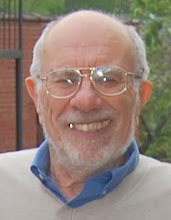
Inasmuch as Susie and I shall be going to Paris for four weeks next Saturday to spend time in our pied-a-terre in the 5th arrondissment, I have been thinking a good deal about the recent election there, and the conventional wisdom of the mainstream media concerning that lovely country. The universal view of the talking heads is that although France is a nice place to visit, it has no future unless it gives up its quasi-socialist Gallic ways and adopts the American economic model. The only disagreement among the commentators seems to be over the likelihood that Nicholas Sarkozy will be able provide the requisite tough love to the pleasure-loving French, hooked on short work weeks, long vacations, and leisurely lunches en plein air.
The statistic most frequently trotted out to support the conventional wisdom is the unemployment rate in France, which last year had come down to 8.7%, making it a bit less than double the rate in the United States.
A contrarian to the core, I decided to gather some statistics from the web, and do a somewhat more careful comparison of the employment situation in the two countries. Herewith the results, as briefly and with as little pain as possible.
The United States had a population of 301 million and a civilian labor force earlier this year of 152.6 million. The labor force includes 145.8 million employed persons and 6.8 million umemployed persons. It does not include 1.4 million persons who are described in the Bureau of Labor Statistics publications as "marginally attached to the labor force," meaning that they have looked for work in the last year, but not in the last two or three months, and would like jobs, but are "discouraged" by their persistant failure to find them.
France, in 2006 [the statistics do not exactly correspond, but are adequately comparable for my purposes], had a total population of 61 million and a labor force of 27, 638,000, including 2,717,000 unemployed. [I have no figures for the "discouraged."] This comes out to an unemployment rate of 8.9% [why the documents list the rate as 8.7% I do not know.]
However: France has a total prison population of about 52,000, whereas the prison population of the United States is roughly 2,194,000. Since the population of the United States is almost exactly five times that of the United States, there is, in a manner of speaking, an "excess" U. S. prison population of 1,930,000. There is a corresponding "excess" population of correctional officers [prison guards] of 425,000.
Now, suppose we add the excess prisoners and guards to the ranks of the unemployed, and see how that changes the unemployment rate. The extra prisoners increase the size of the labor force, but the guards do not, since they are already included in it. The result, as the reader can confirm, is an unemployment rate of 5.9% If the persons marginally attached to the labor force are also included, the real unemployment rate is 6.77%
Now, there is a significant difference between 8.9% or 8.7% and 6.77%, a difference that corresponds to a great many men and women [disproportionately young and Muslim in France] who cannot find work. Balanced against this difference is the vastly more generous system of social services, including child care, health care, and a vibrant public life. Incidentally, I have read [but do not have in front of me] statistics that show that the productivity of French workers is quite as high as that of American workers. Even though they work a thirty-five hour week and take long vacations, they are not lazy or incompetent -- simply more concerned with living a good life.
One final bit of information -- I also took a look at the relative size of the two military establishments. The American military is, to be sure, five times that of the French, but since that is the population ratio as well, it seemed tendentious to include some of the American militaru in this recalculation of unemployment rates.
By the way, lest anyone imagine that this way of studying an economy has anything new about it, I will note that I am simply borrowing a mode of analysis from Adam Smith, who in his great work, On the Nature and Causes of the Wealth of Nations, contrasts the unproductive labor of the servants of the landed aristocracy with the productive labor of the employees of agricultural and industrial entrepreneurs.
Sunday, May 27, 2007


Saturday, May 26, 2007
Once More Into The Fray, Dear Friends
All politics are local, as Tip O'Neill would have said had he been a bit more punctilious about his grammar. Hence, while the nation has been fixated on Iraq, Gonzalez, Goodling, and the proposed halving of Paris Hilton's jail sentence, we in the Hampshire County region sometimes referred to as "happy valley," have been caught up in a parochial struggle over the future direction of the University of Massachusetts -- a bit like events in the Shire, with Mordor looming in the far distance. To be sure, there have been echoes of a larger evil -- the mostly Republican university trustees, appointed by fomer governer Mitt Romney, chose with perfect tone-deafness, to award an honorary degree to Andrew Card, thereby uniting the university community in opposition and mobilizing our politically engage graduate students. But the real action has focused on the efforts of the university president and the Chair of the Board of Trustees to pull off a covert, imperial reorganization of the university that includes the unceremonious firing of the Chancellor of our flagship campus in Amherst, the reshuffling of the chancellorships of the other four campuses, and the imposition of a new model of organization that would merge the presidency with the Amherst campus chancellorship.
Assuming that I have not lost my three or four readers at this point, their eyes glazing over with boredom, I shall give a summary account of these events, and then struggle to find a larger meaning in them. [My mind wanders, in Tristram Shandy fashion, and I am reminded of the anxious televsion producer in Hard Day's Night, who moans in desperation. when Ringo is late for the final run-through, that if the errant Beatle doesn't show up in ten minutes, he will be consigned to doing "the news in Welsh."]
The plan seems to have been for Jack Wilson, the President, to keep the reorganization secret until a June 21st Trustee's meeting, when the faculty and students would be dispersed for the summer. The assumption, surely, was that by September, it would all be old news and a fait accompli. A press leak three weeks ago revealed their machinations, and all hell broke loose on the Amherst campus. Fifteen days ago, at a meeting of the Faculty Senate, Wilson showed up and was excoriated by the faculty [including yours truly. The next day I walked into a local restaurant with Susie's son, daughter-in-law, and grandson, who had come for a visit, and was applauded by a table of administrators -- my first Standing O, and needless to say catnip to my ego, which no one has ever accused of being undersized.] Perhaps the most remarkable moment in that first Senate meeting was a fifteen minute assault on the President by our long-time State Senator and most faithful university friend, Stan Rosenberg. Stan is a rather mild-mannered little man, who lives in a modest apartment in Amherst, and no one had ever heard him raise his voice before. Since the principal job of the University President is to appeal to the Legislature for money, his success in alienating our best legislative friend was prima facie evidence of utter incompetence.
The flaying of the President was cut short by the fire marshall, who announced that the horde of non-senators who had attended the meeting, along with the regular members of the Faculty Senate, exceeded the safety limits for the room.
Immediately after the meeting, several of us in Afro-American Studies [Michael Thelwell, Ernest Allen, Jr., and I] launched an effort to call a special meeting of the entire faculty for the purpose of voting no confidence in the President and Board of Trustees. After some complex negotiations [too tedious even for this parochial account], the meeting was called, and the President agreed to attend. Two days ago, perhaps a third of the entire faculty showed up [in a room quite large enough to hold us all without ruffling the feathers of the marshall], and in good order we voted no confidence in the President and in the Board of Trustees, with only one negative vote. [Amherst is a bit like Brigadoon -- it is permanently trapped in the Sixties, all sandals and candles -- and during my thirty-six years here, the university has rarely sported more than one, or perhaps two, right-wingers, which is to say conservative Democrats. Every two years, someone throws in a few votes for Republican candidates in elections, but I do not know anyone who can claim actually to have met the folks who do that.]
The very next day [yesterday] was Graduate Commencement, a festivity I had been anticipating with pride and pleasure, inasmuch as eight of our graduate students in Afro-American Studies would be receiving their doctorates. As always, the event was held in the Mullin Center, where two nights earlier Susie and I had attended a performance of Riverdance. [a bit disappointing, that -- highly professional, but without any real stage magic.] On an unseasonably hot day, we gathered outside in our academic regalia, while hundreds of graduate students protesting the Andrew Card degree handed out anti-Card decals, which we all attached to our robes.
When our Chancellor, John Lombardi, was introduced, he was cheered to the echo -- a first for him, as he has many opponents on campus. Then the President was introduced, and the huge hall erupted in boos and catcalls. It was the first time in half a century that I have seen a University president booed at a Commencement. This was followed almost immediately by the awarding of the degree to Card, and this time the booing and shouting filled the space. Many of my colleagues on the platform waved yellow signs that had been handed out as we marched in. I was in the front row [so that I could greet our doctoral students and give them roses as they walked by to receive their degrees], so I chose to stand in my bright crimson Harvard robe and turn my back on Card, exhibiting a quiet and dignified disdain during the awarding of the degree. Then, as quickly as it had erupted, the demonstration stopped, with an astonishing discipline, so that the students receiving degrees would once again be the focus of attention.
My friends know that I am not sentimental about young people in general -- it has been pointed out to me that I am not the first seventy-three year old radical to think that the younger generation has gone soft -- but I was proud of those students yesterday. They managed to stage a demonstration that was both boisterous and absolutely disciplined.
Well, what if anything can we conclude from all of this for the world beyond the happy valley? Another old leftie who marched out with me observed how dramatically the war in Iraq had changed the domestic political landscape, and I think she is right. There is no logical connection between the Iraq disaster and the events at UMass, but people are once again angry, mobilized, and ready to stand up to authority, whether at the national level or in our own neighborhood.
For some while I have had that slight tingling in my scalp that I first felt as the Sixties heated up. The great slumbering American public is stirring, and although we have seen very little of the anti-war marching and protesting that preceded the invasion of Iraq, we have had one small electoral revolution, in 2006, and I think we may be on our way to a second next year. All of this is of course quite unscientific [although, as my old friend Herbert Marcuse pointed out in One-Dimensional Man, one of the functions of quantitative social science is to rob protest of its liberatory potential], but I have a feeling something is happening in America.
Assuming that I have not lost my three or four readers at this point, their eyes glazing over with boredom, I shall give a summary account of these events, and then struggle to find a larger meaning in them. [My mind wanders, in Tristram Shandy fashion, and I am reminded of the anxious televsion producer in Hard Day's Night, who moans in desperation. when Ringo is late for the final run-through, that if the errant Beatle doesn't show up in ten minutes, he will be consigned to doing "the news in Welsh."]
The plan seems to have been for Jack Wilson, the President, to keep the reorganization secret until a June 21st Trustee's meeting, when the faculty and students would be dispersed for the summer. The assumption, surely, was that by September, it would all be old news and a fait accompli. A press leak three weeks ago revealed their machinations, and all hell broke loose on the Amherst campus. Fifteen days ago, at a meeting of the Faculty Senate, Wilson showed up and was excoriated by the faculty [including yours truly. The next day I walked into a local restaurant with Susie's son, daughter-in-law, and grandson, who had come for a visit, and was applauded by a table of administrators -- my first Standing O, and needless to say catnip to my ego, which no one has ever accused of being undersized.] Perhaps the most remarkable moment in that first Senate meeting was a fifteen minute assault on the President by our long-time State Senator and most faithful university friend, Stan Rosenberg. Stan is a rather mild-mannered little man, who lives in a modest apartment in Amherst, and no one had ever heard him raise his voice before. Since the principal job of the University President is to appeal to the Legislature for money, his success in alienating our best legislative friend was prima facie evidence of utter incompetence.
The flaying of the President was cut short by the fire marshall, who announced that the horde of non-senators who had attended the meeting, along with the regular members of the Faculty Senate, exceeded the safety limits for the room.
Immediately after the meeting, several of us in Afro-American Studies [Michael Thelwell, Ernest Allen, Jr., and I] launched an effort to call a special meeting of the entire faculty for the purpose of voting no confidence in the President and Board of Trustees. After some complex negotiations [too tedious even for this parochial account], the meeting was called, and the President agreed to attend. Two days ago, perhaps a third of the entire faculty showed up [in a room quite large enough to hold us all without ruffling the feathers of the marshall], and in good order we voted no confidence in the President and in the Board of Trustees, with only one negative vote. [Amherst is a bit like Brigadoon -- it is permanently trapped in the Sixties, all sandals and candles -- and during my thirty-six years here, the university has rarely sported more than one, or perhaps two, right-wingers, which is to say conservative Democrats. Every two years, someone throws in a few votes for Republican candidates in elections, but I do not know anyone who can claim actually to have met the folks who do that.]
The very next day [yesterday] was Graduate Commencement, a festivity I had been anticipating with pride and pleasure, inasmuch as eight of our graduate students in Afro-American Studies would be receiving their doctorates. As always, the event was held in the Mullin Center, where two nights earlier Susie and I had attended a performance of Riverdance. [a bit disappointing, that -- highly professional, but without any real stage magic.] On an unseasonably hot day, we gathered outside in our academic regalia, while hundreds of graduate students protesting the Andrew Card degree handed out anti-Card decals, which we all attached to our robes.
When our Chancellor, John Lombardi, was introduced, he was cheered to the echo -- a first for him, as he has many opponents on campus. Then the President was introduced, and the huge hall erupted in boos and catcalls. It was the first time in half a century that I have seen a University president booed at a Commencement. This was followed almost immediately by the awarding of the degree to Card, and this time the booing and shouting filled the space. Many of my colleagues on the platform waved yellow signs that had been handed out as we marched in. I was in the front row [so that I could greet our doctoral students and give them roses as they walked by to receive their degrees], so I chose to stand in my bright crimson Harvard robe and turn my back on Card, exhibiting a quiet and dignified disdain during the awarding of the degree. Then, as quickly as it had erupted, the demonstration stopped, with an astonishing discipline, so that the students receiving degrees would once again be the focus of attention.
My friends know that I am not sentimental about young people in general -- it has been pointed out to me that I am not the first seventy-three year old radical to think that the younger generation has gone soft -- but I was proud of those students yesterday. They managed to stage a demonstration that was both boisterous and absolutely disciplined.
Well, what if anything can we conclude from all of this for the world beyond the happy valley? Another old leftie who marched out with me observed how dramatically the war in Iraq had changed the domestic political landscape, and I think she is right. There is no logical connection between the Iraq disaster and the events at UMass, but people are once again angry, mobilized, and ready to stand up to authority, whether at the national level or in our own neighborhood.
For some while I have had that slight tingling in my scalp that I first felt as the Sixties heated up. The great slumbering American public is stirring, and although we have seen very little of the anti-war marching and protesting that preceded the invasion of Iraq, we have had one small electoral revolution, in 2006, and I think we may be on our way to a second next year. All of this is of course quite unscientific [although, as my old friend Herbert Marcuse pointed out in One-Dimensional Man, one of the functions of quantitative social science is to rob protest of its liberatory potential], but I have a feeling something is happening in America.
Wednesday, May 16, 2007
The Boy Friend
In one of the great comic masterpieces of the world of film, Mel Brooks' Young Frankenstein, there is a transformative scene, midway through the movie, in which Chloris Leachman, who takes the crazy cigar smoking violin playing housekeeper over the top, finally reveals her secret to Gene Wilder, Teri Garr, and Marty Feldman. Speaking of her former employer, the mad scientist Dr. Frankenstein, she blurts out in her faux Transylvanian accent, "HE WASS MY BOYFRIEND."
I have been reminded of this memorable cinematic moment by the stories about Paul Wolfowitz's troubles at the World Bank. Every reporter and news medium persists in referring to Shaha Riza as Wolfowitz's "girlfriend." Now, I do not want to appear to be a pinky-hoisting Francophile RadLib simp [although I will cop to Francophile and the first half of RadLib], but is there not some more appripriate way to refer to a pair of fifty-ish professionals who have entered into an intimate relationship? Will the New York TIMES now take to describing Riza and Wolfowitz as going steady? Is she pinned? Has he asked her to the prom?
I have been reminded of this memorable cinematic moment by the stories about Paul Wolfowitz's troubles at the World Bank. Every reporter and news medium persists in referring to Shaha Riza as Wolfowitz's "girlfriend." Now, I do not want to appear to be a pinky-hoisting Francophile RadLib simp [although I will cop to Francophile and the first half of RadLib], but is there not some more appripriate way to refer to a pair of fifty-ish professionals who have entered into an intimate relationship? Will the New York TIMES now take to describing Riza and Wolfowitz as going steady? Is she pinned? Has he asked her to the prom?
Saturday, May 12, 2007
An Elementary Plan for Democratic Electoral Victories
Herewith a plan for Democratic Party victories in elections.
Let us begin with several observations, and a few simple assumptions.
1. Only about 50% of the eligible voters actually vote in a presidential year, and rather fewer in the off years.
2. The geographically based winner-take-all structure of the American electoral system, combined with the high degree of residential segregation by income, by race, and to a lesser extent by ethnicity and religion, produces a patchwork of communities -- wards, precincts, parishes -- that are lop-sidedly either Democratic or Republican, even in Congressional districts or states that are fairly evenly divided.
Since this is central to my plan, let me take a moment to make sure this is clear. At the ward and precinct level, one sees electoral districts that are heavily Democratic or Republican, because voting is closely correlated with income, education, race, and to a lesser extent religion and ethnicity, and communities small enough to comprise a single ward or precinct tend to be quite homogeneous in this respect. Rich neighborhoods and poor neighborhoods, Catholic neighborhoods and Jewish neighborhoods, Black neighborhoods and White neighborhoods. Sometimes these homogeneous areas are located in Congressional districts that are largely homogeneous all the way through. These districts are so lop-sidedly Democratic or Republican that frequently they are not even contested and the incumbent runs unopposed. There is no point in the Republican Party putting up a candidate against Charley Rangel, for example.
Many relatively evenly balanced districts, however, have intensely one-sided pockets of Republican and Democratic voters, and this is especially true at the level of Senatorial campaigns. Hence the familiar phenomenon, on election night, of waiting for the vote from upstate or downstate or the inner city or the suburbs to come in. Seasoned election watchers know where the pockets of votes are that favor their candidates, and will not concede a seat until those precincts have been heard from.
3. Now an assumption, based on the combination of residential segregation and the correlation between voting patterns and the characteristics on which that segregation is organized: I think it is extremely likely that the non-voters in a ward or precinct, were they to vote, would break down pretty much in the same proportions as those who do actually vote. If a ward goes 75% for the Republican candidate, and half the eligible voters go to the polls, then it is very likely that the other half would vote Republican in roughly that proportion, were they to vote.
Do I have evidence for this assumption? No, but I think it is sufficiently plausible to serve as the basis for a serious experiment.
4. It is a fact that in many Republican Congressional districts, or Republican Senatorial states, there are wards and precincts that are heavily Democratic -- and vice versa, of course.
5. We come finally to the crucial question: Are there Republican Congressional districts or Republican Senatorial states that in recent years have been closely enough contested by the Democrats so that if a dramatic increase took place in the proportion of voters coming to the polls in the heavily Democratic wards and precincts, the balance of new Democratic voters over new Republican voters from those wards and precincts would be enough to swing the seat into the Democratic column?
If the answer is yes, then a precisely targeted get out the vote campaign might produce dramatic results. What is more, such a campaign could circumvent campaign finance laws by being strictly non-partisan. No attempt would need to be made to persuade new voters to vote Democratic. By targeting districts already known to be heavily Democratic, we could pretty well count on most of the new votes going for our candidates. Now, to be sure, this effort would result in an increase in the Republican vote total. If a district is 75% Democratic, and we get a thousand new voters to the polls, then 750 or so will vote with us, and 250 against us, so the net gain will be only 500. But that is fine, because all we care about is whether we are adding more Democratic than Republican votes.
Such a campaign would have no use for television advertising, which is so expensive, because there is no way to confine television advertising precisely to a single ward or precinct, and that is crucial to the success of the plan. Instead, the campaign would have to rely on hordes of foot soldiers, drawn if possible from the district itself, who would go door to door and try to bring people to the polls.
To prepare for such a campaign, we would first need a precise computerized database of the election results for the past two cycles or so from every single ward, precinct, and parish in America. This is not readily available, as I discovered when I tried to get this data just for Massachusetts. The Office of the Secretary of State in Boston stores the results in useful form only at the level of towns and cities, which is not fine-grained enough. But precinct breakdowns tend to appear in local newspapers a day or two after an election. Through the magic of the internet, it would not be hard to mobilize a nation-wide effort to secure the results for every single voting unit. Then some fairly simple data manipulation would suffice to tell us whether a 10% increase in turnout in selected wards and precincts would suffice to tilt an election, whether a 20% increase would suffice, and so forth.
Because the campaign would be strictly non-partisan in operation, I think it would circumvent financing restrictions, and since it would not use television, it would be inexpensive enough to be financed by several left-leaning multi-millionaires [or billionaires].
Couldn't the Republicans do the same thing? of course. But I think we would probably have an edge, because not only party loyalty but also voting behavior is strongly correlated with income. To put it another way, among that 50% who don't vote, there are almost certainly more Democrats than Republicans. That by itself does not settle the issue, of course, because the real question is this: Are there more Republican districts vulnerable to this sort of targeted get out the vote campaign than Democratic districts? I simply do not know, but it might be worth doing the data collection necessary to find out.
Let us begin with several observations, and a few simple assumptions.
1. Only about 50% of the eligible voters actually vote in a presidential year, and rather fewer in the off years.
2. The geographically based winner-take-all structure of the American electoral system, combined with the high degree of residential segregation by income, by race, and to a lesser extent by ethnicity and religion, produces a patchwork of communities -- wards, precincts, parishes -- that are lop-sidedly either Democratic or Republican, even in Congressional districts or states that are fairly evenly divided.
Since this is central to my plan, let me take a moment to make sure this is clear. At the ward and precinct level, one sees electoral districts that are heavily Democratic or Republican, because voting is closely correlated with income, education, race, and to a lesser extent religion and ethnicity, and communities small enough to comprise a single ward or precinct tend to be quite homogeneous in this respect. Rich neighborhoods and poor neighborhoods, Catholic neighborhoods and Jewish neighborhoods, Black neighborhoods and White neighborhoods. Sometimes these homogeneous areas are located in Congressional districts that are largely homogeneous all the way through. These districts are so lop-sidedly Democratic or Republican that frequently they are not even contested and the incumbent runs unopposed. There is no point in the Republican Party putting up a candidate against Charley Rangel, for example.
Many relatively evenly balanced districts, however, have intensely one-sided pockets of Republican and Democratic voters, and this is especially true at the level of Senatorial campaigns. Hence the familiar phenomenon, on election night, of waiting for the vote from upstate or downstate or the inner city or the suburbs to come in. Seasoned election watchers know where the pockets of votes are that favor their candidates, and will not concede a seat until those precincts have been heard from.
3. Now an assumption, based on the combination of residential segregation and the correlation between voting patterns and the characteristics on which that segregation is organized: I think it is extremely likely that the non-voters in a ward or precinct, were they to vote, would break down pretty much in the same proportions as those who do actually vote. If a ward goes 75% for the Republican candidate, and half the eligible voters go to the polls, then it is very likely that the other half would vote Republican in roughly that proportion, were they to vote.
Do I have evidence for this assumption? No, but I think it is sufficiently plausible to serve as the basis for a serious experiment.
4. It is a fact that in many Republican Congressional districts, or Republican Senatorial states, there are wards and precincts that are heavily Democratic -- and vice versa, of course.
5. We come finally to the crucial question: Are there Republican Congressional districts or Republican Senatorial states that in recent years have been closely enough contested by the Democrats so that if a dramatic increase took place in the proportion of voters coming to the polls in the heavily Democratic wards and precincts, the balance of new Democratic voters over new Republican voters from those wards and precincts would be enough to swing the seat into the Democratic column?
If the answer is yes, then a precisely targeted get out the vote campaign might produce dramatic results. What is more, such a campaign could circumvent campaign finance laws by being strictly non-partisan. No attempt would need to be made to persuade new voters to vote Democratic. By targeting districts already known to be heavily Democratic, we could pretty well count on most of the new votes going for our candidates. Now, to be sure, this effort would result in an increase in the Republican vote total. If a district is 75% Democratic, and we get a thousand new voters to the polls, then 750 or so will vote with us, and 250 against us, so the net gain will be only 500. But that is fine, because all we care about is whether we are adding more Democratic than Republican votes.
Such a campaign would have no use for television advertising, which is so expensive, because there is no way to confine television advertising precisely to a single ward or precinct, and that is crucial to the success of the plan. Instead, the campaign would have to rely on hordes of foot soldiers, drawn if possible from the district itself, who would go door to door and try to bring people to the polls.
To prepare for such a campaign, we would first need a precise computerized database of the election results for the past two cycles or so from every single ward, precinct, and parish in America. This is not readily available, as I discovered when I tried to get this data just for Massachusetts. The Office of the Secretary of State in Boston stores the results in useful form only at the level of towns and cities, which is not fine-grained enough. But precinct breakdowns tend to appear in local newspapers a day or two after an election. Through the magic of the internet, it would not be hard to mobilize a nation-wide effort to secure the results for every single voting unit. Then some fairly simple data manipulation would suffice to tell us whether a 10% increase in turnout in selected wards and precincts would suffice to tilt an election, whether a 20% increase would suffice, and so forth.
Because the campaign would be strictly non-partisan in operation, I think it would circumvent financing restrictions, and since it would not use television, it would be inexpensive enough to be financed by several left-leaning multi-millionaires [or billionaires].
Couldn't the Republicans do the same thing? of course. But I think we would probably have an edge, because not only party loyalty but also voting behavior is strongly correlated with income. To put it another way, among that 50% who don't vote, there are almost certainly more Democrats than Republicans. That by itself does not settle the issue, of course, because the real question is this: Are there more Republican districts vulnerable to this sort of targeted get out the vote campaign than Democratic districts? I simply do not know, but it might be worth doing the data collection necessary to find out.
The Mess at Justice
Product Warning: What follows is rank speculation, uninformed by any inside knowledge whatsoever.
More than forty years ago, my first wife and I spent a summer in England while she did archival research on Puritan diaries and saints' lives for her doctoral dissertation. We had only been married for two years, and were still at that stage when one is accumulating household belongings [I am now, at the other end of my life, trying to unload some of what has piled up over the years.] We were much taken by eighteenth century antiques, and spent some time in places like Alresford looking for bargains. Like many amateur antiquers, I dreamed of stumbling on a fabulously valuable piece whose true nature was unrealized by the country shopkeeper. After a while, it dawned on me that if I spent a few hours on the odd Saturday looking for antiques, and the shop owner spent all of every day buying and selling antiques, it was actually quite likely that he or she knew more about them than I, and would therefore realize that a chair was genuine Chippendale, even if it had a coat of dust on it.
I drew from this early experience a lesson that has stood me in good stead in the years since, as I observe the passing political scene. Very simply, people who spend all their time doing something know exactly what they are doing, and have thought a good deal about the consequences. They may be wrong -- disastrously wrong -- but they are never just thoughtless.
As the scandal unfolds at the Department of Justice over the firing of eight -- or is it now nine -- U. S. attorneys, there is as yet no hard evidence that the firings were part of a deliberate, carefully thought out plan to use the Department of Justice as an instrument of intimdation to depress the turnout of voters likely to vote for Democratic candidates in hotly contested races in the 2006 bi-elections. But it is, at least to me, transparently clear that just such a coordinated plan of intimidation was under way. The Republican Party has a long history of targeting minority voters in an attempt to tilt the electoral balance [as did the Democratic Party in the South before it, of course.] Recall that the late distinguished Chief Justice of the United States, William Rehnquist, got his start in politics as a party operative accosting African-American voters at the polls and trying to scare them into leaving with groundless threats of legal action.
It is easy, but mistaken, to see Alberto Gonzalez as a hapless fool, cluelessly, fecklessly presiding over a major government department with no idea what his underlings were doing. But that is surely wrong. The reason for his seemingly endless string of "I do not recall" responses in the Senate Judiciary Committee hearings, despite weeks of intense preparation, is, I think, obvious: what he would recall, if he were, against all odds, to answer the questions honestly, is a carefully crafted plan, overseen jointly by himself and Rove, to tilt the balance to the Republicans in as many Congressional and Senatorial races as possible.
This is not unusual, of course. When I was young, the consensus among politics watchers in Illinois, for example, was that the outcome of any statewide election depended on whether the Republicans could steal enough votes downstate to compensate for the votes that the Daley machine stole in Chicago. In a way, it was a crude but effective test of their relative competence and hence fitness for office.
More than forty years ago, my first wife and I spent a summer in England while she did archival research on Puritan diaries and saints' lives for her doctoral dissertation. We had only been married for two years, and were still at that stage when one is accumulating household belongings [I am now, at the other end of my life, trying to unload some of what has piled up over the years.] We were much taken by eighteenth century antiques, and spent some time in places like Alresford looking for bargains. Like many amateur antiquers, I dreamed of stumbling on a fabulously valuable piece whose true nature was unrealized by the country shopkeeper. After a while, it dawned on me that if I spent a few hours on the odd Saturday looking for antiques, and the shop owner spent all of every day buying and selling antiques, it was actually quite likely that he or she knew more about them than I, and would therefore realize that a chair was genuine Chippendale, even if it had a coat of dust on it.
I drew from this early experience a lesson that has stood me in good stead in the years since, as I observe the passing political scene. Very simply, people who spend all their time doing something know exactly what they are doing, and have thought a good deal about the consequences. They may be wrong -- disastrously wrong -- but they are never just thoughtless.
As the scandal unfolds at the Department of Justice over the firing of eight -- or is it now nine -- U. S. attorneys, there is as yet no hard evidence that the firings were part of a deliberate, carefully thought out plan to use the Department of Justice as an instrument of intimdation to depress the turnout of voters likely to vote for Democratic candidates in hotly contested races in the 2006 bi-elections. But it is, at least to me, transparently clear that just such a coordinated plan of intimidation was under way. The Republican Party has a long history of targeting minority voters in an attempt to tilt the electoral balance [as did the Democratic Party in the South before it, of course.] Recall that the late distinguished Chief Justice of the United States, William Rehnquist, got his start in politics as a party operative accosting African-American voters at the polls and trying to scare them into leaving with groundless threats of legal action.
It is easy, but mistaken, to see Alberto Gonzalez as a hapless fool, cluelessly, fecklessly presiding over a major government department with no idea what his underlings were doing. But that is surely wrong. The reason for his seemingly endless string of "I do not recall" responses in the Senate Judiciary Committee hearings, despite weeks of intense preparation, is, I think, obvious: what he would recall, if he were, against all odds, to answer the questions honestly, is a carefully crafted plan, overseen jointly by himself and Rove, to tilt the balance to the Republicans in as many Congressional and Senatorial races as possible.
This is not unusual, of course. When I was young, the consensus among politics watchers in Illinois, for example, was that the outcome of any statewide election depended on whether the Republicans could steal enough votes downstate to compensate for the votes that the Daley machine stole in Chicago. In a way, it was a crude but effective test of their relative competence and hence fitness for office.
Friday, May 11, 2007
This is not a blog
Two evenings ago, I emceed a dinner for the students and faculty in a program I run for minority Freshmen. As I sat at table with half a dozen folks, I mentioned my blog. "Is it self-absorbed?" one person asked. "Do you post pictures of yourself? Do you comment on every passing thing that is in the news?" "No," I replied. "I try to keep that out of the blog. I aim for a deeper analysis of fundamental questions." With one voice, they replied, "Then it isn't a blog!"
Apparantly, I have, withoujt knowing it, violated several of the well-established norms of the blogosphere, for which I apologize. But although I find myself fascinating, it seems a trifle implausible that anyone else does. So I shall slog on in my blog, with the hope that a few intrepid souls will find my postings of some interest.
Apparantly, I have, withoujt knowing it, violated several of the well-established norms of the blogosphere, for which I apologize. But although I find myself fascinating, it seems a trifle implausible that anyone else does. So I shall slog on in my blog, with the hope that a few intrepid souls will find my postings of some interest.
Tuesday, May 8, 2007
On The Unbearable Lightness of Being
I spent last weekend anxiously following three breaking stories: the French presidential election, the unraveling of Paul Wolfowitz, and Tiger Woods' successful run for his fifty-seventh tournament victory. Measured purely by the intensity of my psychic engagement in these three stories, Tiger ranks first, the French election second, and Wolfowitz third. The Tiger story fed my fantasies of effortless mastery; the French election evoked my Marxist leanings, intensified by my ownership of a pied-a-terre in the 5th arrondisement; and the Wolfowitz story, illuminated by insider communiques from my sister, who worked for many years at the World Bank, gratified my ever-present penchant for schadenfreude.
Once again, I was reminded of a fact that has troubled me for many years: My life is so affluent, so secure, so protected from the effects of even the most horrific tragedies or the most egregious buffoonery in public office, that it is impossible for me to make a connection between my deeply held political beliefs and my quotidien existence. I earn an extremely fat salary [somewhere in the neighborhood of $175,000 a year], I have had tenure since 1964, and as a public employee in Massachusetts, I have excellent health insurance and a secure pension. In short, nothing that has happened in the larger world in the past forty years has in any real way threatened my comfort or security, let alone my safety or life, or indeed that of my children.
My politics are therefore a spectator sport, indistinguishable in a fundamental way from my rooting for Tiger. I vigorously opposed Ronald Reagan and his right-wing spawn, but the simple truth is that I benefited from the tax cuts that they enacted. I raised money for the NAACP Voter Registration Fund to defeat George W. Bush in Florida in 2004, and included maybe eight thousand dollars of my own in the packet; I am in despair at the carnage in Iraq; I weep for the evisceration of civil liberities in America -- but I cannot point to a single way in which these disasters have changed my daily life.
I do not think I am alone in thus experiencing a disconnect between my politics and my life. There are hundreds of thousands, if not millions, of men and women in America who have managed to secure for themselves and their families comfortable, secure lives protected from the evils against which they march, protest, and campaign.
My colleagues in the Afro-American Studies Department at the University of Massachusetts, by way of contrast, themselves have experienced the insults and assaults against which they have spent their lives struggling. For my entire adult life, I have believed that fundamental change in my society would only come about through the organized efforts of those directly injured by the injustice on which America is founded. I have resisted the pressure to substitute identity politics for class conflict, convinced that Marx's fundamental insight is right -- that capitalism rests on exploitation. But like so many upper middle class old lefties, I find myself longing nostalgically for a working class movement to which I can attach myself. I am reminded of the lament of my old friend, Herbert Marcuse, in the preface to One Dimensional Man, that his analysis is necessarily abstract because there is no movement on the ground in which it can be rooted.
It is a part of the genius of late capitalism [as we old socialists longingly, hopefully describe the current stage of economoc development] that it quite succesfully fragments the forces opposed to it and so eviscerates them.
Once again, I was reminded of a fact that has troubled me for many years: My life is so affluent, so secure, so protected from the effects of even the most horrific tragedies or the most egregious buffoonery in public office, that it is impossible for me to make a connection between my deeply held political beliefs and my quotidien existence. I earn an extremely fat salary [somewhere in the neighborhood of $175,000 a year], I have had tenure since 1964, and as a public employee in Massachusetts, I have excellent health insurance and a secure pension. In short, nothing that has happened in the larger world in the past forty years has in any real way threatened my comfort or security, let alone my safety or life, or indeed that of my children.
My politics are therefore a spectator sport, indistinguishable in a fundamental way from my rooting for Tiger. I vigorously opposed Ronald Reagan and his right-wing spawn, but the simple truth is that I benefited from the tax cuts that they enacted. I raised money for the NAACP Voter Registration Fund to defeat George W. Bush in Florida in 2004, and included maybe eight thousand dollars of my own in the packet; I am in despair at the carnage in Iraq; I weep for the evisceration of civil liberities in America -- but I cannot point to a single way in which these disasters have changed my daily life.
I do not think I am alone in thus experiencing a disconnect between my politics and my life. There are hundreds of thousands, if not millions, of men and women in America who have managed to secure for themselves and their families comfortable, secure lives protected from the evils against which they march, protest, and campaign.
My colleagues in the Afro-American Studies Department at the University of Massachusetts, by way of contrast, themselves have experienced the insults and assaults against which they have spent their lives struggling. For my entire adult life, I have believed that fundamental change in my society would only come about through the organized efforts of those directly injured by the injustice on which America is founded. I have resisted the pressure to substitute identity politics for class conflict, convinced that Marx's fundamental insight is right -- that capitalism rests on exploitation. But like so many upper middle class old lefties, I find myself longing nostalgically for a working class movement to which I can attach myself. I am reminded of the lament of my old friend, Herbert Marcuse, in the preface to One Dimensional Man, that his analysis is necessarily abstract because there is no movement on the ground in which it can be rooted.
It is a part of the genius of late capitalism [as we old socialists longingly, hopefully describe the current stage of economoc development] that it quite succesfully fragments the forces opposed to it and so eviscerates them.
Subscribe to:
Posts (Atom)