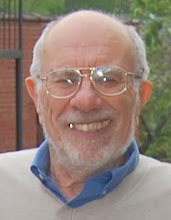
It occurred to me today that this year marks the fifty-fifth anniversary of my earning a doctorate in philosophy at Harvard. Since I did not do anything to acknowledge the fiftieth, and my recent quasi near death experience has reminded me that I may not live to see the sixtieth [though I have every intention of trying], it seems to me that perhaps I ought to have a little private ceremony of commemoration [returning for the annual Harvard reunion is totally out of the question, for all sorts of reasons.]
But what would be an appropriate rite of passage? Should I try to contact the other folks who received their Philosophy doctorates that same year? I have a vague recollection that there were twelve of us in the Philosophy Department at Harvard in 1957. I am pretty sure Dudley Shapere and Joe Ullian were among the dozen, and I thought I remembered that Nicholas Wolterstorff was as well. Wikipedia says Nick received his degree in '56, but the Yale Philosophy Department page on which he is listed as Professor Emeritus, after repeating this date, goes on to say, rather inconsistently, that he received his degree in 1957. [These two statements are separated by only several paragraphs, and although in the old days the Yale Department was not known for strength in Logic, it does seem to me that they ought by now to have mastered the Law of Contradiction.]
An unusually good bottle of wine? Some chocolate truffles from the local upscale gourmet food shop? Perhaps I should memorialize the occasion on my blog -- but then, I seem to be doing that.
Oh well, it was a long time ago. Maybe I will just wait until the sixtieth rolls around. Meanwhile, on a more serious note, I need to get started planning for the twenty-fifth wedding anniversary that Susie and I will celebrate in August. Now that is something to make a fuss about.
Thursday, March 8, 2012


Wednesday, March 7, 2012
ENOUGH IS ENOUGH
I have been a political junkie all my life. My earliest political memory is the day FDR died [I was eleven]. At fourteen, I went to a Henry Wallace rally at Yankee Stadium [but it rained, and I ended up watching a no-hitter at the Polo Grounds -- you can look it up in my Autobiography.] What really brought home to me my political addiction was an evening I spent in 1966 in a Cotswald cottage outside London. A brief explanation is called for.
Ernest Gellner was a very well known and widely read Czech-English philosopher, sociologist, and anthropologist who made a big name for himself in 1958 with the publication of his first book, Words and Things, an excoriating attack on the so-called Ordinary Language Philosophy that was then all the rage in England, and was leaking over into the United States. Shortly after the book came out, Gellner spent some time in Cambridge, MA [and, if memory serves me, went out briefly with my big sister, Barbara, who was then taking a doctorate in Biochemistry at Harvard.] I got to know him, and we became friends. For years, we corresponded and on rare occasions saw one another.
In 1964, when I went to Columbia University, one of my new colleagues was Charles Frankel, a student of Ernest Nagel who did social and political philosophy [tragically, some years later, Frankel and his wife were killed in their home in Westchester during a robbery.] Charlie was pretty far along in organizing an international conference for the Social Science Research Council, to be held at a posh villa in Italy, when he was tapped by LBJ to be Assistant Secretary of State for Cultural and Educational Affairs. He asked me to take over the last few organizational chores for the conference, which I did. On my way home from the conference, I passed through London and took the opportunity to visit Gellner and his wife and family in their Cottswald cottage. The date was March 31, 1966, which just happened to be election day in England, so after dinner was over and the children were put to bed, Ernest, his wife, and I sat down in the little living room and watched the results on an old black-and-white television set. I had not the foggiest idea who any of the candidates was, and aside from a general preference for Labour, no clue what the election was about. And yet I watched mesmerized as the results came in and were put up on chalk boards by the commentators. It crossed my mind, as I sat there, that I must really be a hopeless political junkie if I could be fascinated by election results in a contest I knew nothing about.
All of which brings me to last night, which was Super Tuesday in the Republican Presidential Primary race. I have been following every up and down of this seemingly endless process with the obsessive attention appropriate to a political junkie. I watched in horror as Bachmann rose and fell, as Trump wafted into the stratosphere like a child's balloon slipped from its fingers and then popped, as Perry self-destructed, as Cain had his moment in the sun, as Gingrich did his best to steal Christmas. Good grief, I even read the man's doctoral dissertation. How much deeper in the weeds can one go?
But as the weeks have turned into months, and a year and more has gone by, I feel like a little boy who has finally been taken by his parents to a Ringling Bros. Barnum and Bailey circus, only to discover that it is clowns all the way down -- no trapeze artists, no lion tamers, no jugglers, not even a pretty lady equestrian, just one clown after another with a silly grin painted onto his face hitting his fellow clowns with a slapstick and staggering around the center ring in oversized shoes. I never thought I would hear myself saying this, but at long last, I just don't care. Last night, I watched Rachel Maddow and John Heilmann and Michael Steele and Chris Matthews vamping for hours until the first results dribbled in, and as the numbers started appearing on the screen, I gave it up and went to sleep.
Oh, I will watch the conventions -- both of them -- and I will settle in for election night with a pizza and a bottle of good red wine. But for the moment, I have had about as much of Romney and Santorum and Gingrich and Paul as I can stomach. Will someone please pile them back into the tiny car they tumbled out of and drive them off stage?
Tuesday, March 6, 2012
PLATO'S GORGIAS A MINI-TUTORIAL CONCLUSION
This is, to my way of thinking, the high point of the dialogue, even though it is slightly less than half way through. The discussion now takes a familiar course -- familiar at least to those of us who have had the benefit of reading other of Plato's writings, including some written after the Gorgias. There is first the matter of clarifying what Callicles really means when he says that it is a Law of Nature that the strong should rule. He certainly does not mean that the masses should rule, even though they are, as a mob, capable of overpowering the outstanding individual. By "stronger" Callicles means more intelligent, superior -- he has in mind the extraordinary individual who in every way elevates himself above the mediocre mob. [As everyone in the past century and more has pointed out, there is a close connection between the line taken by Callicles here and by Thrasymachus in the Republic, and Nietzsche's romantic celebration of the ubermensch, the "superman."]
Callicles also throws into the mix the claim the this superior individual, who ought by a law of Nature to rule, will also have outsized appetites. "A man who is going to live a full life," he asserts, "must allow his desires to become as mighty as may be and never repress them. When his passions have come to full maturity, he must be able to serve them through his courage and intelligence and gratify every fleeting desire as it comes into his heart."
Strictly speaking, this particular claim has no logical connection with Callicles' central position, but Plato introduces it, I think, in order to give him one more opportunity to engage with what was a hot topic in ancient debates, namely the place of pleasure in the good life.
The debate goes on for quite some time, of course, and Plato arranges things so that it appears that Callicles is tripped up by certain internal inconsistencies in his position and thus loses the argument. But I do not really believe that Plato thinks Socrates has dialectically defeated Callicles [this is very much my own interpretation, and may not be shared by the scholars, for all I know.] The purpose of the second half of the dialogue, as signaled by the long and powerful speech Plato writes for Callicles, is to present to the reader two fully articulated and utterly incompatible visions of the good life: that expressed by Callicles, and that both expressed and personally exemplified by Socrates. Against the claims of the unbridled desire and uncontrolled political power of the superior individual Plato sets the portrait of a rational, self-controlled, thoroughly thoughtful and inwardly composed man who lives his life, and is prepared to lose his life, if necessary, in accordance with the understanding of the human condition to which he has come in the course of a long life of inquiry and reflection.
Before bringing this mini-tutorial to a close, I should like to highlight one brief passage, early in the exchange with Callicles. Socrates is quizzing Callicles about his use of the term "better," in order to force Callicles to state his real position more precisely. Socrates uses examples drawn from some of the less noble arts [at least as Athenians would have viewed them], such as tailoring and shoe-making. Callicles, who fancies himself to be speaking largely about matters of the highest importance, is frustrated by Socrates' constant use of humble examples. "What is this about shoes?" he asks with evident irritation. "You do insist on talking nonsense!" Very well, Socrates replies, and gives an example of a farmer. "Socrates," Callicles blurts out in utter exasperation, "you always keep saying the same thing over and over again!" To which Socrates calmly replies, "Not only that, Callicles, but on the same subjects, too."
This is just marvelous. As Kierkegaard noted two thousand years later, quoting this same passage, although the essence of the Aesthetic is novelty, the essence of the Ethical is repetition. Since the truths of morality never change, when we speak of morality, we ought always to be saying the same thing, and in the same way, too. That is why the Aesthetic is always so much more engaging than the Ethical, but also inferior in importance. [Kierkegaard, with a considerable literary flair that, in a paradoxical way, contradicts his thesis, captures this contrast in Either/Or.]
Let me wrap this up with a poignant passage that occurs near the end of the dialogue. Callicles is hammering away at the danger Socrates might face as a consequence of his steadfast refusal to avail himself of the meretricious tricks of the rhetorician. ["meretricious" is perhaps a poor word choice, since its root is Latin, not Greek: "meretricious" = "falsely alluring, like a prostitute." But then, in light of the earlier play with the notion of cosmetics as the false art of the health of the body, maybe not such a bad choice.] The passage occurs at Stephanus 521.
"How confident you seem to be, Socrates," says Callicles, "... that you could never be dragged into court by some utterly vicious and debased creature." Socrates replies:
"Then, Callicles, I must really be a fool if I believe that in this city of ours anyone at all is exempt from the risk of any possible form of calamity. Of this, however, I am perfectly certain: if ever I am dragged into court and exposed to any of these risks, it will be, as you say, some vicious fellow that brings me there (for no honest man would ever so deal with the innocent); and, indeed, it would not be surprising if I were put to death. ... In my opinion, I am one of the few Athenians (not to say the only one) who has attempted the true art of politics, and the only one alive to put it into practice. For this reason, then, I never carry on my habitual discussions with a view to gratification, but with my eyes fixed on the highest good, not on that which is merely pleasant. Being unwilling to follow your advice as to the employment of rhetorical tricks, I shall have nothing to say in the courtroom. ... I shall be like a physician tried before a jury of children on the accusation of a cook. [ed. There follows a long description by Socrates of how he would have thrown up to him the many painful things that, as a physician, he had inflicted on his patients.] ... And if anyone accuses me of corrupting the younger men by perplexing them with doubts, or says that I criticize their elders with bitter words both in private and in public, I shall be able neither to tell the truth ("Yes, and it is right for me to say all this and in doing so I am serving your interests, gentlemen of the jury") nor to utter anything else at all; so that, in all probability, there is no telling what may happen."
After two thousand years, the image of Socrates' courage in the face of death and his refusal even at the last to betray his beliefs and his philosophical principles has become a cliché, honored for the most part by philosophers with a yawn, before turning to the excitements and delights of modal logic or evolutionary epistemology. I can only ask you to try to read this passage with the eyes of a fourth century B. C. Athenian a scant few years after the death of Socrates.
One final personal story, to end on a lighter note. [Faithful readers of my autobiography will be familiar with this tale. To them I offer an apology.] In the Fall of 1986, I was arrested at Harvard's Fogg Art Museum in an anti-apartheid protest. Some of our number were charged with trespass, for blocking the entrance to the museum, and others [myself included] were charged with disorderly conduct for marching up and down and blocking the sidewalk in front of the museum. We elected to defend ourselves at the trial, which lasted only for several hours, and the jury of six found us guilty as charged. Since we were defending ourselves [pro se, as lawyers would say], when the time came for sentencing, after the Assistant District Attorney [a nice young man with the old Boston political name Belloti] had proposed 100 hours of community service, each of us was asked to propose an alternative punishment. Recalling Socrates' great final speech in the Apology, I said to the judge, "Well, your honor, since I am a professor at the University of Massachusetts, I have been serving the interests of the people of the Commonwealth for more than fifteen years, and I think therefore that an appropriate punishment would be for the Commonwealth to give me a pension." The judge, who was not too well up on her Plato, even though she had a son at Harvard at the time [don't even ask about conflict of interest -- this was Boston], looked at me blankly and sentenced me to a fine of $72.50. In the end I did not have to pay, because we when decided to appeal, it was found that the tape recorder substituting as court reporter was so old it was impossible to get a usable transcript from it, and the entire matter went down the rabbit hole of Massachusetts justice.
Callicles also throws into the mix the claim the this superior individual, who ought by a law of Nature to rule, will also have outsized appetites. "A man who is going to live a full life," he asserts, "must allow his desires to become as mighty as may be and never repress them. When his passions have come to full maturity, he must be able to serve them through his courage and intelligence and gratify every fleeting desire as it comes into his heart."
Strictly speaking, this particular claim has no logical connection with Callicles' central position, but Plato introduces it, I think, in order to give him one more opportunity to engage with what was a hot topic in ancient debates, namely the place of pleasure in the good life.
The debate goes on for quite some time, of course, and Plato arranges things so that it appears that Callicles is tripped up by certain internal inconsistencies in his position and thus loses the argument. But I do not really believe that Plato thinks Socrates has dialectically defeated Callicles [this is very much my own interpretation, and may not be shared by the scholars, for all I know.] The purpose of the second half of the dialogue, as signaled by the long and powerful speech Plato writes for Callicles, is to present to the reader two fully articulated and utterly incompatible visions of the good life: that expressed by Callicles, and that both expressed and personally exemplified by Socrates. Against the claims of the unbridled desire and uncontrolled political power of the superior individual Plato sets the portrait of a rational, self-controlled, thoroughly thoughtful and inwardly composed man who lives his life, and is prepared to lose his life, if necessary, in accordance with the understanding of the human condition to which he has come in the course of a long life of inquiry and reflection.
Before bringing this mini-tutorial to a close, I should like to highlight one brief passage, early in the exchange with Callicles. Socrates is quizzing Callicles about his use of the term "better," in order to force Callicles to state his real position more precisely. Socrates uses examples drawn from some of the less noble arts [at least as Athenians would have viewed them], such as tailoring and shoe-making. Callicles, who fancies himself to be speaking largely about matters of the highest importance, is frustrated by Socrates' constant use of humble examples. "What is this about shoes?" he asks with evident irritation. "You do insist on talking nonsense!" Very well, Socrates replies, and gives an example of a farmer. "Socrates," Callicles blurts out in utter exasperation, "you always keep saying the same thing over and over again!" To which Socrates calmly replies, "Not only that, Callicles, but on the same subjects, too."
This is just marvelous. As Kierkegaard noted two thousand years later, quoting this same passage, although the essence of the Aesthetic is novelty, the essence of the Ethical is repetition. Since the truths of morality never change, when we speak of morality, we ought always to be saying the same thing, and in the same way, too. That is why the Aesthetic is always so much more engaging than the Ethical, but also inferior in importance. [Kierkegaard, with a considerable literary flair that, in a paradoxical way, contradicts his thesis, captures this contrast in Either/Or.]
Let me wrap this up with a poignant passage that occurs near the end of the dialogue. Callicles is hammering away at the danger Socrates might face as a consequence of his steadfast refusal to avail himself of the meretricious tricks of the rhetorician. ["meretricious" is perhaps a poor word choice, since its root is Latin, not Greek: "meretricious" = "falsely alluring, like a prostitute." But then, in light of the earlier play with the notion of cosmetics as the false art of the health of the body, maybe not such a bad choice.] The passage occurs at Stephanus 521.
"How confident you seem to be, Socrates," says Callicles, "... that you could never be dragged into court by some utterly vicious and debased creature." Socrates replies:
"Then, Callicles, I must really be a fool if I believe that in this city of ours anyone at all is exempt from the risk of any possible form of calamity. Of this, however, I am perfectly certain: if ever I am dragged into court and exposed to any of these risks, it will be, as you say, some vicious fellow that brings me there (for no honest man would ever so deal with the innocent); and, indeed, it would not be surprising if I were put to death. ... In my opinion, I am one of the few Athenians (not to say the only one) who has attempted the true art of politics, and the only one alive to put it into practice. For this reason, then, I never carry on my habitual discussions with a view to gratification, but with my eyes fixed on the highest good, not on that which is merely pleasant. Being unwilling to follow your advice as to the employment of rhetorical tricks, I shall have nothing to say in the courtroom. ... I shall be like a physician tried before a jury of children on the accusation of a cook. [ed. There follows a long description by Socrates of how he would have thrown up to him the many painful things that, as a physician, he had inflicted on his patients.] ... And if anyone accuses me of corrupting the younger men by perplexing them with doubts, or says that I criticize their elders with bitter words both in private and in public, I shall be able neither to tell the truth ("Yes, and it is right for me to say all this and in doing so I am serving your interests, gentlemen of the jury") nor to utter anything else at all; so that, in all probability, there is no telling what may happen."
After two thousand years, the image of Socrates' courage in the face of death and his refusal even at the last to betray his beliefs and his philosophical principles has become a cliché, honored for the most part by philosophers with a yawn, before turning to the excitements and delights of modal logic or evolutionary epistemology. I can only ask you to try to read this passage with the eyes of a fourth century B. C. Athenian a scant few years after the death of Socrates.
One final personal story, to end on a lighter note. [Faithful readers of my autobiography will be familiar with this tale. To them I offer an apology.] In the Fall of 1986, I was arrested at Harvard's Fogg Art Museum in an anti-apartheid protest. Some of our number were charged with trespass, for blocking the entrance to the museum, and others [myself included] were charged with disorderly conduct for marching up and down and blocking the sidewalk in front of the museum. We elected to defend ourselves at the trial, which lasted only for several hours, and the jury of six found us guilty as charged. Since we were defending ourselves [pro se, as lawyers would say], when the time came for sentencing, after the Assistant District Attorney [a nice young man with the old Boston political name Belloti] had proposed 100 hours of community service, each of us was asked to propose an alternative punishment. Recalling Socrates' great final speech in the Apology, I said to the judge, "Well, your honor, since I am a professor at the University of Massachusetts, I have been serving the interests of the people of the Commonwealth for more than fifteen years, and I think therefore that an appropriate punishment would be for the Commonwealth to give me a pension." The judge, who was not too well up on her Plato, even though she had a son at Harvard at the time [don't even ask about conflict of interest -- this was Boston], looked at me blankly and sentenced me to a fine of $72.50. In the end I did not have to pay, because we when decided to appeal, it was found that the tape recorder substituting as court reporter was so old it was impossible to get a usable transcript from it, and the entire matter went down the rabbit hole of Massachusetts justice.
JEROME DOOLITTLE, THANK YOU
As readers of this blog are aware, after I expressed distress at the political biases of the authors of the spy novels I was reading, I got a flood of reading suggestions, three of which I immediately took up, with great pleasure. I also reveived a very nice email message from Jerome Doolittle, who, aside from having spent time as a speechwriter for Jimmy Carter and as USIA spokesman in Laos, is the author of a number of detective stories. He very generously offered to send me the first of them, Body Scissors, in which he introduces the character, Tom Bethany, who is featured in at least four subsequent novels. Doolittle suggested that I would find the political leanings of the narrator more to my liking.
The book arrived in the mail yesterday, at about 1:30 p.m. I opened the first page to see what it was like. At 8:23 p.m., with time out to prepare and eat dinner, I turned the last page, put out my light, and went to sleep. I think it is accurate to say that I could not put it down.
I shan't spoil the book for you by summarizing the plot. Suffice it to say that Bethany is called in during a presidential campaign to do a background check on a distinguished character whom one of the candidates is thinking of naming Secretary of State. It is a great tale, but what really captivated me [aside from the Harvard Square scenes, rendered with delicious and unillusioned irony], is the progressive sensibility that infuses the narrative. It does not actually play a role in the plot as such, but it is present, nonetheless, and it made me aware how much of the time, in the sorts of things I had been reading, I simply had to bracket my political sensibilities in order to get through the book. Just the opposite is true in Body Scissors [the title refers to a wrestling maneuvre, by the way. Bethany is a former wrestler, and I sort of get the impression Doolittle must have been as well.]
I checked with Amazon, and the book is available. I really recommend it to anyone who is looking for a first-rate read with a progressive sensibility.
I am very grateful to Doolittle for having sent me the book, but from now on I am going to buy my own. We authors have to stick together!
The book arrived in the mail yesterday, at about 1:30 p.m. I opened the first page to see what it was like. At 8:23 p.m., with time out to prepare and eat dinner, I turned the last page, put out my light, and went to sleep. I think it is accurate to say that I could not put it down.
I shan't spoil the book for you by summarizing the plot. Suffice it to say that Bethany is called in during a presidential campaign to do a background check on a distinguished character whom one of the candidates is thinking of naming Secretary of State. It is a great tale, but what really captivated me [aside from the Harvard Square scenes, rendered with delicious and unillusioned irony], is the progressive sensibility that infuses the narrative. It does not actually play a role in the plot as such, but it is present, nonetheless, and it made me aware how much of the time, in the sorts of things I had been reading, I simply had to bracket my political sensibilities in order to get through the book. Just the opposite is true in Body Scissors [the title refers to a wrestling maneuvre, by the way. Bethany is a former wrestler, and I sort of get the impression Doolittle must have been as well.]
I checked with Amazon, and the book is available. I really recommend it to anyone who is looking for a first-rate read with a progressive sensibility.
I am very grateful to Doolittle for having sent me the book, but from now on I am going to buy my own. We authors have to stick together!
Sunday, March 4, 2012
PLATO'S GORGIAS A MINI-TUTORIAL PART SIX
As I say, I puzzled over this odd turn in the dialogue for quite some time. Here is what I think is going on. Polus may insist that it is better to do injustice than to suffer it. But he clings to the view, conventional and widespread in the Greek world at that time, that there is something, mean-spirited, dishonorable, beneath the dignity of a gentleman, to act unjustly. Such behavior, in that extended sense of kalon, ugly. A man who will lie, cheat, steal, or kill an unarmed person simply because he is able to get away with it, may be powerful, he may even be happy [or so Polus thinks], but he is not someone one can admire, because his actions -- and his character, presumably -- are contemptible.
At about the time that I came to this interpretation of the passage, I gave a talk at a small catholic college in New Hampshire, in the course of which I alluded to the Gorgias and tried this line out. The example I used, as I recall, was Richard Nixon, as compared with Teddy Kennedy. The students did not dispute my reading of Plato, but they utterly rejected my contrast between Nixon and Kennedy, considering Kennedy [because of his behavior in the Mary Jo Kopechne Chappaquiddick episode as evidence that Kennedy was not a morally beautiful individual, not someone whose life could be instanced as an explication of Plato's thought.
I remain quite torn on the substance of the matter. [As far as an interpretation of Plato is concerned, I am really so far from being an expert that I have no particular confidence at all in my reading of the passage.] On the one hand, there seem to me to be a number of political figures in America [and elsewhere, but America is what I know best] whose behavior strikes me as dignified and admirable, even when I disagree with their politics. On the other hand, when I reflect on the harm that those wrong policies inflict, sometimes on millions of people, I have difficulty respecting them or acknowledging that they are morally admirable human beings. Consequences matter.
Be all of that as it may, Socrates concludes his exchange with Polus by insisting that the worst fate that can befall a man is to act unjustly and not be punished for it. This is too much for Callicles, who has been listening silently to the exchanges first with Gorgias and then with Polus. "Tell me, Chaerephon," he asks, "is Socrates serious about this or is he only joking?"
Socrates assures Callicles that he is quite serious, in an speech that is unusually long for Socrates, extending for an entire page. In response, Callicles launches into quite the longest speech in the dialogue, and one of the longest, or perhaps the longest, in any of the so-called Socratic dialogues -- the early and middle ones. It is a brilliant tour de raison, or perhaps I should say tour de discours, and it my absolutely favorite passage from the entire philosophical corpus -- I will quote it at length a little bit later on.
Callicles begins by giving a spot-on critique of the discussion thus far, identifying exactly the points at which Gorgias, and then Polus, by failing to adopt a sufficiently radical and anti-conventional position, leave themselves open to Socrates' dialectical tricks. For Gorgias, it is the concession that if his pupils do not come to him already inclined to act justly, he will have to teach them to be just. For Polus, it is the acknowledgement that even if suffering wrong is worse than doing wrong, doing wrong is uglier than suffering wrong. It is, in my view, a mark of the Plato's high seriousness that he puts these remarks in Callicles' mouth, thus in effect positioning him to resist Socrates' arguments.
But now something of the very greatest importance happens, in the midst of Callicles' extended remarks. To appreciate its true significance, you must understand that in the common speech of Plato's time, nature, or physis [I hope I have the Greek right -- as I have remarked, I do not know Greek], contrasted with law, which in Greek carries with it the sense of convention. Thus, the regularities and objective permanence of nature are contrasted with the variable, changing, man-made conventions that in this, that, or the other city-state regulate the behavior of men and the state. "Convention," says Callicles, "declares that it is unjust and ugly to seek to get the better of the majority. But my opinion is that nature herself reveals it to be only just and proper that the better man should lord it over his inferior; it will be the stronger over the weaker. ... To my mind, men are acting in accord with natural justice when they perform such acts, and, by heaven, it is in accordance with law, too, the law of nature."
This is, to my knowledge, the very first time that the phrase "the law of nature" appears in the western literary and philosophical tradition, and it may very well be the very first time it appears in any literary and philosophical tradition. Eventually, of course, thanks to the Stoics, and after them to the tradition of Roman Catholic thought, the idea of The Law of Nature became absolutely central to several modern intellectual traditions, including both Natural Law jurisprudence, so called, Social Contract political theory. But as it is introduced here by Callicles, it is a self-conscious paradox, a slap in the face of conventional Greek mores, and a radical declaration of the right of the strong to rule.
We come now to the passage I alluded to earlier. This is still part of Callicles' big speech -- for those following along, it starts near the end of Stephanus 484. I am going to quote it at length, because I could not teach the Gorgias or write a mini-tutorial on the dialogue without doing so. Here it is. Callicles is speaking. Keep in mind that Plato was writing this at roughly the time when he was deliberating whether to follow his family into politics or retreat from public life and found The Academy.
"Here, then, you have the truth of the matter. You will become convinced of it if you only let philosophy alone and pass on to more important considerations. Of course, Socrates, philosophy does have a certain charm if one engages with it in one's youth and in moderation; but if one dallies overlong, it's the ruin of a fellow. If a man, however well endowed, goes on philosophizing throughout his life, he will never come to taste the experiences which a man must have if he's going to be a gentleman and have the world look up to him. You know perfectly well that philosophers know nothing about state laws and regulations. They are equally ignorant of the conversational standards that we have to adopt in dealing with our fellow men at home and abroad. Why, they are inexperienced even in human pleasures and desires! In a word, they are totally innocent of all human character. So, when they come to take part in either a private or a public affair, they make themselves ridiculous -- just as ridiculous, I dare say, as men of affairs may be when they get involved in your quibbles, your 'debates.' ....
"But the best course, no doubt, is to be a participant in both. It's an excellent thing to grasp as much philosophy as one needs for an education, and it's no disgrace to play the philosopher when you're young; but if one grows up and becomes a man and still continues in the subject, why, the whole thing becomes ridiculous, Socrates. My own feeling toward its practitioners is very much the same as the way I feel toward men who lisp and prattle like a child. When I see a child, who ought to be talking that way, lisping and prattling, I'm please, it strikes me as a pleasant sign of good breeding and suitable to the child's age; and when I hear a little lad speaking distinctly, it seems to me disagreeable and offends my ears as a mark of servile origin. [ed. fascinating bit of Athenian sociology, this.] So, too, when I hear a grown man prattling and lisping, it seems ridiculous and unmanly; one would like to strike him hard! And this is exactly the feeling I have about students of philosophy. When I perceive philosophical activity in a young lad, I am pleased; it suits him, I think, and shows he has good breeding. A boy who doesn't play with philosophy I regard as illiberal, a chap who will never raise himself to any fine or noble action. Whereas when I see an older man still at his philosophy and showing no sign of giving it up, that one seems to me, Socrates, to be asking for some hard knocks. For, as I said just now, such a man, even if he's well-endowed by nature [ed. as Socrates was not by the way -- he was apparently rather ugly], must necessarily become unmanly by avoiding the center of the city and the assemblies where, as the Poet says, 'men win distinction.' [ed. -- Homer] Such a fellow must spend the rest of his life skulking in corners, whispering with two or three little lads, never pronouncing any large, liberal, or meaningful utterance."
At about the time that I came to this interpretation of the passage, I gave a talk at a small catholic college in New Hampshire, in the course of which I alluded to the Gorgias and tried this line out. The example I used, as I recall, was Richard Nixon, as compared with Teddy Kennedy. The students did not dispute my reading of Plato, but they utterly rejected my contrast between Nixon and Kennedy, considering Kennedy [because of his behavior in the Mary Jo Kopechne Chappaquiddick episode as evidence that Kennedy was not a morally beautiful individual, not someone whose life could be instanced as an explication of Plato's thought.
I remain quite torn on the substance of the matter. [As far as an interpretation of Plato is concerned, I am really so far from being an expert that I have no particular confidence at all in my reading of the passage.] On the one hand, there seem to me to be a number of political figures in America [and elsewhere, but America is what I know best] whose behavior strikes me as dignified and admirable, even when I disagree with their politics. On the other hand, when I reflect on the harm that those wrong policies inflict, sometimes on millions of people, I have difficulty respecting them or acknowledging that they are morally admirable human beings. Consequences matter.
Be all of that as it may, Socrates concludes his exchange with Polus by insisting that the worst fate that can befall a man is to act unjustly and not be punished for it. This is too much for Callicles, who has been listening silently to the exchanges first with Gorgias and then with Polus. "Tell me, Chaerephon," he asks, "is Socrates serious about this or is he only joking?"
Socrates assures Callicles that he is quite serious, in an speech that is unusually long for Socrates, extending for an entire page. In response, Callicles launches into quite the longest speech in the dialogue, and one of the longest, or perhaps the longest, in any of the so-called Socratic dialogues -- the early and middle ones. It is a brilliant tour de raison, or perhaps I should say tour de discours, and it my absolutely favorite passage from the entire philosophical corpus -- I will quote it at length a little bit later on.
Callicles begins by giving a spot-on critique of the discussion thus far, identifying exactly the points at which Gorgias, and then Polus, by failing to adopt a sufficiently radical and anti-conventional position, leave themselves open to Socrates' dialectical tricks. For Gorgias, it is the concession that if his pupils do not come to him already inclined to act justly, he will have to teach them to be just. For Polus, it is the acknowledgement that even if suffering wrong is worse than doing wrong, doing wrong is uglier than suffering wrong. It is, in my view, a mark of the Plato's high seriousness that he puts these remarks in Callicles' mouth, thus in effect positioning him to resist Socrates' arguments.
But now something of the very greatest importance happens, in the midst of Callicles' extended remarks. To appreciate its true significance, you must understand that in the common speech of Plato's time, nature, or physis [I hope I have the Greek right -- as I have remarked, I do not know Greek], contrasted with law, which in Greek carries with it the sense of convention. Thus, the regularities and objective permanence of nature are contrasted with the variable, changing, man-made conventions that in this, that, or the other city-state regulate the behavior of men and the state. "Convention," says Callicles, "declares that it is unjust and ugly to seek to get the better of the majority. But my opinion is that nature herself reveals it to be only just and proper that the better man should lord it over his inferior; it will be the stronger over the weaker. ... To my mind, men are acting in accord with natural justice when they perform such acts, and, by heaven, it is in accordance with law, too, the law of nature."
This is, to my knowledge, the very first time that the phrase "the law of nature" appears in the western literary and philosophical tradition, and it may very well be the very first time it appears in any literary and philosophical tradition. Eventually, of course, thanks to the Stoics, and after them to the tradition of Roman Catholic thought, the idea of The Law of Nature became absolutely central to several modern intellectual traditions, including both Natural Law jurisprudence, so called, Social Contract political theory. But as it is introduced here by Callicles, it is a self-conscious paradox, a slap in the face of conventional Greek mores, and a radical declaration of the right of the strong to rule.
We come now to the passage I alluded to earlier. This is still part of Callicles' big speech -- for those following along, it starts near the end of Stephanus 484. I am going to quote it at length, because I could not teach the Gorgias or write a mini-tutorial on the dialogue without doing so. Here it is. Callicles is speaking. Keep in mind that Plato was writing this at roughly the time when he was deliberating whether to follow his family into politics or retreat from public life and found The Academy.
"Here, then, you have the truth of the matter. You will become convinced of it if you only let philosophy alone and pass on to more important considerations. Of course, Socrates, philosophy does have a certain charm if one engages with it in one's youth and in moderation; but if one dallies overlong, it's the ruin of a fellow. If a man, however well endowed, goes on philosophizing throughout his life, he will never come to taste the experiences which a man must have if he's going to be a gentleman and have the world look up to him. You know perfectly well that philosophers know nothing about state laws and regulations. They are equally ignorant of the conversational standards that we have to adopt in dealing with our fellow men at home and abroad. Why, they are inexperienced even in human pleasures and desires! In a word, they are totally innocent of all human character. So, when they come to take part in either a private or a public affair, they make themselves ridiculous -- just as ridiculous, I dare say, as men of affairs may be when they get involved in your quibbles, your 'debates.' ....
"But the best course, no doubt, is to be a participant in both. It's an excellent thing to grasp as much philosophy as one needs for an education, and it's no disgrace to play the philosopher when you're young; but if one grows up and becomes a man and still continues in the subject, why, the whole thing becomes ridiculous, Socrates. My own feeling toward its practitioners is very much the same as the way I feel toward men who lisp and prattle like a child. When I see a child, who ought to be talking that way, lisping and prattling, I'm please, it strikes me as a pleasant sign of good breeding and suitable to the child's age; and when I hear a little lad speaking distinctly, it seems to me disagreeable and offends my ears as a mark of servile origin. [ed. fascinating bit of Athenian sociology, this.] So, too, when I hear a grown man prattling and lisping, it seems ridiculous and unmanly; one would like to strike him hard! And this is exactly the feeling I have about students of philosophy. When I perceive philosophical activity in a young lad, I am pleased; it suits him, I think, and shows he has good breeding. A boy who doesn't play with philosophy I regard as illiberal, a chap who will never raise himself to any fine or noble action. Whereas when I see an older man still at his philosophy and showing no sign of giving it up, that one seems to me, Socrates, to be asking for some hard knocks. For, as I said just now, such a man, even if he's well-endowed by nature [ed. as Socrates was not by the way -- he was apparently rather ugly], must necessarily become unmanly by avoiding the center of the city and the assemblies where, as the Poet says, 'men win distinction.' [ed. -- Homer] Such a fellow must spend the rest of his life skulking in corners, whispering with two or three little lads, never pronouncing any large, liberal, or meaningful utterance."
Saturday, March 3, 2012
MARGINAL RATES
One of the reasons why I have been a little slow in writing my mini-tutorial on Plato's Gorgias is that I have been doing our taxes. This is a laborious, complicated, time-consuming effort, not because we are rich [although we are, let me emphasize, extremely comfortable -- upper middle-class, by any rational definition] but because I have a certain amount of royalty income from my books [also from speeches, but nobody very much is asking me to speak these days.] That requires me to fill out something called Schedule C, which in turn requires that I go back over old credit card bills and our checkbook looking for deductible expenses.
There has been a lot of talk lately in the public world about what Mitt Romney pays in taxes, and also a good deal of debate about raising the tax rate on people who make over a million dollars, or alternatively two hundred and fifty thousand dollars, a year. And in that debate, there is a great deal of confusion about "marginal rates." The tax rates are [or are supposed to be] "progressive," which means that the more money you make, the higher your tax rate is on the last or marginal dollars, the top bit of the heap. Even if you make a billion dollars a year, you pay the same amount of tax on the first ten thousand dollars of taxable income as the person who only has ten thousand dollars of taxable income. This is obvious, but everybody seems to forget it when the political debates heat up and the bleeding heart Republicans start talking about the poor, benighted rich folks.
Out of curiosity, I decided to figure out our marginal tax rate. Now, the notion of the marginal dollar of income is a trifle peculiar, since it doesn't mean the dollar you made on December 31st -- the last dollar you made in the year. It just means some dollar arbitrarily plucked from the pile and treated as "last.".
The point is this. When I am finished filling out Schedule C, whose name is "Self-Employment Income," I must then copy the net Schedule C income onto Line 2 of Schedule SE, as well as onto Line 12 of the Form 1040 that everyone fills out [line 1 on Schedule SE is for farmers.] Schedule SE is used to compute how much Social Security tax I must pay on that Schedule C income, and since I am in theory employing myself ["Self-Employment Income"], I have to pay both the employee's half of the Social Security tax and the employer's half. In short, I must pay 15.3% of that income, as well as paying income tax on it on Form 1040.
Now, my marginal tax rate on my Form 1040 net taxable income is 25%. I don't have very much income in that bracket, but since I can treat any dollar of income as my "marginal income," I can perfectly well construe my royalty income as my marginal income. Which means that my marginal rate on that income is 25% plus 15.3%, or 40.3% Then, of course, I have to pay my North Carolina taxes, and in this state, there is a flat 7% tax above a certain rather low level.
Which means that my total over all marginal tax rate, viewed in a certain way, is 47.3%!
But what proportion of my Gross Taxable Income do I actually fork over in taxes? The answer turns out to be 17.9%, including my North Carolina state taxes. My Federal Taxes are only 13.7% of my Gross Taxable Income [the number at the very top of the second page of Form 1040.]
The simple truth is that we in the United States are not heavily taxed at all. Comfortably fixed people in this country -- let us arbitrarily describe them as people living in households whose annual income is twice the median rate of about $50,000 -- could quite easily afford to pay higher taxes to fund Social Security, Medicare, Medicaid, education, and the other collective needs of our society. And people who make five times, or twenty times, or one hundred times the median household income could afford to pay a great deal more.
So let us hear no more descriptions of folks with $250,000 a year of income as "middle class families in need of tax relief."
There has been a lot of talk lately in the public world about what Mitt Romney pays in taxes, and also a good deal of debate about raising the tax rate on people who make over a million dollars, or alternatively two hundred and fifty thousand dollars, a year. And in that debate, there is a great deal of confusion about "marginal rates." The tax rates are [or are supposed to be] "progressive," which means that the more money you make, the higher your tax rate is on the last or marginal dollars, the top bit of the heap. Even if you make a billion dollars a year, you pay the same amount of tax on the first ten thousand dollars of taxable income as the person who only has ten thousand dollars of taxable income. This is obvious, but everybody seems to forget it when the political debates heat up and the bleeding heart Republicans start talking about the poor, benighted rich folks.
Out of curiosity, I decided to figure out our marginal tax rate. Now, the notion of the marginal dollar of income is a trifle peculiar, since it doesn't mean the dollar you made on December 31st -- the last dollar you made in the year. It just means some dollar arbitrarily plucked from the pile and treated as "last.".
The point is this. When I am finished filling out Schedule C, whose name is "Self-Employment Income," I must then copy the net Schedule C income onto Line 2 of Schedule SE, as well as onto Line 12 of the Form 1040 that everyone fills out [line 1 on Schedule SE is for farmers.] Schedule SE is used to compute how much Social Security tax I must pay on that Schedule C income, and since I am in theory employing myself ["Self-Employment Income"], I have to pay both the employee's half of the Social Security tax and the employer's half. In short, I must pay 15.3% of that income, as well as paying income tax on it on Form 1040.
Now, my marginal tax rate on my Form 1040 net taxable income is 25%. I don't have very much income in that bracket, but since I can treat any dollar of income as my "marginal income," I can perfectly well construe my royalty income as my marginal income. Which means that my marginal rate on that income is 25% plus 15.3%, or 40.3% Then, of course, I have to pay my North Carolina taxes, and in this state, there is a flat 7% tax above a certain rather low level.
Which means that my total over all marginal tax rate, viewed in a certain way, is 47.3%!
But what proportion of my Gross Taxable Income do I actually fork over in taxes? The answer turns out to be 17.9%, including my North Carolina state taxes. My Federal Taxes are only 13.7% of my Gross Taxable Income [the number at the very top of the second page of Form 1040.]
The simple truth is that we in the United States are not heavily taxed at all. Comfortably fixed people in this country -- let us arbitrarily describe them as people living in households whose annual income is twice the median rate of about $50,000 -- could quite easily afford to pay higher taxes to fund Social Security, Medicare, Medicaid, education, and the other collective needs of our society. And people who make five times, or twenty times, or one hundred times the median household income could afford to pay a great deal more.
So let us hear no more descriptions of folks with $250,000 a year of income as "middle class families in need of tax relief."
Friday, March 2, 2012
PLATO'S GORGIAS A MINI-TUTORIAL PART FIVE
Before turning to the paradox of the powerless tyrant, let me take just a moment to explain why this portion of the dialogue resonated with me so immediately back in the early 1960's. As the old folks among you will recall, and the rest of you may have learned in school, John F. Kennedy and Richard M. Nixon were locked in a very close contest for the presidency in the Fall of 1960. In September and October, they took part in the very first televised debates -- in grainy Black and White, of course. Many Americans listened to the first debate on radio, not having television sets. The consensus among those listeners was that Nixon had done better than Kennedy. But television viewers all thought Kennedy had won the debate, and that fact made a significant difference in what turned out to be the closest presidential election in the modern era. How come?
Well, Nixon had rather thin skin [I mean literally], and even though he had shaved just before the debate, he looked under the blinding lights of early television as though he had a five o'clock shadow. In addition, getting out of the car at the studio, he banged his elbow on the door, and he was in pain during the debate. But Nixon was in fact in fine health. Kennedy, on the other hand, suffered from Addison's disease, one of the effects of which is to darken the skin, so although he was in fact in terrible physical condition from that and other things, he looked as though he had an attractive suntan. The appearance and the reality were completely reversed! And the sophists and rhetoricians carried the day. Appearance trumped Reality.
Those of us who were at Harvard at that time were of course fanatic Kennedy supporters. He was young, he was handsome, he was a Harvard man, his wife spoke French, and he had [so we then thought] written a book that had won the Pulitzer Prize [it was actually written by Ted Sorenson.] Not until he invaded Cuba the next April did some of us realize there was very little difference between Kennedy and Nixon.
Back to the dialogue. Polus protests the description of rhetoric as a false art of mere flattery, insisting that the most successful rhetoricians [which is to say, public speakers -- politicians] "have the greatest power in the country." Socrates denies this, saying "No, if at least by 'power' you mean something good to the man who wields it." Elaborating on this paradoxical assertion, he goes on:
"I assert, Polus, that both orators and tyrants have the least possible power in their own countries...For they do nothing, so to speak, that they wish to do, and yet do what is in their opinion best."
I always found to very difficult indeed to make Socrates' claim seem at all plausible to my students. Midway through my career, I had an experience that perfectly illustrated the thesis, and I several times invoked it as a pedagogical aid. [By the way, those of you who are conversant with more recent political theory may know that Plato's argument reappears in an unlikely place, as Rousseau's famous assertion that in a truly democratic state whose citizens aim at the General Good in their legislation and hence have a General Will, the recalcitrant citizen compelled to obey the laws is "forced to be free."] At any rate, in 1986, after my first marriage ended, I found and undertook to woo my childhood sweetheart, who was then living in Chapel Hill, North Carolina. I was living outside Boston and commuting to Western Massachusetts regularly to teach at UMass. I traveled to Chapel Hill as often as I could, which in those days meant flying Piedmont Airlines [long since absorbed into USAir.] The trips always required a change of planes, usually in Baltimore. One day, I flew to Baltimore and more or less on automatic pilot [I had done it so often] walked off the first flight and onto the second, leaving from the next gate. as I settled into my seat, a stewardess announced, "Will Mr. Robert Wolff please identify himself."] I pressed the little call button, and was escorted off the plane. It seems I had wandered onto the wrong plane. My flight was another gate down the row.
Now, had I been a tyrant [or an orator], I might have gotten away with refusing to get off the plane I was one, in which case, I would have gotten what I willed -- which was to sit on that plane and fly with it to its destination -- but not what I wanted, which was to go to Raleigh Durham. [I seem to remember I would have ended up in Charlotte.] The point, of course, is that I had a wrong belief, on which I was acting.
The tyrant, Socrates holds, can do whatever he wills, being all-powerful, but possessed as he is by wrong beliefs about what is truly good for him, he will end up getting what he wills, but not what he wants. He will not live well [a phrase that, for Plato, means both living a morally good life and also being happy. The equivalence of the two is the centerpiece of Plato's moral psychology.]
Well, Polus is no more convinced than you probably are, and the discussion goes on for several pages, leading finally to the characteristic Socratic claim that it is worse to do injustice than to suffer it, and worse to do injustice without being punished for it than to suffer the appropriate punishment for one's misdeeds. Plato is of course perfectly aware of how monstrous this sounds to the typical Athenian, and he painfully aware, as well, of the response that Socrates, by not availing himself of the "quackery" of Gorgias' rhetorical tricks, ended by being found guilty in his trial and put to death. It is a literary act of great courage, I have always thought, for Plato to state this paradox without qualification or cavil, fully aware of the end that Socrates suffered as a consequence of his stubborn commitment to his vision of moral truth.
Logically and dramatically this ought to be the end of the exchange with Polus. It is at this point that Callicles ought to jump in with his violent attack on everything Socrates has been saying. Instead, the conversation with Polus takes a very curious turn, one that baffled me for the longest time. I am not alone, I believe, in finding this portion of the dialogue puzzling, and there are even some translations that simply omit it. The swerve occurs about midway through Stephanus 474. The passage is the following. Socrates is undertaking to explain himself to Polus:
"Answer me, then, and you'll learn" says Socrates. "I'll put my question just as though we were beginning the discussion. Which, Polus, do you think is worse: to do or to suffer wrong?" "To suffer it is what I think," replies Polus. "And what do you say to this? Which is uglier: to do or to suffer wrong?" Rather surprisingly, and fatally for the coherence of his side of the argument, Polus replies "To do wrong."
What on earth has happened here? How did considerations of beauty and ugliness [the Greek is kalon] suddenly enter the debate about right and wrong, justice and injustice?
Well, Nixon had rather thin skin [I mean literally], and even though he had shaved just before the debate, he looked under the blinding lights of early television as though he had a five o'clock shadow. In addition, getting out of the car at the studio, he banged his elbow on the door, and he was in pain during the debate. But Nixon was in fact in fine health. Kennedy, on the other hand, suffered from Addison's disease, one of the effects of which is to darken the skin, so although he was in fact in terrible physical condition from that and other things, he looked as though he had an attractive suntan. The appearance and the reality were completely reversed! And the sophists and rhetoricians carried the day. Appearance trumped Reality.
Those of us who were at Harvard at that time were of course fanatic Kennedy supporters. He was young, he was handsome, he was a Harvard man, his wife spoke French, and he had [so we then thought] written a book that had won the Pulitzer Prize [it was actually written by Ted Sorenson.] Not until he invaded Cuba the next April did some of us realize there was very little difference between Kennedy and Nixon.
Back to the dialogue. Polus protests the description of rhetoric as a false art of mere flattery, insisting that the most successful rhetoricians [which is to say, public speakers -- politicians] "have the greatest power in the country." Socrates denies this, saying "No, if at least by 'power' you mean something good to the man who wields it." Elaborating on this paradoxical assertion, he goes on:
"I assert, Polus, that both orators and tyrants have the least possible power in their own countries...For they do nothing, so to speak, that they wish to do, and yet do what is in their opinion best."
I always found to very difficult indeed to make Socrates' claim seem at all plausible to my students. Midway through my career, I had an experience that perfectly illustrated the thesis, and I several times invoked it as a pedagogical aid. [By the way, those of you who are conversant with more recent political theory may know that Plato's argument reappears in an unlikely place, as Rousseau's famous assertion that in a truly democratic state whose citizens aim at the General Good in their legislation and hence have a General Will, the recalcitrant citizen compelled to obey the laws is "forced to be free."] At any rate, in 1986, after my first marriage ended, I found and undertook to woo my childhood sweetheart, who was then living in Chapel Hill, North Carolina. I was living outside Boston and commuting to Western Massachusetts regularly to teach at UMass. I traveled to Chapel Hill as often as I could, which in those days meant flying Piedmont Airlines [long since absorbed into USAir.] The trips always required a change of planes, usually in Baltimore. One day, I flew to Baltimore and more or less on automatic pilot [I had done it so often] walked off the first flight and onto the second, leaving from the next gate. as I settled into my seat, a stewardess announced, "Will Mr. Robert Wolff please identify himself."] I pressed the little call button, and was escorted off the plane. It seems I had wandered onto the wrong plane. My flight was another gate down the row.
Now, had I been a tyrant [or an orator], I might have gotten away with refusing to get off the plane I was one, in which case, I would have gotten what I willed -- which was to sit on that plane and fly with it to its destination -- but not what I wanted, which was to go to Raleigh Durham. [I seem to remember I would have ended up in Charlotte.] The point, of course, is that I had a wrong belief, on which I was acting.
The tyrant, Socrates holds, can do whatever he wills, being all-powerful, but possessed as he is by wrong beliefs about what is truly good for him, he will end up getting what he wills, but not what he wants. He will not live well [a phrase that, for Plato, means both living a morally good life and also being happy. The equivalence of the two is the centerpiece of Plato's moral psychology.]
Well, Polus is no more convinced than you probably are, and the discussion goes on for several pages, leading finally to the characteristic Socratic claim that it is worse to do injustice than to suffer it, and worse to do injustice without being punished for it than to suffer the appropriate punishment for one's misdeeds. Plato is of course perfectly aware of how monstrous this sounds to the typical Athenian, and he painfully aware, as well, of the response that Socrates, by not availing himself of the "quackery" of Gorgias' rhetorical tricks, ended by being found guilty in his trial and put to death. It is a literary act of great courage, I have always thought, for Plato to state this paradox without qualification or cavil, fully aware of the end that Socrates suffered as a consequence of his stubborn commitment to his vision of moral truth.
Logically and dramatically this ought to be the end of the exchange with Polus. It is at this point that Callicles ought to jump in with his violent attack on everything Socrates has been saying. Instead, the conversation with Polus takes a very curious turn, one that baffled me for the longest time. I am not alone, I believe, in finding this portion of the dialogue puzzling, and there are even some translations that simply omit it. The swerve occurs about midway through Stephanus 474. The passage is the following. Socrates is undertaking to explain himself to Polus:
"Answer me, then, and you'll learn" says Socrates. "I'll put my question just as though we were beginning the discussion. Which, Polus, do you think is worse: to do or to suffer wrong?" "To suffer it is what I think," replies Polus. "And what do you say to this? Which is uglier: to do or to suffer wrong?" Rather surprisingly, and fatally for the coherence of his side of the argument, Polus replies "To do wrong."
What on earth has happened here? How did considerations of beauty and ugliness [the Greek is kalon] suddenly enter the debate about right and wrong, justice and injustice?
Subscribe to:
Posts (Atom)