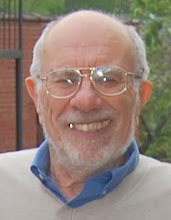
You will recall that not very long ago, Philip Green had a guest post on this blog. Phil just forwarded to me the following mesage from his son, Robert:
OK, so it's official: i am as of yesterday the Executive Producer for the west coast side of the newly formed Huff Post Live. http://www.hollywoodreporter.com/news/aol-launch-huffington-post-streaming-network-286644 I will be hiring up Producers and APs over the next two weeks. We will be breaking new ground in streaming content before we are done.
If you check this out and are interested, send an email to Phil at philip.green51@verizon.net and he will forward it to his son.
Wednesday, May 30, 2012


Tuesday, May 29, 2012
THE PILOT PROGRAM AT BENNETT COLLEGE
I have just returned from a second meeting at Bennett
College [it turns out that the easy one hour highway drive takes more out of me
than I would have imagined. I must
really be getting old.] We made a great
deal of progress today in refining and shaping the Pilot Program I devised, and
I can now say something about its outlines.
[I realize that this does not compare in importance with the massacre in
Syria or the future of the Eurozone or the vast continuing problems facing men
and women all over the world, but I can really only have opinions about those
things, and I may be able actually to make a difference at Bennett, so I hope
you will forgive me if I go on about this for a while.]
In the next week or two, we shall recruit ten members of the
faculty to serve as Instructor/Mentors [IM's] to sixty incoming Freshwomen whom
we shall select from the class of 2016.
Esther Terry has made the splendid suggestion that we call these young
women Willa B. Player Scholars after the first woman to hold the Presidency of
Bennett College. Player was president
during the very time that Esther was an undergraduate there in the late
fifties.
The sixty students, chosen so as to represent a
cross-section of the entering class in both academic preparation and geographic
background, will be divided into ten groups of six students, each group to be assigned
to one of the ten members of the faculty.
During the next three months, the IM's [these are the
faculty members, remember] will be in touch with the members of their group by
phone, email, Twitter, and whatever other social networking instrumentalities
exist, introducing them to one another, discussing what they will encounter
when they come to the campus, and in general forging a personal and
intellectual bond with them.
For Academic Year 2012-2013, each IM will design a yearlong
six-credit course especially for his or her six students. This course will be a part of the students'
regular course load and a part as well of the IM's regular teaching load. The subject matter of the first semester is
up to the individual IM, but in the second semester, in each of the ten courses
taught by the IM's, each student will choose an individual research project on any topic the student likes. The work of the second semester will be this
research project, guided by the IM's. Students will learn how to do research, how to
use the library [and not just Google!], how to develop an outline, write drafts,
and eventually produce a research report of not less than fifteen pages, on
which the grade for the second semester will be based. At the end of the Spring semester, Bennett
will hold an all-day conference, open to all members of the college community,
at which students will make short public presentations of their research.
The IM's will be expected to know what other courses their
Mentees are taking, where they are having difficulty, what problems are
interfering with satisfactory completion of their academic work. The IM's will help the students to find
appropriate support and solutions for these problems, whether they are writing
problems, math problems, roommate problems, problems at home, or any of the
other difficulties that students encounter when they go away to college.
Over the summer after this first year, and all during the
next year, the IM's will stay in touch with their students, continuing to guide
them and encouraging them to complete their work in a timely and satisfactory
manner.
From the very beginning of the program, the fundamental assumption
will be that every student admitted to Bennett is capable, with the right help
and encouragement, of doing satisfactory work and of earning a Bachelor's
Degree.
The short-term goal of the program is to achieve a one-year
retention rate of 80% -- which means that of the sixty students who enter the
program now, at least forty-eight will return in the Fall of 2013 as Sophomores
in good standing. This would represent a
dramatic improvement on the current record of success at Bennett.
If the initial results or promising, we will launch a
second, expanded Pilot Program next Summer for the new incoming class. Ten more faculty will be recruited to serve
as IM's. Eventually my hope is that the
entire faculty of sixty-one regular full time professors will serve as IM's to
the entire Freshwomen and Sophomore student body.
The long-term goal of this program is to raise the six-year
graduation rate at Bennett to at least 60% from its present rate of 39%. This would put Bennett above the national
average, and well above the average for Historically Black Colleges and
Universities.
There is a great deal of work to be done, and we are only now at the
beginning.
Saturday, May 26, 2012
MY NEW GIG
Well, the meeting went well, and I can now tell you a bit
about my new gig. It looks as though I
am going to be pretty busy for the next several years. Some background is required.
Greensboro is the third largest city in North Carolina. It is in the part of the state referred to as
"The Piedmont," about fifty miles west of my home town of Chapel Hill
on Interstate 40. Half a century ago,
Greensboro, like all of the south and much of the north, was segregated. Blacks were denied admission to restaurants,
swimming pools, colleges and universities, and all manner of other accommodations,
public and private. Jim Crow was the
official and unofficial law of the land.
Greensboro is home to two historically Black colleges: North Carolina A&T, which at that time
was exclusively for men, and Bennett College, then, as now, a college for Black
women. On February 1, 1960, a small
group of NC A&T men and Bennett women walked to Elm Street in the center of
town and sat down at the lunch counter in Woolworth's, asking to be
served. As they anticipated, they were
denied service because they were Black, but instead of leaving meekly and
quietly, four of the young men remained seated at the lunch counter, returning
with their Bennett College supporters every day asking to be served. Thus was invented the "sit-in," a
weapon widely used in the Civil Rights Movement and many other protest
movements as well.
A world away, in Cambridge, Massachusetts, I was a young
Instructor in Philosophy at Harvard University.
A number of us each Saturday picketed the Woolworth's in Harvard Square
in sympathy with the brave young men and women who were challenging Jim Crow in
North Carolina. As I walked up and down
on Brattle Street carrying my sign, I could not possibly have imagined that
thirty-two years later Esther Terry, one of those young Bennett women, would
invite me to join the W. E. B. Du Bois Department of Afro-American Studies, of
which she had become the Chair, to help create, and then for twelve years to
run a groundbreaking doctoral program in Afro-American Studies. Nor could I have foreseen, even then in 1992,
that twenty years later still, I would be living in Chapel Hill, North Carolina,
and that Esther, now retired from UMass, would be the new Interim President of
her alma mater. Once again, she has called on me to work
with her on an exciting, ground-breaking project, this time at Bennett.
Bennett is a tiny church related liberal arts college of 700
students and sixty-one full-time faculty, the oldest historically Black women's
college in the world. It is desperately
poor, perpetually struggling to keep its doors open. Its mission is to prepare young Black women
for productive lives and careers of service to society as a whole. Right now, it is not fulfilling that mission,
for more than sixty percent of each entering class never manages to graduate.
In the world of higher education, the customary benchmark by
which a college's success is measured is the "six year graduation
rate." When I was a lad, students
rarely took a year or more off from college before finishing, but this is now
so common that it is customary to collect six-year rather than four-year graduation
statistics. Needless to say, the success
rates of colleges and universities vary widely.
Harvard's six year graduation rate is a stellar 93% [although given the
care with which they handpick their students from tens of thousands of
applicants, it is a little hard to see how they manage to lose seven percent of
them!] Princeton's is an almost perfect
97%.
The national six year graduation rate of the more than two
thousand five hundred four year American colleges and universities is 55%,
which means that almost half of all the young people who go to college never
earn their degrees. Bennett's record is
significantly worse. Although in a
college that small, the figures fluctuate, in the most recent six-year group --
those who entered in 2005 -- only 39% had earned their degrees by 2011. It is useful to provide some context
here. Among the eighty-three
Historically Black Colleges and Universities [HBCUs], the six-year graduation
rate averages 37%, a bit worse than
Bennett's. By way of contrast, the other
[and vastly wealthier] HBCU for women, Spelman College, has a six year
graduation rate of 70%.
Very simply, Esther has invited me to work with the Bennett
faculty and administration to craft a program that will address this problem
and measurably improve Bennett's retention and graduation rates. I have designed a program, and I am now in
discussions with the senior members of the administration on ways to implement
it, starting with a pilot program to go in to effect right now [before I leave
for a month in Paris on June 9th!]
This is going to be the hardest thing I have ever attempted
in the real world. Next to this,
creating an outstanding doctoral program or a successful scholarship
organization was a walk in the park. But I am mindful of Marx's famous Eleventh
Thesis on Feuerbach: Philosophers have hitherto only interpreted
the world in various ways; the point is
to change it. And as I have so often
observed, on this blog and elsewhere, changing even a little bit of the world
takes an enormous effort, and changing a little bit more takes ten times as
much effort.
As time goes on, I will report on the structure of the new
program, once we have worked out its details, and down the road I will report
on its success or failure. If I can be
instrumental in simply raising Bennett's six-year graduation rate from 39% to
50% or 60%, that will be a triumph, worth much more than producing yet another
book or series of journal articles.
As I am now seventy-eight, this will, I am sure, be my Last
Hurrah.
Tuesday, May 22, 2012
THINGS THAT REALLY BUG ME
I was just watching a bit of a godawful old shlock sci fi movie called "It Came From Beneath The Sea" [never mind], and several of the characters said something that really gets to me. A little background is called for. In August, 1957, after completing Basic Training, I was sent to Fort Devens, outside Boston, for training in "communications." In those days, this consisted of learning to climb a telephone pole or a tree with ankle gaffs and mastering the fundamental rules of radio communication. We used a little radio called a PRC-10 [universally referred to, I am afraid, as a "prick ten"] which was connected by a roll of wire to the next unit down the way [a sophisticated version of two dixie cups and some string.]
Now, on these old radios. only one person could talk at a time. To talk, you pressed down a button. When that button was down, you could send but you could not receive. To indicate when you were finished talking and were taking your finger off the button so that the person at the other end of the wire could talk, you said "over." You kept going back and forth saying "over" until one of you was all done. That person, instead of saying "over" would say "out," meaning "This conversation is ended and I am turning off my radio."
For the past fifty-five years, I have been grinding my teeth every time some idiot in a movie says "over and out," which is, as we used to say, a contradiction in terms. It is a small thing, but since it is just about the only thing I learned during my six months in the Army [except for how to make a bed with hospital corners] it is important to me.
Probably none of you is a movie actor [although you never know who is reading your blog], but if you are and you are handed a script in which you are called on to say "over and out," do me a favor and gently correct the screen writer or director, will you?
Now, on these old radios. only one person could talk at a time. To talk, you pressed down a button. When that button was down, you could send but you could not receive. To indicate when you were finished talking and were taking your finger off the button so that the person at the other end of the wire could talk, you said "over." You kept going back and forth saying "over" until one of you was all done. That person, instead of saying "over" would say "out," meaning "This conversation is ended and I am turning off my radio."
For the past fifty-five years, I have been grinding my teeth every time some idiot in a movie says "over and out," which is, as we used to say, a contradiction in terms. It is a small thing, but since it is just about the only thing I learned during my six months in the Army [except for how to make a bed with hospital corners] it is important to me.
Probably none of you is a movie actor [although you never know who is reading your blog], but if you are and you are handed a script in which you are called on to say "over and out," do me a favor and gently correct the screen writer or director, will you?
WHAT AM I READING?
I have just started reading two books. The first is a new edition of David Schweickart's 2001 book, After Capitalism. I knew Dave way back when he published his first book, Capitalism or Worker Control, a terrific book from which I learned a great deal. One of you suggested I read this one, and then my sister did also. Well, when my sister says "Read a book," I pay attention. I will let you know what I think as I work my way through it.
The second book is Working Knowledge: The Making of the Human Sciences from Parsons to Kuhn, by Joel Isaac. Professor Isaac is, it turns out, a reader of this blog, and was kind enough to send me a copy, which I am now starting to read. This book is, for me, a rather odd experience, because Isaac is talking in a systematic, very knowledgeable way about a time and place [Harvard in the fifties and sixties] that I lived through. I knew some of the people he writes about, and was there when the books he discusses were published. Somehow, that world sounds very different when described in this scholarly way than it seemed when I was there. I think that must be true of every period and any person situated in the middle of it. I am just now reading the long Prologue, so I have a good way to go.
I think I mentioned that I read Turing's Cathedral by George Dyson. I actually read it before the New York Review of Books and the NY TIMES Book Review Sunday Section reviewed it, and I must say the reviewers seem to have read a different book from the one I read, judging by what they had to say.
Meanwhile, I am "vamping 'til ready," to use an old musical phrase, waiting for the meeting this Friday.
The second book is Working Knowledge: The Making of the Human Sciences from Parsons to Kuhn, by Joel Isaac. Professor Isaac is, it turns out, a reader of this blog, and was kind enough to send me a copy, which I am now starting to read. This book is, for me, a rather odd experience, because Isaac is talking in a systematic, very knowledgeable way about a time and place [Harvard in the fifties and sixties] that I lived through. I knew some of the people he writes about, and was there when the books he discusses were published. Somehow, that world sounds very different when described in this scholarly way than it seemed when I was there. I think that must be true of every period and any person situated in the middle of it. I am just now reading the long Prologue, so I have a good way to go.
I think I mentioned that I read Turing's Cathedral by George Dyson. I actually read it before the New York Review of Books and the NY TIMES Book Review Sunday Section reviewed it, and I must say the reviewers seem to have read a different book from the one I read, judging by what they had to say.
Meanwhile, I am "vamping 'til ready," to use an old musical phrase, waiting for the meeting this Friday.
THINGS THAT MAY HAVE SLIPPED YOUR ATTENTION
While I mark time until Friday, I keep myself amused by surfing the web. Here is a little story picked up from TPM that you may have missed.
The Secretary of State of Arizona, Ken Bennett, who happens also to be the co-chair of the Arizona branch of Mitt Romney's election campaign, has apparently been swamped by birther requests that he keep Obama off the Arizona ballot unless he can confirm that Obama was indeed born in Hawaii. Ever the dutiful public servant, Bennett has sent off requests to the Hawaii Attorney-General's office, which of course has been inundated with a tsunami of such inquiries. With a sly, ironic humor that I would never have suspected in a state government official, Hawaii has responded very politely by requesting that Bennett supply proof that he is in fact legally qualified to request such information. As the trail of email messages shows, Bennett has not been able to do so with the degree of precision and confirmation that the birthers routinely demand when asking for proof that Obama is an American. Meanwhile, Bennett is getting complaints from his local birthers, including threats that they will not support his bid for the governorship of Arizona unless he keeps Obama off the ballot.
If you have nothing better to do, you can always join the more than three thousand concerned citizens who have sent requests to Bennett that he obtain proof that Romney was born in the U. S. of A. Since Romney's grandfather fled to Mexico, even before Utah was a state, in order to continue practicing his religiously mandated polygamy, and Romney's father, George, was actually born in Mexico, we all have good reason to be concerned. A secondary demand, that Bennett obtain proof that Romney is human, has not gained much traction, I fear.
The Secretary of State of Arizona, Ken Bennett, who happens also to be the co-chair of the Arizona branch of Mitt Romney's election campaign, has apparently been swamped by birther requests that he keep Obama off the Arizona ballot unless he can confirm that Obama was indeed born in Hawaii. Ever the dutiful public servant, Bennett has sent off requests to the Hawaii Attorney-General's office, which of course has been inundated with a tsunami of such inquiries. With a sly, ironic humor that I would never have suspected in a state government official, Hawaii has responded very politely by requesting that Bennett supply proof that he is in fact legally qualified to request such information. As the trail of email messages shows, Bennett has not been able to do so with the degree of precision and confirmation that the birthers routinely demand when asking for proof that Obama is an American. Meanwhile, Bennett is getting complaints from his local birthers, including threats that they will not support his bid for the governorship of Arizona unless he keeps Obama off the ballot.
If you have nothing better to do, you can always join the more than three thousand concerned citizens who have sent requests to Bennett that he obtain proof that Romney was born in the U. S. of A. Since Romney's grandfather fled to Mexico, even before Utah was a state, in order to continue practicing his religiously mandated polygamy, and Romney's father, George, was actually born in Mexico, we all have good reason to be concerned. A secondary demand, that Bennett obtain proof that Romney is human, has not gained much traction, I fear.
Friday, May 18, 2012
QUICK RESPONSE
One of problems with posting something serious on one's blog is that it engenders serious, thoughtful comments that demand some acknowledgement and response, all of which seriously interferes with my reading of schlock novels and other important matters [I am just finishing up Vanished Man by Jeffrey Deaver.] I have to go to a Greek festival shortly [to replenish my stores of baklava and spanakopita], but tomorrow I shall try to make at least brief replies to some of the interesting comments posted in the past two days.
Subscribe to:
Posts (Atom)