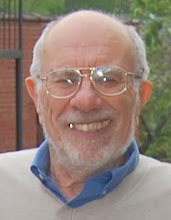
Twenty-six years ago, I visited Cape Town, South Africa for the first time. There I had lunch with the Rector of the University of the Western Cape and his senior staff, among whom was a plump middle-aged man with an engaging manner and a somewhat unclear role at the university. Later, as I was walking across the campus with him, I learned to my astonishment that he had recently come out of prison, where he had spent seven years for spying on a South African nuclear energy plant that was later successfully blown up by ANC commandos. He had been released from prison on condition that someone would give him a job, and UCT had stepped up. He held a doctorate in Politics from Oxford University. That man, Dr. Renfrew Christie, became one of my very closest friends in South Africa, and though I see him only rarely, I think of him as one of my closest friends in the world. He has for many years been Dean of Research at The University of the Western Cape, the university originally created for the Coloured population of the Western Cape and now the leading Historically Black University in South Africa. It is to UWC that I have been sending the money from my charitable organization, University Scholarships for South African Students, for a number of years.
Recently, Renfrew gave the keynote address to a meeting convened to address the subject of judicial torture in South Africa. I reproduce it here exactly as he sent it to me. It is long, and it is deeply distressing, but I urge all of you read it from start to finish.
UNIVERSITY OF THE WESTERN CAPE
DEPARTMENT OF RESEARCH DEVELOPMENT
KEYNOTE ADDRESS
Domesticating the UN Convention against Torture and
the Robben Island Guidelines for the Prevention of Torture in Africa
ARTICLE 5 FORUM
WEDNESDAY & THURSDAY, 13 & 14 NOVEMBER 2013
UWC Community Law
Centre Civil Society Prison Reform Institute
UCT Gender, Health and
Justice Research Unit
University of Bristol
Human Rights Implementation Centre
African Policy and
Oversight Forum
Professor
Renfrew Christie DPhil Oxford, FRSSAf, MASSAf
Dean of Research, University of the Western Cape
Keynote Address to the
Community Law Centre Conference on
The Law of Torture
Domesticating
the UN Convention against Torture
And
the
Robben
Island Guidelines for the Prevention of Torture in Africa
On the evening of 23
October 1979, I had a date to take a fair maiden to dinner. Instead, that
afternoon, I was arrested by eight very large South African policemen.
Perforce, I stood the fair maiden up. Not being stupid, she promptly
disappeared before she too could be arrested. I spent the next seven and a bit
years behind bars. A month or two after my release, I met the fair maiden. She
did not greet me. The kind words, “Hello, how are you?” did not escape her
lips. All she said was, “You’re late!”
I was told by the
police to put on a tracksuit because I had a hard night ahead of me. I put on a
suit and tie. I had been buying crockery for my new flat. I was told I would
never get to use it. Seven years later, I used it with glee!
I was taken to Caledon
Square Police Station where I was forcibly made to stand all night. I was prevented from sleeping, until I wrote
a “confession”, eighteen hours later.
I was then moved to
John Vorster Police Station in Johannesburg.
I was kept there for six months, incommunicado and in solitary
confinement, until I was charged under the Terrorism Act. After being charged, I was moved to the old
Pretoria Central Prison building to await trial, still in solitary, but now in
the condemned cells of what had been the old hanging prison in the time of
Herman Charles Bosman and Cold Stone Jug.
In total, I was in solitary for about
seven months.
In John Vorster Square,
at first I was in a cell sealed with inch-thick transparent Perspex on all the
windows, with a one-inch gap for air. It was very hot in summer. I lost ten
kilograms in weight on the sparse diet they fed me.
But one day they
arrived and moved me to another cell, because the sealed cell was for those who
they really wanted answers from, and they now had a new victim.
During the weekdays,
the Special Branch would take me for showers alone; but over weekends, the
ordinary police were a bit lazy, and saved time by putting people in showers
together.
One weekend I was naked
in a multiple-head shower room, when the new prisoner was put in naked beside
me. Picture two startled men, suddenly together naked in a shower. He screamed:
“I am not a terrorist! I am not a Terrorist! Tell them I am not!” He did not
trust me at first. He thought I was a nark, an impimpi. But over successive
weekends, we were showered together and he came to realise that I too was
accused of Terrorism.
His name was Mordecai
Tatsa. And over the weeks he appeared naked in the showers, each time with more
evidence of gruesome tortures on his body. They beat his feet to the size of
rugby balls. He had rope-burn marks on his neck, where they tightened a noose
until he was nearly strangled, then released it, and then tightened it again.
I could do nothing
except watch in horror, as each week he was in a worse condition. Eventually, I
understand, they had tortured him so badly that they could not put him in front
of even one of their own tame judges. I am told that Mrs Helen Suzman did a
deal by which he was released into twenty-four hour house arrest, provided he
kept his mouth shut about the torture. I have never seen him again.
Also in John Vorster
Square, I could look across a courtyard into cells of ordinary alleged
criminals. One day a policeman had two men handcuffed to each other. He would
hit one hard in the face; then knee the other in the balls; punch the first in
the stomach; then kick the second in the face bent over. He kept at it for some time, clearly trying
to get an answer that did not come. At night, I would hear a young person being
flogged in a cell below me. I would hear feet running up; then the sound of a
cane or whip thrashing a body; and a scream.
This went on and on, seemingly forever, and night after night.
At my “trial”, the onus
of proof was reversed so that I had to prove my innocence. The judge decided to admit my so-called
“confession” as evidence, despite accepting that I was tortured to get it. State
versus Christie was much criticised by the academic lawyers, but it was used
as precedent in later political trials, in which tortured “confessions” were
admitted as “evidence”.
“Terrorism” in 1980 in
South Africa was a capital offence. The headlines on 5 June 1980, around the
world, read something like, “White scientist may face gallows”. The headlines
on 6 June 1980 read: “White scientist escapes gallows.” I was quite pleased
that I was finally not going not to be hanged!
Nevertheless, after the
trial, I was taken from the old hanging prison to the new hanging prison. I was placed on the Death Row closest to the
gallows in the Pretoria Maximum Security Prison, along with five other “white”
male political prisoners, some of whom had been in jail for almost twenty
years. We were not to be hanged. They just wanted us to listen to the hangings.
Over the next two and a half years I listened to perhaps three hundred people
being hanged.
The whole prison would
sing for two or three days before the hanging, to ease the terror of the
victims. “Senzeni-na? Senzeni-na? What have we done? What have we done?” It was
the most beautiful music on earth, sung in a vile place. Then, at zero dark
hundred, the hanging party would come through the corridors to the gallows,
slamming the gates behind them on the road to death. Once they were at the
gallows there was a long pause. Then “crack!” the trapdoors would open, and the
neck or necks of the condemned would snap. A bit later came the hammering,
presumably of nails into the coffins. And another day in Pretoria went on – for
the living. (We were later moved to the re-built Pretoria Security Prison,
where we did not hear the hangings.)
The warders queued to
be members of the hanging party. They put their names down on a list, and
waited impatiently for months or years, till the day came when they could help
to snap a neck. They left a little model of a gallows, with a hanged effigy in
it, in our living space. They gloried in their power; they gloated.
Yet seven of my warders
committed suicide while I was in prison. They were fresh off the farms, “white”
boys chosen for their ideological party. They had been taught that all
authority comes from God, to the State President, to Mammie, Pappie, die
Dominee and die Onderwyser. They had been taught that the big city was a sin;
that sex was a sin; and that all liberals were communists and terrorists who
would rape their sisters.
They discovered that
the big city was nice. Sex was fantastic! (They were eighteen.) And as for those
liberal, communist, terrorist, sister-rapers: we were human. We were not
monsters. They could talk to us. If they were studying, we might help them with
their studies.
They would end up in a
guard tower at minus two degrees Centigrade in a Pretoria winter. Their entire
cosmology had collapsed. Everything they had been taught was false. And their
girlfriend had dropped them, as happens at the age of eighteen. They would put
the rifle barrel into their mouths and pull the trigger.
One poor kid wisely
shot himself in the shoulder. He lay on the floor of the tower, screaming,
“Help me! Help me!” The only people who could hear him were his prisoners. The
International Committee of the Red Cross had insisted that we should have
intercoms, with which to summon help if we were, say, having a heart attack. In
those days we called the warders “Boers”. The problem with the intercoms that
night was that either the Boers had switched them off, or they were not
listening. So the kid lay on the floor of his tower, bleeding until the shift
changed. I think he lived.
During my seven years
in prison I had a wisdom tooth removed. There were twenty Boers in a truck in
front, with rifles. There were twenty Boers in a truck behind, with rifles. I
was in the prison ambulance in leg irons. I was handcuffed to Sergeant Arendse.
Sirens blaring, we screamed from one end of Pretoria to the other, from the
Pretoria Security Prison to the HF Verwoerd Hospital, stopping all the traffic
for my wisdom tooth. At the hospital, the parking lot had been cleared of cars
and was surrounded by armed Boers. There were snipers on the roof of the
hospital. Inside, the passageways were empty, except for Boers with rifles.
The ward had forty
beds, all empty, except mine. Sergeant Arendse put on little green sterile
booties, sterile green trousers, a sterile green smock, and a sterile green
cap. Overall he put his unsterile service pistol in its
unsterile holster. The last thing I saw as I went under the anaesthetic was his
snorr moustache, as he beamed down at me.
Going back to the
prison was the same: sirens, snipers, armed guards by the truckload, and
handcuffed to Sergeant Arendse. I was in pain, and nauseous from the
anaesthetic. I threw up. I vomited all over Sergeant Arendse. I could do
nothing else: we were shackled together!
Today, of course the
Verwoerd Hospital is named for Steve Biko.
We have a democracy; a Constitution; a Bill of Rights; and an
independent judiciary. Nonetheless, we
still have torture. We meet today to work out how to reduce torture; perhaps to
get rid of it entirely, although I believe that is impossible.
What can we learn from
my story, for the laws against torture?
From the depths of
hell, let me assure you that there is no practical difference between “Torture”
and “Other Cruel, Inhuman or Degrading Treatment or Punishment”. I have been
there. I am a witness and a victim. It
is all torture, whatever the silly lawyers say.
Forced standing is
torture; sleep deprivation is torture; bastinado of the feet is torture;
near-strangulation is torture whether it is done with ropes or by
water-boarding; incommunicado is torture; solitary is torture; death row is
torture even if they are not going to hang you.
Death row is torture, all the more so, if they are (or might be) going
to hang you.
Imprisonment itself is
torture, especially indefinite imprisonment. The sexual deprivation implicit in
imprisonment is torture. Whether carried out by prisoners or police or warders,
assault behind bars is torture. Rape in prison is torture. It did not happen to
me; but prison rape of men or women is patently torture. Serious overcrowding
is torture. Gang domination in prison builds up an overwhelming fear and a
paranoia amounting to torture.
The mental effects of
all this are as devastating as the physical effects and both are torture. The
torture goes on for the rest of one’s life, be it short or long. You do not
“get over it”. The terror and the nightmares do not wear off; they do not go
away. I gave my torturers no names; but to this day if you ask me my mother’s
name I will not be able to answer you for twenty-four hours. Moreover, the
effects of torture can be as bad for the torturers as for the tortured. Seven
of my warders killed themselves.
Torture does not work,
as I shall show; but every State on earth today tortures willy-nilly, as they
always have done. Humans have tortured since the dawn of time and they will
torture until the end of time. All we can do is seek by all legal means at our
disposal to diminish it.
In one of my remand
hearings, I was put in a cell with a blond, blue-eyed sixteen year old. While
hitchhiking, he had broken into an empty caravan to sleep. For this he had been
sentenced to a judicial flogging. He was rightly terrified out of his wits. I
think they put me in with him to help to calm him. I could do nothing. He was
about to be judicially tortured, and every lawyer in the land was complicit in
his torture. At least today we no longer officially flog people, but I do not
kid myself that the inmates of our cells do not get “unofficially” thrashed,
bashed or beaten. We have a long way to go.
But if we no longer judicially
flog, we still imprison. The United Nations Convention on Torture says that,
legally, torture “does not include pain or suffering arising only from,
inherent in or incidental to, lawful sanctions to the extent consistent with
the Standard Minimum Rules for the Treatment of Prisoners”. So imprisonment is
torture, unless the imprisonment is a lawful punishment to minimum standards.
Then it is no longer torture, except perhaps in the mind and body of the
prisoner, who undoubtedly thinks it is a torture.
But even if we accept
that lawful, minimum standard imprisonment is somehow necessary and therefore
not torture, the moment we imprison unlawfully, before or after trial, or if we
do not imprison to minimum standards, we are torturing.
Just as every lawyer in
Apartheid South Africa was complicit in the torturing of flogged juveniles, so
today every lawyer in the country is complicit in torture when people are held
awaiting trial for too long; when minimum standards are not met, either for
awaiting trial or for sentenced prisoners; and especially when people are raped
or otherwise assaulted behind bars. And whenever we imprison an innocent person
we commit torture.
If rape is a standard
occurrence in our police and prison cells, then every lawyer in the country is
complicit in that rape. If gross overcrowding is standard in our cells, then
the imprisonment becomes torture and every lawyer in the country is complicit
in that torture. If juveniles are imprisoned with adults, minimum standards are
not met, and the imprisonment becomes torture, in which the whole judicial
system is complicit. Be careful what you wish for. Becoming a legal officer of
the court makes you complicit if the legal system commits torture, as it
undoubtedly does. The better we make our whole justice system, the less torture
we will be committing. That is why we are meeting today.
Torture does not
work. I do not believe the torturers got
anything useful out of Mordecai Tatsa. They ended up with the option of killing
him or of releasing his mangled ruin into house arrest and silence.
In my own case I was
able to use my so-called confession as a way to communicate with my African
National Congress control, to pass on the results of my spying. I put into my
“confession” exactly how I believed the Koeberg Nuclear Power Station could be
attacked with explosives without endangering the people of Cape Town. The idea was to plant the bombs and set them
off just before the radioactive fuel was brought to the site. Bombs on the
reactor heads and in the pipe works would ruin the quality control which is
essential in a nuclear plant. The damage would cost hundreds of millions of
dollars. And so it did.
I treasure a story of a
young lawyer, Penuel Maduna, faxing a copy of my “confession” from Johannesburg
to London. The police arrived as he was
doing so; he put the “confession” in his shirt and clung to the iron work under
the fire escape until the police went away. He ended up Minister of Justice in
the democratic South Africa.
My Judge was kind
enough to read out my whole confession to the press of the world in the
courtroom, including my recommendations to the ANC. Everything I spied on was eventually bombed
or blown up: the Koeberg Nuclear Power Station, Sasol, and other coal fired
power stations. Of course, no spy ever knows how or whether his data is
actually used. I take no blame and I claim no credit. I was just a spy. I
cannot know whether the information I passed back was useful. The heroes were
the Umkhonto we Sizwe cadres who bombed the targets. But what I do know is that
in my case, torture backfired.
The Koeberg Nuclear
Power Station was bombed by the ANC in December 1982, three years after my
arrest, by Rodney and Heather Wilkinson. They got jobs in building the power
station; they hid bombs in their back packs; they placed the bombs where and
when I had recommended; the radioactive fuel was not yet on site; and the bombs
did damage which cost $519 million, in 1982 United States dollars, much as I
expected. Wonderfully the auditors
forced Escom to publish the cost of repairing the damage. Rodney and Heather
later told all this to the Truth and Reconciliation Commission.
My confession had dealt
with my supplying data to the ANC about Sasol. The bombing of the Sasol plants
happened the night before my trial. My lawyer
came into my cell with front page photo in the Rand Daily Mail, of Sasol burning.
There was a plume of smoke going up a hundred thousand feet, almost like
a nuclear explosion. The total cost of the damage to Sasol and to Koeberg and
to the other targets, on which I spied, came to about a billion dollars, US
1982. Other power stations, fired by coal, were mentioned in my confession and
someone blew them up. Even the Calueque/ Ruacana hydroelectric schemes, the
subject of my 1975 UCT master’s thesis, which I had sent to Swapo, was blown up
by someone.
These explosions had
nothing proven to do with me: “it was two other guys and it fell off the back
of a bus”. But I do know in my case that torture was completely
counterproductive. They got an outcome
exactly the opposite of what they wanted.
This all feeds into the
debate about the “ticking bomb” argument, in favour of torture in the United
States. David Luban has written a cogent article destroying the “ticking bomb”
argument, published in 2005 Virginia Law
Review, pages 1425 to 1461. Essentially, it was argued after 9/11 that
torture was justified in a liberal democracy if it could prevent a “ticking
bomb” from exploding and killing people.
Torture the person you think has placed the bomb; you will be told where
it is and you will defuse it in time.
Luban shows beyond reasonable doubt that this argument is nonsense.
The man may be the
wrong man; he may send you to the wrong place even if he is the right man;
tortured people will say anything they think may stop the torture, so they are
unreliable; and so on. You could torture
a thousand innocents and still not get to defuse the bomb. Read Luban
yourselves: he is persuasive that torture
does not work. It certainly was no use to my captors: quite the opposite.
Torture does not work;
but every nation on earth has tortured in my lifetime. Spies were tortured on
both sides of the cold war. NATO soldiers tortured each other on exercises in
the cold war. Police of every nation have beaten so-called “confessions” out of
prisoners. Gangs routinely torture inside and out of prisons. Organised criminals torture the world over. In
prisons, the warders torture the inmates.
The torturers act with impunity. And states do this as policy; or they
turn blind eyes to it; or they secretly connive at it. Torture happened on all sides in all the many
hundreds of wars since 1945, from Korea to Vietnam to the Gulf.
To take just one
example, John T Parry has published a conclusive torture case against the
United States, showing in irrefutable detail that America has tortured from the
beginning of its history to the present. His title says all you need to know:
“Torture Nation, Torture Law”, The
Georgetown Law Journal 2009, Volume
97, pages 1001 – 1056. Torture does not work but all states do it. Impunity
reigns, OK?
Our task today is to
make it possible to reduce torture by using the composite tool which is called
the Domestication and Implementation Package.
We must get co-ordinated action; we must institutionalise collaboration;
we must ensure that research is done; we must increase monitoring across the
board. Governments at all levels and in
all relevant departments; national human rights institutions; and civil society
organisations must be made to work together to reduce torture and to prosecute
and punish torturers. We must work together to prevent torture; to combat
impunity; to bring redress to the tortured and their families; and we must
report properly under the Convention Against Torture and the African Charter on
Human and People’s Rights. As but one of the millions of tortured people, I ask
you to do this, with passion, professionalism and vigour.