Those of you who live in America have no doubt heard about the curious case of George Santos, the newly elected Republican representative from Long Island who appears to have lied about every single element in his biography. I reflected that I have only known one real pathological liar in my life. In the summer of 1953, after I graduated from Harvard, I got a job as a counselor at Camp Winamac, an eight week sleep away camp in the Berkshires. One of the little boys in my cottage was an odd sort who lied about everything. He lied about where he was from, what his parents did, whether he had brothers and sisters, and everything else. He did not seem to do it for any purpose, to gain status or rebut criticism or to claim abilities that he did not have. He simply lied all the time. It was weird and a little creepy. It looks to me as though George Santos may be one of those peculiar characters.
Friday, December 30, 2022


Thursday, December 29, 2022
FUN TIMES
I remain mesmerized by the prospect of chaos in the House of Representatives next Tuesday when the new Congress meets, is sworn in, and attempts to choose a Speaker. There will be 434 representatives (the fourth Virginia district is vacant because of the death of the recently reelected Democrat and will be filled on February 21 in the special election that will almost certainly be won by the Democrats.)
What will happen next Tuesday? There are two possibilities:
the first is that between now and then Kevin McCarthy manages to find something
he has not already given to the crazies in his party that will win one or more
of the five holdouts to his side. The prospect of that happening is, so far as
I can tell, rather dim. The second possibility is that McCarthy, Hakim
Jeffries, and Andy Biggs be nominated. Jeffries will get 212 votes, Biggs will
get five votes or possibly more, and McCarthy will fall short of the 218 he
needs. At that point, another vote will be held (apparently almost
immediately.)
There then seem to be three possibilities: McCarthy will succeed
in bribing one of the five holdouts – perhaps by reinstating the old rule that
a single member of the House can at any time call for a vote on vacating the
chair. The second possibility is that everybody will vote the same in the
second round as in the first. The third possibility, if one is to believe the
rumors, is that someone will nominate Steve Scalise. At that point, I imagine,
Biggs will withdraw and a vote will be held. Jeffries will still get 212 votes,
Scalise will get some number – 50, 75, 100, who knows – and McCarthy will get
the rest. No one will have 218 and yet another vote be called.
I do not think McCarthy is going to bow out and support
Scalise. What is more, my guess is that McCarthy has at least four loyalists
plus himself who will block Scalise from getting the required 218. At this point,
all bets are off. The Democrats are sitting there with an enormous block of 212
votes, and very quietly, guided by the wisdom and experience of Nancy Pelosi,
Jeffries will be meditating about whether there is some move the Democrats can
make.
There are 19 Republicans who won their seats in districts that
Biden carried in the presidential election. They are not likely to want a total crazy as Speaker. Furthermore, we must remember that
the Speaker does not have to be a member of the House. I simply have no idea
how this is going to play out, but remember, until a Speaker is chosen,
committee chairs cannot be appointed and so Jim Jordan cannot launch his 24
hour a day investigation of Hunter Biden.
My plans for January 3 include a supply of candied popcorn
and a soft cushion.
HERE I STAND - A REPLY TO MARC SUSSELMAN
Marc Susselman writes: “Prof. Wolff, I don’t want to be a nag, but I have raised this question several times, and it is one of the big questions to which you have alluded in the past: On what basis does one decide on what side one should be on? If one does not deduce it syllogistically, and one does not intuit it, how does one make that decision, and if it is based on one’s gut feeling, how does that differ from intuiting it?”
I hesitated to respond to this question because I have
talked about it so often in the past but if you wish, I shall repeat here what
I have said in various ways and in various places.
Let me begin almost 60 years ago. When I wrote In Defense of
Anarchism in the summer of 1965 (not published until five years later) I
assumed without much thought the truth of Kant’s claim that there is a
fundamental principle of morality knowable by reason alone and valid for all
moral agents as such. Having been hired by Columbia to teach ethical theory, I
lectured each year on the subject, devoting considerable attention to Kant’s
great work the Groundwork of the Metaphysics of Morals. Having found – or so I
believed – an argument in the First Critique for the causal maxim, I searched
in vain in the bowels of the Groundwork for an argument for the validity a
priori of the fundamental principle of morality.
In the spring of 1968, when I was traveling to New Brunswick
twice a week to teach as a visitor at Rutgers University (it was there that
Marc studied with me), students at Columbia occupied several buildings to
protest both Columbia war work and her plan to take a portion of Morningside
Park to build a new gym which would not be open to the residents of Harlem
(protests that I strongly and publicly supported.) The next semester, I was
back to lecturing on ethical theory, struggling unsuccessfully with the
Groundwork. One day (a story I have often told) a student in the class who had
been active in the building occupations stopped me after class to ask why it
was so important to me to find that argument in Kant. I answered that if I
could not find such an argument, then I would not know what to do. As I have
often reported, he looked at me rather like a parent looking at a much loved
but not very bright child, and said “first you must decide which side you are
on. Then you will be able to figure out what to do.”
At the time, I dismissed this as undergraduate ignorance and
continued my fruitless quest for an argument in Kant’s writings that would
support his claims for his fundamental moral principle. Eventually, five years
later, I published a commentary on the Groundwork in which I acknowledged my
inability to find a satisfactory argument in Kant’s writings.
As the years went by, I came to recognize the deep wisdom of
the undergraduate’s observation. I came to the conclusion that each of us in
life is confronted with a choice – not a conceptual problem, but a choice.
Each of us must decide which side he or she is on. This is a genuine life
choice, not a temporary substitute while we search for an argument. Am I on the
side of the exploited or on the side of the exploiters? Am I on the side of
the oppressed or on the side of the oppressors?
The unavoidable and stark reality of this choice was brought
home to me forcefully in my 1986 visit to South Africa. During my six weeks
there, teaching the thought of Karl Marx to undergraduates at the University of
the Witwatersrand, I traveled one day to Pretoria and had dinner that evening
with Koos Pau, a professor of philosophy at Rand Afrikans Universitat
(RAU). Pau was on leave from his
professorship to serve as the number three man in the education division of the
apartheid government. He was intelligent, well read, knowledgeable – rather
like a sophisticated Nazi. It was obvious to me that there was no argument I
could give to persuade him that he was on the wrong side of the barricade and
it was equally obvious, in South Africa at that time, that which side you were
on was the most important decision you could make.
So it is, that for the last half-century or so I have
embraced the view that one’s fundamental political commitments are a matter of
life choice, not philosophical argument. I am sure there are many reading this
you will find what I say unsatisfactory and who will insist that if I have no
better argument than that, then I really have no argument at all.
So be it.
Wednesday, December 28, 2022
OLD THOUGHTS FROM AN OLD MAN
Thank you all for your birthday wishes. They warmed my heart.
As I look back over my long life, I find that I have spent
most of my time thinking about eight or ten big questions, to which I return
again and again. The first big question I tackled was my attempt to find a straightforward,
coherent argument in the Critique of Pure Reason that began with a premise that
David Hume could not consistently deny and led by simple logical steps to a
proof of the causal maxim. I found that argument, at least in a form that
satisfied me, a little less than sixty-three years ago and set it forth three
years later in my first book, Kant’s Theory of Mental Activity.
One of the earliest questions to which I have not found a
satisfactory answer to this day can be stated simply in this fashion: Given the
world as it is, not as we wish it would be, what ought the foreign policy of
the United States to be? It is easy enough to criticize what the United States
does and to call out the hypocrisy of its public pronouncements. I did that
publicly for the first time almost 62 years ago when I chaired a Cuba Protest
Rally at Harvard (an event that got somewhat less local attention than I had hoped
because it coincided with a student protest of Harvard’s decision to print its
diplomas in English rather than in Latin,) and I have been doing it ever since.
That takes very little knowledge or courage or thought. But then when I ask
myself, What ought the foreign policy of the United States to be? I find myself
torn and uncertain.
I am not asking what minor tweaks or adjustments in America’s
foreign policy I would like to see a Democratic administration make. Nor am I interested
once more in assigning blame – Lord knows there is plenty to go around. No, I
am asking a deeper and more difficult question: given all the facts on the
ground as they are, and leaving entirely to one side the possibility of
actually putting such a policy into effect, what ideally should the foreign
policy of the United States be right now?
Speaking broadly, I can see three possibilities. The first
is what I think of as the Luxembourg or Swiss policy: the United States could
withdraw all its troops back within its borders, dramatically reduce the size
of its military budget, withdraw from all “entangling alliances,” and as it
were mind its own business. If countries want to invade one another, engage in
extensive slaughter, deny the rights of women or gays, or Christians, or Jews,
or Muslims, or Hindus, overthrow democratic regimes and replace them with
autocratic regimes and do all manner of other evil things, that is their own
business so long as they do not threaten the territory of the United States and
its citizens.
The second possibility is what I think of as the modern
Monroe doctrine: United States carves out a portion of the world – let us say,
North, Central, and South America, and declares that so long as the rest of the
world keeps its hands of this territory, it can do as it wishes.
The third possibility would be some form of progressive
militaristic interventionism: using the enormous military power of the United
States for what I think of as good rather than what I think of as evil.
As I say, it is easy to expose the hypocrisy and dishonesty
of the US government in all of its Democratic and Republican iterations. But
doing that does not answer the question, What ought our foreign policy and
military policy to be?
I simply do not know what I think.
Tuesday, December 27, 2022
UPDATE
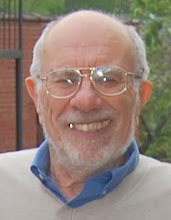
Today I enter on my ninetieth year, which is to say I am eighty-nine. There are number of things I want to say, but first things first. When I created this blog many years ago, I put a rather dorky picture of myself on it. There is a better picture of me on my Wikipedia page – it makes me look rather like an old KGB operative. Well, I trimmed my beard this morning and here is what I look like at the age of eighty-nine.

Wednesday, December 21, 2022
AS PAUL NEWMAN SAYS TO ROBERT REFORD IN THE STING, IT WON'T BE ENOUGH, B UT YOU MUST TAKE IT AND WALK AWAY
I have always hated this time of year, an endless series of four-day weekends and forced jollity. As I approach my 89th birthday in just six days, I have taken to protecting myself by meditating on three upcoming events in which I shall take a great and mean-spirited pleasure: Kevin McCarthy’s hopeless struggle to become Speaker of the House, the report of the special grand jury to the Fulton County DA in Georgia, which with any luck will lead to the indictment of Trump, and the coming to fruition of the Justice Department’s investigation of the stolen classified documents case. These are terrible times and one must take one’s pleasures where one finds them.
Saturday, December 17, 2022
WHAT IS NEXT?
At first, I proposed teaching a graduate course in the UNC philosophy department called “The Use and Abuse of Formal Methods in Political Philosophy.” The department said they did not have the money for such a course, so I suggested a series of non-credit lectures in the department this spring. There was a good deal of interest in that idea, but then the question arose of finding me a handicap accessible room and a graduate student who could assist me with various technical matters. A student volunteered, but all the room assignments are frozen until after the first week of the semester in January. I do not yet know whether I will be able to offer the lectures.
So I sit and wait.