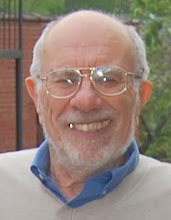
From the outset, I imposed strict guidelines on the selection of recipients of the USSAS bursaries, which have, with one revision, continued to the present day. There are six principles:
1. All recipients must be Black, which in South African terms means African, Indian, or Coloured. At Durban-Westville, an historically Indian school in transition to a majority African student population, we made an effort to balance the races, but there were very few Coloured students attending UDW.
2. We must strive for gender balance. This was rather easy to accomplish, and in fact over time, a slight majority of women over men have received awards.
3. We should try to strike a balance between urban and rural students. This has proved very difficult to achieve, and in fact, because of the bizarre distortions of population distribution imposed by the apartheid regime, has proved impractical.
4. We are NOT trying to identify the very best students. This is not a merit based program. In light of the stringent filter of the Matric system, I assume that every student who is eligible for admission to a university is capable of succeeding, given a decent chance. One sees here the influence of my American experience, and my long-standing hostility to the elitist system of university admissions in this country. [For an extended defense of this prejudice, see http://people.umass.edu/rwolff/esther.pdf ] With our limited funds, we support the first students who apply, so long as they fit the guidelines and genuinely cannot continue in school without our help. Unfortunately, there is ever a shortage of students who fit this profile.
5. If one of our bursary recipients manages to do well enough in the end of year examinations to be permitted to return the next year, he or she will automatically receive a bursary, assuming that I am successful in raising the necessary money. This is one of the most important decisions I made in setting up USSAS, and seems to have played a very large role in the striking success of our USSAS scholars. I shall talk about it more below.
6. Finally, six or seven years ago, in response to the horrific HIV/AIDS epidemic in South Africa [the latest figures are that 20% of the population is HIV positive], I shifted the focus of USSAS, and decided to require that bursary recipients be involved in the struggle against HIV/AIDS in some way or other. In practice, this has meant supporting a group of students in the Child and Youth Development Program at Durban University of Technology who are being trained to work with street children and other young people who are HIV positive or have been affected by the epidemic [for example, by losing a parent to the disease], and also requiring the students I support at the University of the Western Cape to be involved in the extraordinary HIV/AIDS awareness and prevention program run on that campus by Dr. Tania Vergnani -- arguably the best such program in the country.
This is a good place to share a bit of wisdom that I have gained from my twenty years of experience with USSAS. I am a philosopher, and for the first thirty-four years of my half century in the Academy, I taught philosophy at the undergraduate and graduate level, and wrote books of philosophy. Now, what philosophers do is think -- no fieldwork, no lab work, not even much in the way of library research [my books are notorious for their lack of footnotes.] Very quickly, one learns as a philosopher that so long as all you are doing is thinking, you might as well think big. So philosphers do a lot of thinking about God, about the universe, about Being, about possible worlds in addition to the actual one. The idea of Everything, it turns out, weighs no more than the idea of Something. Neither one involves any heavy lifting. However, as soon as you try to make a difference in the world, you learn that it takes a great deal of effort to make a tiny difference, and a great deal more to make a slightly bigger difference.
All of this came home to me very quickly once USSAS was up and running. In our very best year, thanks to a complicated deal that Prem struck with the UDW administration for cost sharing, we were able to help maybe 120 young Black men and women. Now 120 students gathered in a room looks like a lot of people, but that is really so small a number that it does not even constitute a blip in the South African national figures on numbers if Black students at universities. Even after twenty years, the 1400 or so students we have helped constitute a tiny fraction of all the Black students who have gone to university in South African in that time, and an even tinier fraction of all the young people who were eligible to go, let along those who had the talent and the ability, but not the Matric Exemption. All that folding and stuffing, merge printing and sealing and stamping, all those trips to South Africa, all those thank you letters banged out on my home computer, and from a philosophical perspective, precious little to show for it. It would have helped, of course, to be religious. After all, if eternal bliss is in the offing, what is a slog through a pile of mailing materials? But absent the comfort of faith, I have found that I must learn to be satisfied with the knowledge that at the end of the day, there are identifiable young people in South Africa who would not have gone to university were it not for my meager efforts. You see, while the Thought of Somebody is very little, in the presence of the Thought of Everybody, a real person, even just one, is very significant. Indeed, one actual person, no matter how insignificant, is more important than all of the philosophical ideas ever thought.
To keep this lesson vividly before my mind, I found it helpful on my infrequent trips to South Africa to spend time meeting with the students USSAS was helping. These meetings at Durban-Westville, then at Cape Technikon, UWC, MEDUNSA [The Medical University of South Africa, the only Black medical school], and the Qwa Qwa Campus of the Univefsity of the North, were always the high points of my South African trips.
The first thing I learned, not surprisingly, was that the students, scorned by the faculty as unprepared and even stupid, were fluent in three, four, five or six languages. Now, I must explain that I am, as we say delicately, linguistically challenged. I have, I flatter myself, a complete mastery of English, but my French is execrable despite my many trips to Paris, and my German is almost non-existent [a painful admission for a Kant scholar who has also written two books about Karl Marx.] A typical USSAS student was a very serious young woman at UDW, Benedict Zhivani, who was studying for the Ll. B. degree. I was chatting with her in English, needless to say, and I asked her what languages she spoke. "English," she replied with a smile, "and Afrikaans [which, incidentally, is required by anyone seeking to argue before a South African court], and French, and Zulu, oh, and Latin." In the United States, this alone would have been enough to earn her admission to Harvard, but at UDW, she was considered a marginal student at best because her English was a little rusty. A young man, asked the same question, replied "English, and Zulu, and Sotho, and of course. Xhosa." "Why of course?" I asked. "Well," he replied, "Zulu and Xhosa are almost the same language." I must have looked a trifle surprised, because he undertook to demonstrate the fact. He pronounced a word in Zulu. He then pronounced a word in Xhosa that to my untutored ear sounded utterly different. "You see?" he said, as though talking to an idot or a child. "They are the same."
There were less happy moments, enough to bring me to tears. Prem came to me on one visit with a special case -- a young woman who had applied for a USSAS bursary after all of the regular money had been allocated. Her mother was the sole support of an extended family, working as a household maid for pathetic wages. The young woman had no money at all for food or lodging, and had somehow put together enough for the registration fee. [Keep it in mind that she had earned a Matric Exemption, placing her in perhaps the top 2% of her age cohort. Without it, she would never have come to our attention at all.] She was sleeping on the floor of a friend's room, and subsisting on scraps brought back from the student dining room. Could we find the money to pay enough of her remaining tuition fees so that she could stay in school? Of course I said yes. She didn't make it, flunking out at the end of the year. But as I explained to Prem, that was perfectly all right. We had done the right thing. The purpose of USSAS was to give young men and women like her a chance, not to restrict ourselves to students who were sure to succeed.
Tomorrow: USSAS responds to the changing South African situation.
Showing posts with label South Africa. Show all posts
Showing posts with label South Africa. Show all posts
Friday, August 21, 2009


Thursday, August 20, 2009
SOUTH AFRICAN HIGHER EDUCATION PART V
USSAS IS BORN:
To create a scholarship organization that could help poor Black students in South Africa to get a university education, I needed to do four things: Choose a name for the organization, get it declared a tax-exempt charitable organization by the IRS, find someone in South Africa who was willing to select the scholarship recipients and look after them, and then RAISE SOME MONEY.
Susie and I mulled over a good name for the new organization. During our trips to South Africa [she had accompanied me several times, once to Botswana for a Sanctions conference and again to South Africa for a trip to Kreuger], we had noticed that many of the pro-liberation groups had similar sounding acronyms, because they all had the letters "SA" in them: NUSAS, COSATU, SASCO, and so forth. We finally came up with University Scholarships for South African Students, or USSAS, which had a very South African ring to it.
One of the lawyers who had given us informal advice during our trial led me through the paperwork involved in applying for tax-exempt status under Section 501(c)(3) of the Tax Code [hence the familiar phrase, "a 501(c)(3) organization."] I intended to do all the work myself, but the law required that I list a Secretary and a Treasurer, in addition to myself as President, so I put down Susie's name as Secretary and an old HRAAA comrade, Joel Krieger, as Treasurer. Very quickly, I received a letter from the IRS granting USSAS provisional status as a tax-exempt organization. Permanent status would not come for several years.
On my next trip to South Africa, I made a grand circle of the country, starting in Johannesburg, and moving on to Cape Town, Alice [home of Fort Hare], Umtata, Durban, and back to Johannesburg. It was in Durban that I found my in-country coordinator. Prem Singh was a Lecturer in Political Science at the University of Durban-Westville. Husband of Mala Singh, Prem was a slender man of forty or so who was deeply committed to the well-being of his students, and willing to take on the responsibility of managing the South African side of USSAS, assuming that I could raise some money. Prem died some years ago, very suddenly, of a heart attack, and I have not, until now, had the opportunity to testify publicly to the absolutely essential role he played in the growth and success of USSAS. It was not merely a matter of choosing the scholarship recipients, although that was obviously crucial. Prem had to negotiate the Byszantine complexities of the South African banking system to set up the account into which the money would be transferred, and --equally tricky -- to get it out again at the appropriate time and transfer it to the proper account at the University. Prem served as the unofficial Mentor and Advisor to the student bursary recipients, who quickly came to number well over one hundred a year. He put me up in his home each time I came to Durban, and took me in charge as I visited the students, the new Rector, Jairam Reddy, members of the faculty, and also the townships surrounding Durban. My relationship with the students, inevitably, was distant and episodic, but Prem's was intimate and daily. As my story unfolds, it will become clear how central his role was over the early and middle years of USSAS.
So, everything was in place, but I still had no money. What to do? My only experience with fund-raising was my stint as HRAAA Executive Director, and that had been through mailings, so I decided to assemble the largest list I could of potential donors and send out letters. I had the HRAAA list still installed on my computer, and a Boston-based anti-apartheid organization agreed to lend me part of their list [all but the big donors], so that was a start. But since it seemed to me that academics were my best target population, I decided to buy sets of mailing labels from six or seven academic professional associations -- the American Philosophical Association, the American Economics Association, the American Sociological Association, and so forth. The next step was to draft an appeal letter and get famous members of each association to sign the letter to their colleagues. A sheltered workplace in Boston would handle the task of folding and stuffing and labeling the letters, for not too much money. In all, I planned a mailing of about 85,000 letters. [The number of American academics is vast -- something that is completely outside the experience of their South African colleagues.]
Sam Bowles actually managed to persuade a group of Nobel laureates in Economics to sign, including Paul Samuelson, Kenneth Arrow, and future laureate Amartya Sen. I rounded up some philosophers, but ran into an odd problem when I tried to recruit John Rawls. Rawls and I knew one another, of course. We had been colleagues for a year at Harvard, when I was an Instructor and he a visiting professor from MIT. And he had actually had dinner at my home on two occasions, one in Northampton and the other in Belmont. But the letter I had drafted said that we were aiming to help "poor Black South African students who have been active in the struggle against apartheid," and the world's leading expert on social justice thought mentioning participation in the struggle was a bit too strong, so he declined to sign. [Rawls didn't like me, and I have often wondered whether that was the real reason for his refusal.]
Out went the 85,000 letters, and I waited anxiously for the returns. My expectations were absurdly overblown. How could any members of the Economics profession turn down a request from Samuelson, Arrow, and Sen?, I thought. In fact, experienced fundraisers will tell you that a 1% response to a letter of that sort is considered very good. In the end, I did a bit better than 1%, and managed actually to cover the cost of the mailing. No money yet for students, but I now had more than 1,000 people who had given once, and might be persuaded to give again. I was on my way. From then on, Susie and I did the mailings ourselves, at first twice a year and then later once a year.
Putting together a mailing for a thousand people is a rather complicated process, at least for someone with my limited computer skills and a modest PC. The donors were on a database -- a small program at first, later on Excel. Some of the letters would go to one person [Professor so and so], some to two people [Professor So and So and his wife, Professor So and So. Very early on, I learned the dangers of assuming that the wife or husband of the person on my list was NOT also an academic]. Some folks had one address, some two [i.e., Apartment X, or whatever]. And some people would be addressed as Dear Professor --- while others, whom I actually knew personally, would be address Dear Firstname. Thus, there were eight possible permutations, and therefore eight sub-lists to be broken out. [I know, I know, you are supposed to be able to do all of this at once with filters and sorts and if then statements, but I never figured out how to do it, and so twenty years later I am still going through the same tedious process.] Then, using my desktop printer, which can hold ten envelopes max, I had to generate eight sets of envelopes, taking care to keep them in alphabetical order. After this, I would write the appeal letter, limiting myself [for reasons of weight and postal costs] to two sides of one sheet. I would make two versions, one signed with my full name, the other [to be sent to the people I knew] signed "Bob." These would be xeroxed up, and then merge printed with the address and the saluation being inserted from one or the other of the eight files. Now we were ready to fold and stuff. Each Number 10 envelope got a letter, a return envelope [number 9], and a contribution card with suggested donation levels. [It was a major move when, after some years of offering donors a minimum contribution of $35, I dropped that and made $50 the minimum.] With a wet sponge, the letters had to be sealed, and then finally stamped. A thousand letters actually fills up several pretty big cardboard boxes. They would go off to the mailbox [or several mailboxes -- you can't stuff one thousand fat envelopes into the standard curbside mailbox.]
Tomorrow: We start offering scholarships.
To create a scholarship organization that could help poor Black students in South Africa to get a university education, I needed to do four things: Choose a name for the organization, get it declared a tax-exempt charitable organization by the IRS, find someone in South Africa who was willing to select the scholarship recipients and look after them, and then RAISE SOME MONEY.
Susie and I mulled over a good name for the new organization. During our trips to South Africa [she had accompanied me several times, once to Botswana for a Sanctions conference and again to South Africa for a trip to Kreuger], we had noticed that many of the pro-liberation groups had similar sounding acronyms, because they all had the letters "SA" in them: NUSAS, COSATU, SASCO, and so forth. We finally came up with University Scholarships for South African Students, or USSAS, which had a very South African ring to it.
One of the lawyers who had given us informal advice during our trial led me through the paperwork involved in applying for tax-exempt status under Section 501(c)(3) of the Tax Code [hence the familiar phrase, "a 501(c)(3) organization."] I intended to do all the work myself, but the law required that I list a Secretary and a Treasurer, in addition to myself as President, so I put down Susie's name as Secretary and an old HRAAA comrade, Joel Krieger, as Treasurer. Very quickly, I received a letter from the IRS granting USSAS provisional status as a tax-exempt organization. Permanent status would not come for several years.
On my next trip to South Africa, I made a grand circle of the country, starting in Johannesburg, and moving on to Cape Town, Alice [home of Fort Hare], Umtata, Durban, and back to Johannesburg. It was in Durban that I found my in-country coordinator. Prem Singh was a Lecturer in Political Science at the University of Durban-Westville. Husband of Mala Singh, Prem was a slender man of forty or so who was deeply committed to the well-being of his students, and willing to take on the responsibility of managing the South African side of USSAS, assuming that I could raise some money. Prem died some years ago, very suddenly, of a heart attack, and I have not, until now, had the opportunity to testify publicly to the absolutely essential role he played in the growth and success of USSAS. It was not merely a matter of choosing the scholarship recipients, although that was obviously crucial. Prem had to negotiate the Byszantine complexities of the South African banking system to set up the account into which the money would be transferred, and --equally tricky -- to get it out again at the appropriate time and transfer it to the proper account at the University. Prem served as the unofficial Mentor and Advisor to the student bursary recipients, who quickly came to number well over one hundred a year. He put me up in his home each time I came to Durban, and took me in charge as I visited the students, the new Rector, Jairam Reddy, members of the faculty, and also the townships surrounding Durban. My relationship with the students, inevitably, was distant and episodic, but Prem's was intimate and daily. As my story unfolds, it will become clear how central his role was over the early and middle years of USSAS.
So, everything was in place, but I still had no money. What to do? My only experience with fund-raising was my stint as HRAAA Executive Director, and that had been through mailings, so I decided to assemble the largest list I could of potential donors and send out letters. I had the HRAAA list still installed on my computer, and a Boston-based anti-apartheid organization agreed to lend me part of their list [all but the big donors], so that was a start. But since it seemed to me that academics were my best target population, I decided to buy sets of mailing labels from six or seven academic professional associations -- the American Philosophical Association, the American Economics Association, the American Sociological Association, and so forth. The next step was to draft an appeal letter and get famous members of each association to sign the letter to their colleagues. A sheltered workplace in Boston would handle the task of folding and stuffing and labeling the letters, for not too much money. In all, I planned a mailing of about 85,000 letters. [The number of American academics is vast -- something that is completely outside the experience of their South African colleagues.]
Sam Bowles actually managed to persuade a group of Nobel laureates in Economics to sign, including Paul Samuelson, Kenneth Arrow, and future laureate Amartya Sen. I rounded up some philosophers, but ran into an odd problem when I tried to recruit John Rawls. Rawls and I knew one another, of course. We had been colleagues for a year at Harvard, when I was an Instructor and he a visiting professor from MIT. And he had actually had dinner at my home on two occasions, one in Northampton and the other in Belmont. But the letter I had drafted said that we were aiming to help "poor Black South African students who have been active in the struggle against apartheid," and the world's leading expert on social justice thought mentioning participation in the struggle was a bit too strong, so he declined to sign. [Rawls didn't like me, and I have often wondered whether that was the real reason for his refusal.]
Out went the 85,000 letters, and I waited anxiously for the returns. My expectations were absurdly overblown. How could any members of the Economics profession turn down a request from Samuelson, Arrow, and Sen?, I thought. In fact, experienced fundraisers will tell you that a 1% response to a letter of that sort is considered very good. In the end, I did a bit better than 1%, and managed actually to cover the cost of the mailing. No money yet for students, but I now had more than 1,000 people who had given once, and might be persuaded to give again. I was on my way. From then on, Susie and I did the mailings ourselves, at first twice a year and then later once a year.
Putting together a mailing for a thousand people is a rather complicated process, at least for someone with my limited computer skills and a modest PC. The donors were on a database -- a small program at first, later on Excel. Some of the letters would go to one person [Professor so and so], some to two people [Professor So and So and his wife, Professor So and So. Very early on, I learned the dangers of assuming that the wife or husband of the person on my list was NOT also an academic]. Some folks had one address, some two [i.e., Apartment X, or whatever]. And some people would be addressed as Dear Professor --- while others, whom I actually knew personally, would be address Dear Firstname. Thus, there were eight possible permutations, and therefore eight sub-lists to be broken out. [I know, I know, you are supposed to be able to do all of this at once with filters and sorts and if then statements, but I never figured out how to do it, and so twenty years later I am still going through the same tedious process.] Then, using my desktop printer, which can hold ten envelopes max, I had to generate eight sets of envelopes, taking care to keep them in alphabetical order. After this, I would write the appeal letter, limiting myself [for reasons of weight and postal costs] to two sides of one sheet. I would make two versions, one signed with my full name, the other [to be sent to the people I knew] signed "Bob." These would be xeroxed up, and then merge printed with the address and the saluation being inserted from one or the other of the eight files. Now we were ready to fold and stuff. Each Number 10 envelope got a letter, a return envelope [number 9], and a contribution card with suggested donation levels. [It was a major move when, after some years of offering donors a minimum contribution of $35, I dropped that and made $50 the minimum.] With a wet sponge, the letters had to be sealed, and then finally stamped. A thousand letters actually fills up several pretty big cardboard boxes. They would go off to the mailbox [or several mailboxes -- you can't stuff one thousand fat envelopes into the standard curbside mailbox.]
Tomorrow: We start offering scholarships.
Sunday, August 16, 2009
SOUTH AFRICAN HIGHER EDUCATION
This morning, I begin a several part blog posting on the scholarship organization I founded nineteen years ago, called University Scholarships for South African Students [USSAS]. For more information about USSAS, and pictures of and stories about some of the students who have been helped by USSAS, you can go to http://www.ussas.com/ .
I am going to start with a rather long account of the history and structure of South African higher education, which is very different from the American variety, so that you can understand exactly why USSAS was needed, and what it does.
I hope the readers of this blog find this interesting. It is, like my multi-part essay on the ideal college, a break from the political commentary that has taken up much of the space on this site since I started blogging.
By the way, Susie and I just saw the new Meryl Streep movie, Julie and Julia, which is, of course, a delight. Julia Childs fans will enjoy it for Streep's dead accurate portrayal of the inimitable Ms. Childs, but I was also taken by the story of the young woman [played by Amy Adams] who blogged her way out of an early life stalemate by undertaking in one year to make, and to write about, every single one of the more than 500 recipes in Childs' classic book, Mastering the Art of French Cooking. A great inspiration to apprentice bloggers.
At first, Blacks were permitted to work only in the most menial of jobs, and an ideological justification was developed according to which they were intellectually incapable of work requiring more sophisticated understanding, or even literacy. A national system of Bantu schools, so called, was created to provide primary education for Black children, and Teachers' Colleges were set up to train the Black women who would serve as teachers in the Bantu schools. Drawing yet again on distorted and corrupted versions of Continental Philosophy, the Afrikanns intellectuals who served as rationalizers for the apartheid system developed an educational theory, called Fundamental Pedagogics, to justify the stringent discipline and rote learning imposed on the students in the Bantu schools.
Eventually, however, as the economy grew, and the White population shrank as a proportion of the total population, it became clear that some sort of higher education was going to be required to prepare the non-White population for a productive role in the economy, and so a number of new universities were created, along strictly racially segregated lines. By this time, there were thirteen separate Departments of Education in South Africa -- one for White schools, one for Indian schools, one for Coloured schools, and one in each of the ten Homelands. The Whites already had their universities. For the Indian students, the Univetsity of Durban-Westville was created, with a White Rector, of course, but eventually with some Indian as well as White academics. For the Coloured students, the University of the Western Cape was established in Bellville, a community not far outside of Cape Town itself [and quite near the airport, as it happens]. For the Black students, a university was created in each of the ten Homelands, ostensibly funded by the puppet Homeland government, but actually supported by the central government. Thus, there came into being a University of Zululand, a University of the North, a University of Venda, and so forth. Inasmuch as the entire South African governmental system was a vast works project for otherwise idle White South Africans, not surprisingly the Homelands university system became a place to locate politically connected Whites with marginal claims to academic qualifications.
Along with this now quite complex system of universities, there also existed a system of Technikons, modeled on the Continental rather than British system, in which a cross between technical and vocational subjects were taught. Parallel to the White Technikons, there now came into existence a number of racially segregated Technikons for Indian, Coloured, or Black students.
This, in somewhat simplified form, was the situation with regard to tertiary education in 1990, when the ANC was unbanned, Nelson Mandela and his colleagues were freed from Robben Island, and the process of transition to a free South Africa began. It is the situation I found when I first travelled to South Africa in 1986.
Tomorrow: The curriculum, admissions, and the academic structure of South African university education.
I am going to start with a rather long account of the history and structure of South African higher education, which is very different from the American variety, so that you can understand exactly why USSAS was needed, and what it does.
I hope the readers of this blog find this interesting. It is, like my multi-part essay on the ideal college, a break from the political commentary that has taken up much of the space on this site since I started blogging.
By the way, Susie and I just saw the new Meryl Streep movie, Julie and Julia, which is, of course, a delight. Julia Childs fans will enjoy it for Streep's dead accurate portrayal of the inimitable Ms. Childs, but I was also taken by the story of the young woman [played by Amy Adams] who blogged her way out of an early life stalemate by undertaking in one year to make, and to write about, every single one of the more than 500 recipes in Childs' classic book, Mastering the Art of French Cooking. A great inspiration to apprentice bloggers.
I. The South African Higher Education System -- Some History and Background
The South African higher education system is a typical colonial education system, on to which have been imposed two distorting influences: the existence of two dominant colonial languages, Afrikaans and English, rather than one, and the complex system of racial segregation and domination known by its Afrikaans name, apartheid. When the two colonizing populations, one from Holland and the other from England, combined to form the modern Republic of South Africa, two groups of universities were established, one using Afrikaans as its language of instruction, the other using English. The first institution established was The University of South Africa, or UNISA, which was, and remains today, a correspondence or distance learning institution. The other universities started life as campuses associated with UNISA, although fairly quickly they gained independent status. Virtually all of the educational institutions in South Africa, until very recently, have been state supported, though the historically White universities, both Afrikaans and English, have very sizeable endowments. With the exception of UNISA, which now has more than 100,000 students, all of the South African unversities are small by American standards -- six or seven to fifteen thousand students, more or less.
In addition to the English and Afrikaans universities, one university was established very early on to educate Black students -- Fort Hare University, in what used to be called the Ciskei [meaning, literally, "this side of the Kei River -- the other side of the river was known as the Transkei.] Nelson Mandela was educated there, as were many of the men who eventually become leaders of sub-Saharan African nations after the post World War II wave of liberations.
The entire university system is not large, by American standards -- sixteen universities or so. The University of the Witwatersrand, or Wits, and the University of Cape Town, or UCT, are the leading English language historically White universities, and the University of Pretoria and Stellenbosch University are the principal Afrikaans language historically White universities. There is considerable competition among them to determine which is the academically best campus, with all of them fervently and mistakenly believing that they are the equivalents of Oxford and Cambridge, or Harvard and Berkeley. In fact, the strongest universities in South Africa can plausibly be compared with second tier State Universities in the United States -- UMass, UConn, maybe Ohio State, but probably not Michigan State, and certainly not UCLA or Berkeley.
In 1949, the Nationalist Party came to power in South Africa, and a wide-ranging system of racial laws was put into effect formalizing, and also very much complicating, the segregation and exploitation that already existed somewhat more informally. Underlying the laws was a pseudo-philosophical theory of racial identity, claiming to find its intellectual rationale in the phenomenological school of thought established by Edmund Husserl. The people of South Africa, it was claimed, formed a collection of racial, cultural, linguistic, and intellectual unities that ought to be kept separate and permitted to develop, each in its own unique manner. In addition to the Afrikaans and English people, twelve other groups were identified. The first was the large number of descendants of the Indian workers who had been brought to South Africa in the nineteenth century to work in the sugar plantations on the Indian Ocean coast of Southeastern South Africa. This population, numbering more than one million, is native English speaking, and had maintained relatively few ties with the old country. The second group was the descendants of intermarriage between the Dutch settlers and the indigenous population of the Western Cape area. This population, called Coloured in South Africa, was [and remains to this day] Afrikaans speaking, and is located primarily in and around Cape Town. The other ten groups are indigenous African people, differentiated primarily by their languages -- Zulu, Xhosa, Sotho, Tswana, Venda, Ndebele, and so forth.
A vast and extremely cruel program of relocation was undertaken to sort the African peoples into their "natural homelands." Ten quasi-independent nations were created, with puppet governments and ostensibly traditional lands carved out of the agriculturally least valuable farmlands and rural areas of South Africa, and individuals were required by official Boards, set up to determine their "true" ethnicity, to relocate to those areas, in many cases tearing families apart.
The Indian, Coloured, and African populations were forced into townships separate from the White cities that they served as pools of cheap labor. Stringent Pass Laws and Group Areas Acts made it a crime for a non-White person to be found within a White city after sundown, forcing the people who performed menial labor in the cities to travel each day to and from the townships. Since huge numbers of African men were required in the mines and the factories on which South Africa's growing wealth depended, single-sex hostels were built near the work sites, and the men were permitted several times a year to return to the Homelands to see their wives and children.At first, Blacks were permitted to work only in the most menial of jobs, and an ideological justification was developed according to which they were intellectually incapable of work requiring more sophisticated understanding, or even literacy. A national system of Bantu schools, so called, was created to provide primary education for Black children, and Teachers' Colleges were set up to train the Black women who would serve as teachers in the Bantu schools. Drawing yet again on distorted and corrupted versions of Continental Philosophy, the Afrikanns intellectuals who served as rationalizers for the apartheid system developed an educational theory, called Fundamental Pedagogics, to justify the stringent discipline and rote learning imposed on the students in the Bantu schools.
Eventually, however, as the economy grew, and the White population shrank as a proportion of the total population, it became clear that some sort of higher education was going to be required to prepare the non-White population for a productive role in the economy, and so a number of new universities were created, along strictly racially segregated lines. By this time, there were thirteen separate Departments of Education in South Africa -- one for White schools, one for Indian schools, one for Coloured schools, and one in each of the ten Homelands. The Whites already had their universities. For the Indian students, the Univetsity of Durban-Westville was created, with a White Rector, of course, but eventually with some Indian as well as White academics. For the Coloured students, the University of the Western Cape was established in Bellville, a community not far outside of Cape Town itself [and quite near the airport, as it happens]. For the Black students, a university was created in each of the ten Homelands, ostensibly funded by the puppet Homeland government, but actually supported by the central government. Thus, there came into being a University of Zululand, a University of the North, a University of Venda, and so forth. Inasmuch as the entire South African governmental system was a vast works project for otherwise idle White South Africans, not surprisingly the Homelands university system became a place to locate politically connected Whites with marginal claims to academic qualifications.
Along with this now quite complex system of universities, there also existed a system of Technikons, modeled on the Continental rather than British system, in which a cross between technical and vocational subjects were taught. Parallel to the White Technikons, there now came into existence a number of racially segregated Technikons for Indian, Coloured, or Black students.
This, in somewhat simplified form, was the situation with regard to tertiary education in 1990, when the ANC was unbanned, Nelson Mandela and his colleagues were freed from Robben Island, and the process of transition to a free South Africa began. It is the situation I found when I first travelled to South Africa in 1986.
Tomorrow: The curriculum, admissions, and the academic structure of South African university education.
Subscribe to:
Posts (Atom)