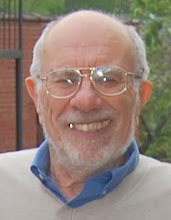
After Prem's death, I was totally at a loss to know how to continue the work of USSAS, but at that moment, an old friend, Sheila Tyeku, stepped forward to offer to take Prem's place. Sheila has a long history in the struggle for liberation, working in the Eastern Cape area where she grew up. During the dangerous days before the release of Mandela, when a wrong step could mean house arrest or prison, she balanced raising her children with going to secret meetings, working toward the day when South Africans would be free. In those days, she came to know and form close bonds with many of the men and women who would later play prominent roles in the New South Africa.
Sheila had gone from UDW, where she worked on a project for which Mala had secured funding, to the Council on Higher Education, when Mala took over that organization. Sheila had also been selected as the Chair of the Council of the University of the Western Cape, so it was natural that USSAS would move its work to that campus. The Council of a University is an important governing body that, among other things, chooses the Rector. In the South African system, the Chancellorship is a purely honorific position, and the real head of the campus, the Rector, holds the title of Vice-Chancellor. The principal administrative posts are called Deputy Vice-Chancellorships. Thus, on the Cape Technikon campus, Koch held the title of DVC Academic -- roughly equivalent to an American Provost.
I had by this time totally committed the USSAS funds to students making a contribution to the struggle against HIV/AIDS. As it happened, UWC had, in the person of Dr. Tania Vergnani, a brilliant and charismatic head of the anti-AIDS effort. At the same time, I was directed by the friend of a friend to Dr. Frida Rundell, a wonderful woman who had started, and headed up, the Department of Child and Youth Development at Durban Technikon. Frida's students were being trained to work with AIDS-impacted children in the KwaZulu/Natal Province -- roughly, the area around and north of Durban. I made trips to walk-in shelters, street clinics, and halfway houses for children entangled with the law, seeing first hand the character and extent of their work. It was clear to me that Frida's program richly deserved whatever little support I could provide.
So it is that for the past six years or so, I have been dividing our USSAS money between UWC and what is now, under the new transformation arrangements, Durban University of Technology [actually the merging of a Black, and Indian, and a White Technikon into one institution.]
As I write these words today, I have been merge printing envelopes in preparation for yet another USSAS fund-raising appeal. This will be the twentieth year of the organization, and it may be that we are approaching a time when I shall have to finally wrap things up and cease our work.
In one of my mailings, I reminded my donors of Dostoyevsky's story, in THE BROTHERS KARAMAZOV, of the mean-spirited old woman and the onion. [For those of you who do not recall it, Google Grushenka and Karamazov and Onion and it ought to come up.] As I grow older, I think of USSAS as my onion. I hope that as the Angel of Death holds out the onion to pull me from Hell, I do not kick so hard against the other poor souls clinging to my ankles in a desperate effort at salvation that I break the onion and fall back into eternal hellfire. [you have to read the story].
USSAS is a good example, I think, of the bit of actual difference that one person can make in the world, with the help of friends, and the willingness to be content with small but genuine victories.
Showing posts with label South African Higher Education. Show all posts
Showing posts with label South African Higher Education. Show all posts
Thursday, August 27, 2009


Sunday, August 23, 2009
SOUTH AFRICAN HIGHER EDUCATION PART VIII
For some years, I was content to focus my efforts solely on UDW, where Prem was doing so good a job of managing things, but eventually, during one of the periodic budget crises, he decided to take an early retirement package [as they call it in SA]. By this time, Mala and he had separated [for reasons that I have never been able to fathom], and she had moved on to an important post in the national education ministry working on Quality Assurance. [This is an enormous subject all its own, too complicated to go into here. Suffice it to say that it is a sort of bureaucratic institutional and programmatic certification process, very big around the world but not particularly important in the United States]. Prem, who despite his much less impressive educational credentials was always the more intellectual and thoughtful of the two, had made himself knowledgeable aboiut the subject, and secured a post at UNISA to work on Quality Assurance. Following him, I took my money to UNISA, and for a year or two tried rather unsuccessfully to integrate my efforts with their own rather lacksadaisical financial aid office.
During this time, Mala and Prem made the acquaintance of the newly appointed Rector of the QwaQwa campus of the University of the North, and after some long distance consultation, we decided to bring USSAS to QwaQwa in support of the new Rector's rather dramatic plans to transform that sleepy rural campus.
Olusegun Dipeolu, or Segun, as he was known, was a very curious man indeed. A Nigerian parisitologist with seemingly hundreds of publications, he hit the backwater QwaQwa campus like a tornado, immediately stirring up enormous controversy and hostility. QwaQwa was about as far from UWC or UDW as it was possible to get, academically, and still have any claim at all to the honorific "university." The campus sits in the shadow of the western slopes of the Drakensberg [QwaQwa, in Sotho, means "white white," and refers to the snow that sometimes gathers on the peaks of the mountains in the dead of winter -- an unusual enough occurrence in South Africa to warrant immortalizing in the campus name]. Although it was then officially a campus of the University of the North, hundreds of miles away, it actually lies in the middle of the Orange Free State, not far from Harrismith, and closer still to the Homelands community of Phuthaditjhaba [and you had better believe it took me a while to master that spelling!] At about the time we left QwaQwa, Kader Asmal rearranged things so that QwaQwa became a satellite campus of the University of the Orange Free State, a considerably more rational organizational plan. [The Orange Free State was perhaps the most obdurately segregated and repressive region of the old South Africa. Prem and Mala both remarked that prior to liberation, they would not have been allowed to stay over night in the province while driving from Johannesburg to Durban.]
The small campus was presided over, prior to Segun's arrival, by an old boy network of Boers who had scheduled the classes in the evening so that they could devote the daylight hours to their farms. Nothing remotely resembling research took place on the campus, and the students, drawn almost entirely from the Sotho and Zulu population of the area, were, to put it mildly, ill-served. Segun proposed to transform all of that, with a series of dictates and mandates designed to get the faculty teaching, crank up their research output, and put QwaQwa on the map.
For two years, Prem and I were enraptured by Segun's energy and ambition, but little by little, we concluded that his dreams for the campus were simply incompatible with the facts on the ground. A grandiose plan for a program in urban development and planning was undertaken, but nothing ever came of it. We grew increasingly uneasy about whether our money was being well used, and finally we pulled out of the campus, shortly before it joined the University of the Orange Free State. I did get something from the experience, however. Segun's wife, who was a very talented fabric designer, made two beutiful dashikis for me as gifts, and I wear them still on formal occasions.
We moved USSAS next to two campuses -- MEDUNSA and Cape Technikon. MEDUNSA is located in a rural section of Bophuthatswana, more or less northwest of Pretoria. We chose to bring some of our funds there as part of our first attempt to respond to the terrible HIV/AIDS epidemic then beginning its devastation of South Africa. The shocking, shameful, incomprehensible response of Mandela's successor, Thabo Mbeki, to the AIDS crisis had demoralized medical personnel and progressives generally in the country. For a long time, the White medical schools had been producing superbly trained White doctors who then took their skills abroad, leaving their countrymen and women unserved. We thought it made sense to offer support to Black medical students who could be counted on to stay in South Africa. For three years, we provided bursaries to five students each year, and by now, I trust, they are practicing as doctors somewhere in South Africa.
Cape Technikon was an historically White institution, extremely well endowed, that had for many years served the mostly Afrikaaner student body of the Western Cape province. However, an old friend from UDW, Marcus Balintulo, had been appointed the new Rector, and I hoped that my personal relationship with him would make it possible to gain entry to the campus and do some good work there. The experience, which was in many ways very disappointing, was an extraordinary window into the thinking of the entrenched Afrikaaner academic community -- the people I had called, in my commencement address at UDW, the "old crocodiles." The Deputy Vice Chancellor Academic -- roughly what we would call a provost on an American campus -- was a Boer named Koch who resisted every proposal put forward by Marcus to transform the campus. Because of the entrenched job security not only of the tenured faculty but also of the administrative officers, Marcus was able to do surprisingly little to change the place, despite being nominally the chief administrative officer. For several years I did my usual thing, offering bursaries and meeting with the students. But the deeply rooted problems of the campus only became clear to me during one visit, when by chance the administrator who accompanied me to the meeting with the students was called away, and I had a chance to talk with them privately. After a bit of hesitation, they opened up, and I learned some things about classroom practices that truly horrified me. These were African students, many from the Eastern Cape though some from other parts of South Africa. Their first languages were Zulu, Sotho, or Xhosa, and the language in which they had done their secondary school work was English. For the most part, they did not speak Afrikaans. The instructors were all Afrikaaners. Apparently, it often happened in a class session that a White or Coloured student would ask a question in Afrikaans. The instructor would reply in Afrikaans, and then proceed to teach the remainder of the class in that language, completely shutting out the African students. Came exam time, they were examined on materials that had been covered in a language they did not speak. When I told Marcus about this, he was astonished [but did nothing to rectify the situation].
During this time, Prem died suddenly of a heart attack. I was stunned and saddened, and totally at a loss to know what to do about USSAS. The organization was saved by an extraordinary woman, Sheila Tyeku, who stepped forward to fill Prem's shoes.
Tomorrw: UWC, DUT, and the Final Part of the Story
During this time, Mala and Prem made the acquaintance of the newly appointed Rector of the QwaQwa campus of the University of the North, and after some long distance consultation, we decided to bring USSAS to QwaQwa in support of the new Rector's rather dramatic plans to transform that sleepy rural campus.
Olusegun Dipeolu, or Segun, as he was known, was a very curious man indeed. A Nigerian parisitologist with seemingly hundreds of publications, he hit the backwater QwaQwa campus like a tornado, immediately stirring up enormous controversy and hostility. QwaQwa was about as far from UWC or UDW as it was possible to get, academically, and still have any claim at all to the honorific "university." The campus sits in the shadow of the western slopes of the Drakensberg [QwaQwa, in Sotho, means "white white," and refers to the snow that sometimes gathers on the peaks of the mountains in the dead of winter -- an unusual enough occurrence in South Africa to warrant immortalizing in the campus name]. Although it was then officially a campus of the University of the North, hundreds of miles away, it actually lies in the middle of the Orange Free State, not far from Harrismith, and closer still to the Homelands community of Phuthaditjhaba [and you had better believe it took me a while to master that spelling!] At about the time we left QwaQwa, Kader Asmal rearranged things so that QwaQwa became a satellite campus of the University of the Orange Free State, a considerably more rational organizational plan. [The Orange Free State was perhaps the most obdurately segregated and repressive region of the old South Africa. Prem and Mala both remarked that prior to liberation, they would not have been allowed to stay over night in the province while driving from Johannesburg to Durban.]
The small campus was presided over, prior to Segun's arrival, by an old boy network of Boers who had scheduled the classes in the evening so that they could devote the daylight hours to their farms. Nothing remotely resembling research took place on the campus, and the students, drawn almost entirely from the Sotho and Zulu population of the area, were, to put it mildly, ill-served. Segun proposed to transform all of that, with a series of dictates and mandates designed to get the faculty teaching, crank up their research output, and put QwaQwa on the map.
For two years, Prem and I were enraptured by Segun's energy and ambition, but little by little, we concluded that his dreams for the campus were simply incompatible with the facts on the ground. A grandiose plan for a program in urban development and planning was undertaken, but nothing ever came of it. We grew increasingly uneasy about whether our money was being well used, and finally we pulled out of the campus, shortly before it joined the University of the Orange Free State. I did get something from the experience, however. Segun's wife, who was a very talented fabric designer, made two beutiful dashikis for me as gifts, and I wear them still on formal occasions.
We moved USSAS next to two campuses -- MEDUNSA and Cape Technikon. MEDUNSA is located in a rural section of Bophuthatswana, more or less northwest of Pretoria. We chose to bring some of our funds there as part of our first attempt to respond to the terrible HIV/AIDS epidemic then beginning its devastation of South Africa. The shocking, shameful, incomprehensible response of Mandela's successor, Thabo Mbeki, to the AIDS crisis had demoralized medical personnel and progressives generally in the country. For a long time, the White medical schools had been producing superbly trained White doctors who then took their skills abroad, leaving their countrymen and women unserved. We thought it made sense to offer support to Black medical students who could be counted on to stay in South Africa. For three years, we provided bursaries to five students each year, and by now, I trust, they are practicing as doctors somewhere in South Africa.
Cape Technikon was an historically White institution, extremely well endowed, that had for many years served the mostly Afrikaaner student body of the Western Cape province. However, an old friend from UDW, Marcus Balintulo, had been appointed the new Rector, and I hoped that my personal relationship with him would make it possible to gain entry to the campus and do some good work there. The experience, which was in many ways very disappointing, was an extraordinary window into the thinking of the entrenched Afrikaaner academic community -- the people I had called, in my commencement address at UDW, the "old crocodiles." The Deputy Vice Chancellor Academic -- roughly what we would call a provost on an American campus -- was a Boer named Koch who resisted every proposal put forward by Marcus to transform the campus. Because of the entrenched job security not only of the tenured faculty but also of the administrative officers, Marcus was able to do surprisingly little to change the place, despite being nominally the chief administrative officer. For several years I did my usual thing, offering bursaries and meeting with the students. But the deeply rooted problems of the campus only became clear to me during one visit, when by chance the administrator who accompanied me to the meeting with the students was called away, and I had a chance to talk with them privately. After a bit of hesitation, they opened up, and I learned some things about classroom practices that truly horrified me. These were African students, many from the Eastern Cape though some from other parts of South Africa. Their first languages were Zulu, Sotho, or Xhosa, and the language in which they had done their secondary school work was English. For the most part, they did not speak Afrikaans. The instructors were all Afrikaaners. Apparently, it often happened in a class session that a White or Coloured student would ask a question in Afrikaans. The instructor would reply in Afrikaans, and then proceed to teach the remainder of the class in that language, completely shutting out the African students. Came exam time, they were examined on materials that had been covered in a language they did not speak. When I told Marcus about this, he was astonished [but did nothing to rectify the situation].
During this time, Prem died suddenly of a heart attack. I was stunned and saddened, and totally at a loss to know what to do about USSAS. The organization was saved by an extraordinary woman, Sheila Tyeku, who stepped forward to fill Prem's shoes.
Tomorrw: UWC, DUT, and the Final Part of the Story
Saturday, August 22, 2009
SOUTH AFRICAN HIGHER EDUCATION PART VII
As USSAS was getting started, the situation on the ground in South Africa with regard to higher education was changing rapidly, and we were forced to alter our guidelines and procedures to adjust to that change. The first response of the historically Black universities to liberation was to expand their intake enormously, in an effort to respond to the pent-up demand. UDW, Western Cape, Zululand, Venda, Transkei, Fort Hare all began taking many more students. On the opening day of term [which in South Africa is January or February, of course, because the country is in the Southern Hemisphere], young men and women would show up at the doors of the university, sometimes with nothing more than the clothes they were wearing, having walked hundreds of miles from the rural areas. They would put down the small registration fee and begin classes, with little or no idea of where they would get the remainder of the tuition. So long as the students were passing their exams, the universities would do everything possible to carry them on the books while they and their families tried to get loans from local banks for the unpaid fees. Those who did not pass -- and there were many, thanks to the punitive grading practices of even the HBU's -- simply walked away at the end of the year, leaving their accounts in arrears and uncollectible.
Very quickly, the HBUs fell into deep financial trouble. At first, a few large American foundations bailed them out with multi-million dollar grants. Mellon, for example, gave a grant to UWC, huge by South African standards, to balance their books. But the situation was unsustainable, and in response, the universities changed their rules so that the registration fee came to represent half or more of the year's tuition charges.
At the same time, the new government, which came to power in 1992, created a national student loan scheme, called TEFSA [Tertiary Education Fund of South Africa -- you see why I say all the acronyms sound alike]. But the catch was that in order to be eligible for a TEFSA loan, a student had to be registered, which meant coming up with the very large registration fee. Incidentally, it is worth noting that this new enlarged registration fee was on the order of 5000 Rand, which, at the exchange rate of those days, was only about $500.
Prem and I discussed this new problem, and decided that the best way we could stretch the bits of money I was able to raise was to offer bursaries sufficient to cover the registration fee, and then let students apply to TEFA for the remainder. That in fact is what we have done for almost fifteen years now. Each $10,000 I can raise in the United States translates into twenty students able to register and study for another year.
USSAS has never been a big money operation. In a really good year, I might raise $50,000 or more, but in a typical year, I raise between $35,000 and $45,000. Most of my donations fall in the range of $50 to $100, but there have been a few astonishing and welcome surprises. One December, early on, I was in Johannesburg, visiting Debra Nails at Wits, when a fax came in from Susie back in Pelham. Someone had just sent a check for $14,000. What should she do? "Deposit it!" I faxed back. The donor, I eventually learned, was a retired Professor of Eighteenth Century English Literature, not on my list of previous donors. He made comparable donations for many years, the check always arriving just about on the last day of the year. I sent lavish thank you letters, of course, but never heard from him personally [the money came from something called a Unitrust in his name -- some sort of tax device], and were it not for the internet and the fact that he has a rather unusual name, I would not even know that he is a retired professor.
Since the only costs incurred by USSAS were the printing and postal charges, a dedicated fax line, and some money to help pay for my trips to South Africa, almost everything I raised could be sent over to the South African bank account and used for bursaries. Over the years, USSAS has given perhaps 1500 awards, so there are hundreds and hundreds of South African men and women who have university degrees as a result of our efforts.
Each year, when I come to South Africa, I explain to the students we are supporting that I have no idea whether anyone will send money next year, but that if they do, and if the students pass their exams, they will once again get bursaries. The evidence from our experience at UDW shows that this simple promise, combined with the personal attention paid to them by Prem, resulted in a startling improvement in the pass rate of our bursary recipients, by comparison with students at UDW generally. It was, for me, one more confirmation of my long-standing conviction that virtually all of the students who make it to university are capable of doing well enough to earn their degrees.
During my years working at UDW, I got involved in a variety of other activities there, in addition to the USSAS scheme. The United States Agency for International Development [USAID] launched a program called the Tertiary Educational Linkages Program [TELP], and invited the HBUs to submit proposals for grants. For those who have not had experience with USAID, I should explain that USAID programs, although designed to assist underdeveloped economies, characteristically spend most of their money hiring Americans to travel abroad on comfortable per diems, to tell the benighted locals how to run their affairs. In a typical USAID grant, maybe 90% of the money will be paid to Americans, and only 10% will find its way into the local economy. Well, the South Africans were awash in American experts of all sorts. South Africa in the early nineties was very much the flavor of the month. Since there are four thousand Americn institutions of higher education as contrasted with maybe thirty of the same in S0uth Africa, and since every American academic wanted to spend at least a few weeks on a South African campus, the last thing the HBUs needed was another flood of American experts paid by a grant supposedly designed to help them. I went a wonderful meeting chaired by the expensively paid TELP coordinators and attended by the Rectors of all the HBUs [most of whom, incidentally, were manifestly better educated than the Americans who were there to lead them by the hand into the world economy], and in no uncertain terms, they stated that they wanted the preponderance of the funds to come to their institutions, to be spent as they thought best. Since Nelson Mandela was then possibly the most widely respected person on the planet, USAID caved.
UDW really had no one at the middle management level capable of writing grant proposals. The lack of second tier academic administrators, as a consequence of the apartheid policies, was one of the signal weaknesses of the South African HBUs. I had been rather successful on my home campus with some grants I had managed to secure for a school to college program I was running for minority high school students in Springfield, MA, so I volunteered to try my hand at the TELP opportunity. In the end, I wrote five TELP proposals, four of which were funded. One of them was for a "modularization" conference, to begin the process of restructuring the UDW curriculum. The idea, which seems second nature to an American academic, was to break the big, unwieldy year long sequenced courses into modules of eight or twelve or sixteen weeks. This would allow students who could handle part of the year's work to get credit for it nailed down, even if they weren't up to meeting the pass standard for a module farther along. Students would also be able to accumulate partial credits, for perhaps half a year of work, and then leave the university to work or look for money to continue their studies. Simple and self-evident as this may seem, it was a revolution in South Africa, and met with considerable resistance.
My visits to South Africa weren't all work, of course. Three experiences in particular stand out in my memory. The first was a weekend trip to a resort in the Drakensberg Mountains, west of Durban, where I read a paper I had written attacking the concept of culture as an ideological construct. After a solemn afternoon of intellectual discussion, we all turned our attention to the real purpose of the outing, a true South African Brai. I should explain that to South Africans, a balanced diet is four or five different sorts of meat. A Brai, or barbeque, as we would call it, consists of steaks surrounded by a garnish of sausages and chops, all washed down with beer and wine. One of the more endearing traits of the South African is his or her suspicion of work. Fridays are usually spent preparing for the weekend, and a week with a holiday on a Wednesday or Thursday is pretty much a washout. The Drakensberg is hauntingly beautiful, with sprongbok and impala grazing on the slopes of the hills.
The second event was what is called a Midlands Ramble. The Midlands in South Africa is the area between the lowlands around Durban on the coast and the Drakensberg, which though not of Rockies stature, is still a pretty decent range of mountains running down the center of the country. Tucked away, at the end of dirt roads and little hollows, are countless artists' and craftspersons' studios where pottery, painting, woodworking, basket weaving, glass blowing, and jewelry making flourish. They may live in rural isolation, but these folks are no rubes. They sell into the world market, and know quite well the value of what they make. The ramble, with half a dozen friends from UDW, was an all day affair, broken for lunch at an impossibly quaint inn called -- I kid you not -- Granny Mouse's House. I think I bought a necklace for Susie, but it is long ago, and I am no longer sure.
But far and away the most extraordinary experience of my entire twenty year involvement with South Africa was the night I spent at the Beatrice Street Y in downtown Durban attending, and filming, an isicathamiya contest. Isicathamiya [it is a Zulu word, the first syllable of which is actually a sibilant click] is a contest of male Zulu a cappella singing groups. The most famous of these groups is Ladysmith Black Mambazo [which means, roughly, the black horned bull from the town of Ladysmith], though as I discovered during that remarkable night, Masakela's group does a prettified version of isicathamiya, suitable for White audiences. The tradition of male a capella singing is rooted in Zulu history, but has been strikingly influenced by African American musical styles, including the Cake Walk. Groups of men, perhaps ten to twenty in number, practice under the leadership of the group director. Usually, they all affect the same uniform -- black pants and shirts, white socks, and black shoes, for example. They sing Zulu songs about life, love, work, and family, achieving keening, penetrating harmonies, to which they join fancy dance steps, a bit like the Radio City Music Hall Rockettes. There are very strict rules for the competitions, which are held all night in an available venue. [All night because the pass control laws made it illegal for them to be on the streets of the White cities after dark, so they would start when the work day ended, and keep going until dawn the next day.] Each group pays a small fee to enter the contest, and the pot thus accumulated goes to the winners. A random passer is recruited to act as judge, and his decision is taken as final, even if he falls asleep during the contest! The audience, which for the most part consists of the girl friends and wives of the singers, is forbidden to applaud or cheer, save for a small designated claque for each group, who get up periodically, applaud, and in general show their approval of their heroes. Each group warms up in the rear of the room, until their leader decides they were ready. They then dance in, singing as they come, do two or three numbers, and dance out again. The sounds are piercing and hauntingly beautiful, as only African singing can be. I spent all night filming with a video camera I had bought, and later on, wove selections of the isicathamiya contest into the half hour video I produced [myself!] as a fund-raising device for USSAS.
I have made a good deal, in these posts, about the punitive character of the South African grading practices. It occurs to me that before concluding this day's post, I ought to tell one story to illustrate what I mean. Early in my trips to UDW, I happened to be on campus just when final exams were being graded. Everyone had big piles of exam books stacked on their desks. I asked Mala what the passing grade was, and she said it was 50%. "Let me see some exams that received 47s or 48s in the first year course," I said. In other words, I wanted to see the exams of students who had come close, but had nonetheless lost all credit for the entire year's work. She pulled six or seven from her pile, and I sat down to read them. The questions were all pretty standard for an Intro Phil course, and could easily have been taken from Philosophy 100 at UMass. After I had read through them all, I turned to Mala and said, "You know, every single one of these students would have received a passing grade at the University of Massachusetts." She was rather startled by that. Despite being quite sophisticated and widely traveled in America, Europe, and Asia, she suffered from the typical colonial self-doubt. "But they are not really prepared for the Second Year course," she responded. "All right," I said, "then give two passing grades, one that admits you to the second year course and the other that does not, but nevertheless gives you credit for the year's work. Not all of our first year students go on to be majors." Now this was the most sophisticated of the South African academics, the president [as it happens] of the national organization of progressive university teachers. And yet this simple solution had never occurred to her, nor, it was pretty clear, had she given the matter much thought.
Tomorrow: USSAS Leaves UDW
Very quickly, the HBUs fell into deep financial trouble. At first, a few large American foundations bailed them out with multi-million dollar grants. Mellon, for example, gave a grant to UWC, huge by South African standards, to balance their books. But the situation was unsustainable, and in response, the universities changed their rules so that the registration fee came to represent half or more of the year's tuition charges.
At the same time, the new government, which came to power in 1992, created a national student loan scheme, called TEFSA [Tertiary Education Fund of South Africa -- you see why I say all the acronyms sound alike]. But the catch was that in order to be eligible for a TEFSA loan, a student had to be registered, which meant coming up with the very large registration fee. Incidentally, it is worth noting that this new enlarged registration fee was on the order of 5000 Rand, which, at the exchange rate of those days, was only about $500.
Prem and I discussed this new problem, and decided that the best way we could stretch the bits of money I was able to raise was to offer bursaries sufficient to cover the registration fee, and then let students apply to TEFA for the remainder. That in fact is what we have done for almost fifteen years now. Each $10,000 I can raise in the United States translates into twenty students able to register and study for another year.
USSAS has never been a big money operation. In a really good year, I might raise $50,000 or more, but in a typical year, I raise between $35,000 and $45,000. Most of my donations fall in the range of $50 to $100, but there have been a few astonishing and welcome surprises. One December, early on, I was in Johannesburg, visiting Debra Nails at Wits, when a fax came in from Susie back in Pelham. Someone had just sent a check for $14,000. What should she do? "Deposit it!" I faxed back. The donor, I eventually learned, was a retired Professor of Eighteenth Century English Literature, not on my list of previous donors. He made comparable donations for many years, the check always arriving just about on the last day of the year. I sent lavish thank you letters, of course, but never heard from him personally [the money came from something called a Unitrust in his name -- some sort of tax device], and were it not for the internet and the fact that he has a rather unusual name, I would not even know that he is a retired professor.
Since the only costs incurred by USSAS were the printing and postal charges, a dedicated fax line, and some money to help pay for my trips to South Africa, almost everything I raised could be sent over to the South African bank account and used for bursaries. Over the years, USSAS has given perhaps 1500 awards, so there are hundreds and hundreds of South African men and women who have university degrees as a result of our efforts.
Each year, when I come to South Africa, I explain to the students we are supporting that I have no idea whether anyone will send money next year, but that if they do, and if the students pass their exams, they will once again get bursaries. The evidence from our experience at UDW shows that this simple promise, combined with the personal attention paid to them by Prem, resulted in a startling improvement in the pass rate of our bursary recipients, by comparison with students at UDW generally. It was, for me, one more confirmation of my long-standing conviction that virtually all of the students who make it to university are capable of doing well enough to earn their degrees.
During my years working at UDW, I got involved in a variety of other activities there, in addition to the USSAS scheme. The United States Agency for International Development [USAID] launched a program called the Tertiary Educational Linkages Program [TELP], and invited the HBUs to submit proposals for grants. For those who have not had experience with USAID, I should explain that USAID programs, although designed to assist underdeveloped economies, characteristically spend most of their money hiring Americans to travel abroad on comfortable per diems, to tell the benighted locals how to run their affairs. In a typical USAID grant, maybe 90% of the money will be paid to Americans, and only 10% will find its way into the local economy. Well, the South Africans were awash in American experts of all sorts. South Africa in the early nineties was very much the flavor of the month. Since there are four thousand Americn institutions of higher education as contrasted with maybe thirty of the same in S0uth Africa, and since every American academic wanted to spend at least a few weeks on a South African campus, the last thing the HBUs needed was another flood of American experts paid by a grant supposedly designed to help them. I went a wonderful meeting chaired by the expensively paid TELP coordinators and attended by the Rectors of all the HBUs [most of whom, incidentally, were manifestly better educated than the Americans who were there to lead them by the hand into the world economy], and in no uncertain terms, they stated that they wanted the preponderance of the funds to come to their institutions, to be spent as they thought best. Since Nelson Mandela was then possibly the most widely respected person on the planet, USAID caved.
UDW really had no one at the middle management level capable of writing grant proposals. The lack of second tier academic administrators, as a consequence of the apartheid policies, was one of the signal weaknesses of the South African HBUs. I had been rather successful on my home campus with some grants I had managed to secure for a school to college program I was running for minority high school students in Springfield, MA, so I volunteered to try my hand at the TELP opportunity. In the end, I wrote five TELP proposals, four of which were funded. One of them was for a "modularization" conference, to begin the process of restructuring the UDW curriculum. The idea, which seems second nature to an American academic, was to break the big, unwieldy year long sequenced courses into modules of eight or twelve or sixteen weeks. This would allow students who could handle part of the year's work to get credit for it nailed down, even if they weren't up to meeting the pass standard for a module farther along. Students would also be able to accumulate partial credits, for perhaps half a year of work, and then leave the university to work or look for money to continue their studies. Simple and self-evident as this may seem, it was a revolution in South Africa, and met with considerable resistance.
My visits to South Africa weren't all work, of course. Three experiences in particular stand out in my memory. The first was a weekend trip to a resort in the Drakensberg Mountains, west of Durban, where I read a paper I had written attacking the concept of culture as an ideological construct. After a solemn afternoon of intellectual discussion, we all turned our attention to the real purpose of the outing, a true South African Brai. I should explain that to South Africans, a balanced diet is four or five different sorts of meat. A Brai, or barbeque, as we would call it, consists of steaks surrounded by a garnish of sausages and chops, all washed down with beer and wine. One of the more endearing traits of the South African is his or her suspicion of work. Fridays are usually spent preparing for the weekend, and a week with a holiday on a Wednesday or Thursday is pretty much a washout. The Drakensberg is hauntingly beautiful, with sprongbok and impala grazing on the slopes of the hills.
The second event was what is called a Midlands Ramble. The Midlands in South Africa is the area between the lowlands around Durban on the coast and the Drakensberg, which though not of Rockies stature, is still a pretty decent range of mountains running down the center of the country. Tucked away, at the end of dirt roads and little hollows, are countless artists' and craftspersons' studios where pottery, painting, woodworking, basket weaving, glass blowing, and jewelry making flourish. They may live in rural isolation, but these folks are no rubes. They sell into the world market, and know quite well the value of what they make. The ramble, with half a dozen friends from UDW, was an all day affair, broken for lunch at an impossibly quaint inn called -- I kid you not -- Granny Mouse's House. I think I bought a necklace for Susie, but it is long ago, and I am no longer sure.
But far and away the most extraordinary experience of my entire twenty year involvement with South Africa was the night I spent at the Beatrice Street Y in downtown Durban attending, and filming, an isicathamiya contest. Isicathamiya [it is a Zulu word, the first syllable of which is actually a sibilant click] is a contest of male Zulu a cappella singing groups. The most famous of these groups is Ladysmith Black Mambazo [which means, roughly, the black horned bull from the town of Ladysmith], though as I discovered during that remarkable night, Masakela's group does a prettified version of isicathamiya, suitable for White audiences. The tradition of male a capella singing is rooted in Zulu history, but has been strikingly influenced by African American musical styles, including the Cake Walk. Groups of men, perhaps ten to twenty in number, practice under the leadership of the group director. Usually, they all affect the same uniform -- black pants and shirts, white socks, and black shoes, for example. They sing Zulu songs about life, love, work, and family, achieving keening, penetrating harmonies, to which they join fancy dance steps, a bit like the Radio City Music Hall Rockettes. There are very strict rules for the competitions, which are held all night in an available venue. [All night because the pass control laws made it illegal for them to be on the streets of the White cities after dark, so they would start when the work day ended, and keep going until dawn the next day.] Each group pays a small fee to enter the contest, and the pot thus accumulated goes to the winners. A random passer is recruited to act as judge, and his decision is taken as final, even if he falls asleep during the contest! The audience, which for the most part consists of the girl friends and wives of the singers, is forbidden to applaud or cheer, save for a small designated claque for each group, who get up periodically, applaud, and in general show their approval of their heroes. Each group warms up in the rear of the room, until their leader decides they were ready. They then dance in, singing as they come, do two or three numbers, and dance out again. The sounds are piercing and hauntingly beautiful, as only African singing can be. I spent all night filming with a video camera I had bought, and later on, wove selections of the isicathamiya contest into the half hour video I produced [myself!] as a fund-raising device for USSAS.
I have made a good deal, in these posts, about the punitive character of the South African grading practices. It occurs to me that before concluding this day's post, I ought to tell one story to illustrate what I mean. Early in my trips to UDW, I happened to be on campus just when final exams were being graded. Everyone had big piles of exam books stacked on their desks. I asked Mala what the passing grade was, and she said it was 50%. "Let me see some exams that received 47s or 48s in the first year course," I said. In other words, I wanted to see the exams of students who had come close, but had nonetheless lost all credit for the entire year's work. She pulled six or seven from her pile, and I sat down to read them. The questions were all pretty standard for an Intro Phil course, and could easily have been taken from Philosophy 100 at UMass. After I had read through them all, I turned to Mala and said, "You know, every single one of these students would have received a passing grade at the University of Massachusetts." She was rather startled by that. Despite being quite sophisticated and widely traveled in America, Europe, and Asia, she suffered from the typical colonial self-doubt. "But they are not really prepared for the Second Year course," she responded. "All right," I said, "then give two passing grades, one that admits you to the second year course and the other that does not, but nevertheless gives you credit for the year's work. Not all of our first year students go on to be majors." Now this was the most sophisticated of the South African academics, the president [as it happens] of the national organization of progressive university teachers. And yet this simple solution had never occurred to her, nor, it was pretty clear, had she given the matter much thought.
Tomorrow: USSAS Leaves UDW
Wednesday, August 19, 2009
SOUTH AFRICAN HIGHER EDUCATION PART IV
I suppose you could say that it all started because my first wife was phobic about flying. Cynthia would not get on a plane, so we never went anywhere much. When our twenty-three year marriage ended, in 1985, I was pretty well ready to go anywhere in the world I was invited, so long as I had to fly to get there. The next year, during one of my very rare sabbatical leaves, an old friend, Debra Nails, came through Boston. Debra had been the Aide to Bob Cohen and Marx Wartofsky in their long-running Center for the History and Philosophy of Science, at Boston University, and she was now living in Johannesburg, teaching philosophy at Wits while her husband, Berendt Kock, taught physics. Debra asked me whether I would like to come to South Africa to teach Marx to the second year philosophy students. No one, it seemed, had ever taught Marx at Wits. I jumped at the chance, and on May 28th, at 6:55 p.m., I took off on Pan Am for Africa.
After a brief stopover in Kenya to see the wild animals at Amboseli and Treetops, I flew into Jan Smuts Airport [as it was then called] for a five week stay. [Travel tip: When going on safari, make sure it is the dry season, so that the animals will gather at the waterholes for easy viewing. I got to Amboseli, in the shadow of Mt. Kilimanjaro, after torrential rains, and the animals were scattered all over the enormous plain. On that occasion, I saw very little, but on later trips to Kreuger National Park and in Botswana, I had fabulous adventures. More of that some other time.]
I instantly fell in love with South Africa. During my five weeks, I traveled around the country -- to Durban, on the Indian Ocean, to the Homelands of Gazenkulu, Lebowa, and Bophutatswana, to the township of Soweto, and to the Afrikaaner capital of Pretoria. The country was the most politically alive place I had ever been, and I felt more at home with my new friends and comrades there than with my colleagues in the Philosophy Department at the University of Massachusetts. There are more stories to tell of those early days, but that will have to wait for a future post, for this is the story of the founding of USSAS.
Back in Boston, where I had been living since Cynthia had been appointed to a professorship in Literature at MIT, I fell into the habit of dining one evening a week with Richard Sens, a psychiatrist who was also going through the break-up of a lengthy marriage. For the most part, we commiserated with one another about the painful process, but one evening, Dick brought along a woman who was, he said, a former student of mine. Sure enough, it was Jean Alonzo, who as Freshman Jean Anderson had been a student in one of my discussion sections of Philosophy 1 in 1956. Jean was now a union organizer at Raytheon, and a member of an anti-apartheid organization called Harvard/Radcliffe Alumni/ae Against Apartheid, or HRAAA [pronounced Hurrah]. The goal of HRAAA was to pressure Harvard to divest itself of its investments in companies doing business with South Africa, and its principal tactic was to run write-in candidates for the Harvard Board of Overseers, a body of alums who play a quasi-admnistrative role at Harvard. However, Harvard's 350th anniversary was coming up [Harvard was founded as Harvard College in 1636], and HRAAA was planning a sit-in at a very toney formal dinner for big donors, with Prince Charles, no less, in attendance, to be held at Memorial Hall. Jean asked whether I would like to come along.
I asked whether there was any chance we would be arrested, and when she said yes, I agreed to join them. I had always been rather embarrassed by my failure to get arrested during the Viet Nam War era, and I thought it would make me look better in my sons' eyes if I did get arrested this time out. Off we went on the appointed day, to seat ourselves, arms locked, in front of the door to the Memorial Hall dinner, chanting, as I recall, "If you want to digest, you've got to divest." [I don't actually much like demonstrations, and as many of the guests were my classmates, I felt, I must confess, like a bit of an ass. But I chanted along with the youngsters.] The sit-in was such a total surprise to Harvard that President Bok, who was hosting the dinner, neglected to call the police.
It ended ok, however, Some time later, we held another protest at Fogg Art Museum. This time, Harvard was prepared, and a bunch of us were hauled off in paddy wagons to the Central Square Police Station, where we were booked on charges of trespass or disorderly conduct, and released on our own recognizance. I have always thought that the police, who were not too fond of Harvard, for reasons of class privilege, went easy on us.
After a quite unsatisfactory trial, during which the judge, whose son was a student at Harvard, refused to allow us to offer a "necessity defense," we were found guilt, and sentenced to some community service or a fine of $72.50 a piece. We undertook to appeal, but the tape recording of the trial was so bad that the court stenographer could not produce a usable transcript, and the whole matter died. There was one rather light moment. As we were defending ourselves ["pro se" as the law has it], we were called on during the sentencing phase to propose a suitable punishment for ourselves. Remembering Socrates' great speech at his trial, memorialized in Plato's dialogue, THE APOLOGY, I said to the judge that inasmuch as I had been serving the people of the Commonwealth for many years as a Professor of Philosophy, I thought an appropriate punishment would be for the state to give me a pension. Her grasp of classical philosophy was obviously inferior to her mastery of the law, and she hit me with the $72.50 fine.
In the next two years, I remained active in HRAAA, and we did actually elect several people to the Board of Overseers, including Gay Seidman, daughter of a famous anti-apartheid activist in South Africa, and Peter Wood, a distinguished historian of South Carolinian slavery. In 1988, when HRAAA fell deeply into debt, and the paid Executive Secretary, Dorothee Benz, left to pursue her education, I volunteered to serve as unpaid Executive Director, in an effort to salvage the organization. In the next two years, I raised enough money to put us in the black, and succeeded in getting Archbishop Desmond Tutu elected to the Board. Harvard did not divest, of course. Instead, it changed the rules for electing overseers so that nothing like that would happen again. By the way, the year that I resigned from the Executive Directorship, HRAAA recruited a young Black Harvard Law Student named Barack Obama to run on the weite-in ticket, but I was gone by then, and never met him.
In the Spring of 1990, shortly after Nelson Mandeela was released, I had my one and only meeting with Tutu, who had come to Cambridge for a Board meeting. He thanked me for my efforts, and spoke very movingly about the need for re-investment in South Africa, now that libration was at hand. I realized that the HRAAA effort was now moot, and that I needed to find some other way to work with my South African comrades. At that moment, quite by chance, the Chair of the Philosophy Department at Durban-Westville, Mala Singh, wrote to me with an urgent appeal. Her graduate students had no money to pursue their studies. Was there anything I could do to help? Very quickly, I sent an appeal to some hundreds of philosophers at American colleges and univerities, and managed to raise enough money to enable Mala's students to continue their studies. It occurred to me that this might be the shape of my new effort. I had learned how to raise money by mail, using my computer. Perhaps I could start a charitable organization to offer scholarship aid to poor Black students going to historically Black universities in South Africa. The idea would be to support them there, not bring them to the United States [which would have been prohibitively expensive.] If I worked out of my home and paid myself nothing, I could send virtually everything I raised to the students.
It was clear to me that I needed someone in South Africa to select the students and look after them, someone who would also do this pro bono. On my next trip, I decided to travel around the country, looking for an academic who would be willing to take on this essential, but rather burdensome, task.
Tomorrow: USSAS is Born
After a brief stopover in Kenya to see the wild animals at Amboseli and Treetops, I flew into Jan Smuts Airport [as it was then called] for a five week stay. [Travel tip: When going on safari, make sure it is the dry season, so that the animals will gather at the waterholes for easy viewing. I got to Amboseli, in the shadow of Mt. Kilimanjaro, after torrential rains, and the animals were scattered all over the enormous plain. On that occasion, I saw very little, but on later trips to Kreuger National Park and in Botswana, I had fabulous adventures. More of that some other time.]
I instantly fell in love with South Africa. During my five weeks, I traveled around the country -- to Durban, on the Indian Ocean, to the Homelands of Gazenkulu, Lebowa, and Bophutatswana, to the township of Soweto, and to the Afrikaaner capital of Pretoria. The country was the most politically alive place I had ever been, and I felt more at home with my new friends and comrades there than with my colleagues in the Philosophy Department at the University of Massachusetts. There are more stories to tell of those early days, but that will have to wait for a future post, for this is the story of the founding of USSAS.
Back in Boston, where I had been living since Cynthia had been appointed to a professorship in Literature at MIT, I fell into the habit of dining one evening a week with Richard Sens, a psychiatrist who was also going through the break-up of a lengthy marriage. For the most part, we commiserated with one another about the painful process, but one evening, Dick brought along a woman who was, he said, a former student of mine. Sure enough, it was Jean Alonzo, who as Freshman Jean Anderson had been a student in one of my discussion sections of Philosophy 1 in 1956. Jean was now a union organizer at Raytheon, and a member of an anti-apartheid organization called Harvard/Radcliffe Alumni/ae Against Apartheid, or HRAAA [pronounced Hurrah]. The goal of HRAAA was to pressure Harvard to divest itself of its investments in companies doing business with South Africa, and its principal tactic was to run write-in candidates for the Harvard Board of Overseers, a body of alums who play a quasi-admnistrative role at Harvard. However, Harvard's 350th anniversary was coming up [Harvard was founded as Harvard College in 1636], and HRAAA was planning a sit-in at a very toney formal dinner for big donors, with Prince Charles, no less, in attendance, to be held at Memorial Hall. Jean asked whether I would like to come along.
I asked whether there was any chance we would be arrested, and when she said yes, I agreed to join them. I had always been rather embarrassed by my failure to get arrested during the Viet Nam War era, and I thought it would make me look better in my sons' eyes if I did get arrested this time out. Off we went on the appointed day, to seat ourselves, arms locked, in front of the door to the Memorial Hall dinner, chanting, as I recall, "If you want to digest, you've got to divest." [I don't actually much like demonstrations, and as many of the guests were my classmates, I felt, I must confess, like a bit of an ass. But I chanted along with the youngsters.] The sit-in was such a total surprise to Harvard that President Bok, who was hosting the dinner, neglected to call the police.
It ended ok, however, Some time later, we held another protest at Fogg Art Museum. This time, Harvard was prepared, and a bunch of us were hauled off in paddy wagons to the Central Square Police Station, where we were booked on charges of trespass or disorderly conduct, and released on our own recognizance. I have always thought that the police, who were not too fond of Harvard, for reasons of class privilege, went easy on us.
After a quite unsatisfactory trial, during which the judge, whose son was a student at Harvard, refused to allow us to offer a "necessity defense," we were found guilt, and sentenced to some community service or a fine of $72.50 a piece. We undertook to appeal, but the tape recording of the trial was so bad that the court stenographer could not produce a usable transcript, and the whole matter died. There was one rather light moment. As we were defending ourselves ["pro se" as the law has it], we were called on during the sentencing phase to propose a suitable punishment for ourselves. Remembering Socrates' great speech at his trial, memorialized in Plato's dialogue, THE APOLOGY, I said to the judge that inasmuch as I had been serving the people of the Commonwealth for many years as a Professor of Philosophy, I thought an appropriate punishment would be for the state to give me a pension. Her grasp of classical philosophy was obviously inferior to her mastery of the law, and she hit me with the $72.50 fine.
In the next two years, I remained active in HRAAA, and we did actually elect several people to the Board of Overseers, including Gay Seidman, daughter of a famous anti-apartheid activist in South Africa, and Peter Wood, a distinguished historian of South Carolinian slavery. In 1988, when HRAAA fell deeply into debt, and the paid Executive Secretary, Dorothee Benz, left to pursue her education, I volunteered to serve as unpaid Executive Director, in an effort to salvage the organization. In the next two years, I raised enough money to put us in the black, and succeeded in getting Archbishop Desmond Tutu elected to the Board. Harvard did not divest, of course. Instead, it changed the rules for electing overseers so that nothing like that would happen again. By the way, the year that I resigned from the Executive Directorship, HRAAA recruited a young Black Harvard Law Student named Barack Obama to run on the weite-in ticket, but I was gone by then, and never met him.
In the Spring of 1990, shortly after Nelson Mandeela was released, I had my one and only meeting with Tutu, who had come to Cambridge for a Board meeting. He thanked me for my efforts, and spoke very movingly about the need for re-investment in South Africa, now that libration was at hand. I realized that the HRAAA effort was now moot, and that I needed to find some other way to work with my South African comrades. At that moment, quite by chance, the Chair of the Philosophy Department at Durban-Westville, Mala Singh, wrote to me with an urgent appeal. Her graduate students had no money to pursue their studies. Was there anything I could do to help? Very quickly, I sent an appeal to some hundreds of philosophers at American colleges and univerities, and managed to raise enough money to enable Mala's students to continue their studies. It occurred to me that this might be the shape of my new effort. I had learned how to raise money by mail, using my computer. Perhaps I could start a charitable organization to offer scholarship aid to poor Black students going to historically Black universities in South Africa. The idea would be to support them there, not bring them to the United States [which would have been prohibitively expensive.] If I worked out of my home and paid myself nothing, I could send virtually everything I raised to the students.
It was clear to me that I needed someone in South Africa to select the students and look after them, someone who would also do this pro bono. On my next trip, I decided to travel around the country, looking for an academic who would be willing to take on this essential, but rather burdensome, task.
Tomorrow: USSAS is Born
Monday, August 17, 2009
SOUTH AFRICAN HIGHER EDUCATION PART III
When I first went to South Africa in 1986, the country was still sweltering under the oppressive apartheid regime, but change was in the air, and everyone sensed that the old Boer dictatorship could not last much longer. In the circles in which I traveled, radical ideology flourished. The Communist Party was a recognized partner in the Mass Democratic Movement of those who had stayed in the country, rather than going into exile. The three pillars of revolutionary change were the ANC, the Congress of South African Trades Unions, or COSATU, and the Party. I was, I must confess, in radical heaven. The instant you met someone, you knew that he or she was either your comrade, with whom you could trust your life, or your enemy. There was no middle ground.
Conversations and journals of opinion were alive with radical proposals for changing everything. The Freedom Manifesto of the ANC, smuggled out of Robben Island, called for collective ownership of the means of production and thoroughgoing land redistribution without compensation. Even in the field of education, radical proposals were everywhere. The old leftist dream of breaking down the wall between hand work and head work was taken seriously by academics and reformers, and it was easy to imagine that once liberation was achieved, South Africa would leap to the forefront of the world movment for educational reform.
Once liberation finally came in 1990, calls went up across South Africa for Educational TRANSFORMATION. There were Transformation Conferences, Transformation Committees, Transformation Officers at each of the universities, Transformation grants from the USIA, Transformation Workshops. At times, it seemed that the regular business of the universities had been indefinitely set aside while everyone engaged in transformation.
The three transformation goals most often posited were increasing the number of Black students at universities, increasing the number of Black academics and administrators in universities, and rationalizing the overlapping, duplicating hodgepodge of institutions bequeathed to the new South Africa by the apartheid regime.
It took me a while to realize that transformation was unlikely actually to reach into the classroom and change the way students were taught and examined. The rigidities of the existing educational bureaucracy made any sort of genuine change extraordinarily difficult. Perhaps most distressing to me was the discovery that my radical friends, who had talked so bravely of Marx and Engels and Lenin and Trotsky and Mao and Castro, actually had no desire at all to change what they themselves did. They were quite as convinced of the essential rightness of their pedagogical practices as were my American friends convinced of theirs. The only people who were genuinely eager, for example, to implement the radical proposal to give formal educational credit for life experiences were the organic intellectuals, as Gramsci called them, who had been working in the townships and the unions. Indeed, in all of my time in South Africa, I can think of only one academic, Prem Singh at UDW, who actually spent time experimenting with new teaching techniques in an effort to reach his Indian and African students. Each time I came to UDW, he would show me new lesson plans, and with great excitement pull out essays that his students had written.
The effort to increase the numbers of Black students at university proceeded along two fronts. The existing historically Black universities rapidly expanded their intake. Durban-Westville, Zululand, Western Cape, Venda, and the others started admitting larger numbers of students, for despite the crippling requirement that admittees have a Full University Exemption on their Matric, which restricted the pool of applicants to a tiny sliver of each age cohort, there were still many, many young Black men and women who were being denied access. The historically White universities, even those at which Afrikaans was the language of instruction, began cherry-picking the tiny pool of Black students who had actually done well on the Matrics, trumpeting their new-found progressive commitment by going after the children of returning ANC leaders and such. I was on fire with revolutionary zeal, and talked to anyone who would listen about my belief that Durban-Westville and Western Cape would become the leading universities of the new South Africa, but my naive enthusiasm was not shared by the new Black elite. They all chose to send their children to Wits and Cape Town.
The search for Black administrators was considerably more difficult, even though the numbers needed were very small, inasmuch as the entire higher education sector is tiny by American standards. A few positions went to those who, like Jakes Gerwel and Jairam Reddy, had remained in South Africa during the struggle. Some posts went to exiles who began to flood back into the country. Kader Asmal, a distinguished legal scholar who had taught for twenty-seven years in exile in Dublin, Ireland, returned to become the first Minister of Education in Nelson Mandela's government. [Kader is a marvelously flamboyant character with many of the same endearing traits as our own Larry Summers. I had a boisterous dinner with him and other returnees in Cape Town at a restaurant that had, in the bad old days, been a meeting place for revolutionaries.]
The call for structural rationalization garnered the most national attention, and inevitably became the subject for complicated political maneuvering and log-rolling. It made no sense to support two Technikons side by side in Cape Town, one for White students and the other for Coulored students, both offering the same range of courses and degrees. Everyone could agree to that. But was rich, well-endowed, well equipped Cape Technikon to merge into poorer, less well equipped Peninsula Technikon, simply because Pen Tech was Coulored and Cape Tech was White? And if the two were to become one, which Rector would survive as the head of the new, rationalized institution? Over a period of many years, as I returned again and again to South Africa, I watched Kader Asmal and the Cabinet juggle a dozen or more such hot potatoes. [One of the less well publicized rationalization efforts involved reducing the number of Teacher's Colleges from more than one hundred to two or three dozen. This effort was overseen by Ben Parker, an old friend on whose doctoral dissertation committee I served as external reader. Ben, who passed away last year much too early, had done extensive field work on the system of farm schools that existed along side of formal educational institutions in the old South Africa.]
My disappointment with the failures of genuine change in the South African higher educational establishment were eventually given voice in a speech delivered to the Faculty of Education of the Univetsity of Pretoria. If you Google "Tertiary Education in the New South Africa: A Lover's Complaint" you can take a look at it.
It was into this exciting, frustrating, bubbling mix of contradictions that I thrust myself, eagerly and somewhat naively, in the late eighties and early nineties.
Next: The complicated journey that led to the founding of University Scholarships for South African Students.
Conversations and journals of opinion were alive with radical proposals for changing everything. The Freedom Manifesto of the ANC, smuggled out of Robben Island, called for collective ownership of the means of production and thoroughgoing land redistribution without compensation. Even in the field of education, radical proposals were everywhere. The old leftist dream of breaking down the wall between hand work and head work was taken seriously by academics and reformers, and it was easy to imagine that once liberation was achieved, South Africa would leap to the forefront of the world movment for educational reform.
Once liberation finally came in 1990, calls went up across South Africa for Educational TRANSFORMATION. There were Transformation Conferences, Transformation Committees, Transformation Officers at each of the universities, Transformation grants from the USIA, Transformation Workshops. At times, it seemed that the regular business of the universities had been indefinitely set aside while everyone engaged in transformation.
The three transformation goals most often posited were increasing the number of Black students at universities, increasing the number of Black academics and administrators in universities, and rationalizing the overlapping, duplicating hodgepodge of institutions bequeathed to the new South Africa by the apartheid regime.
It took me a while to realize that transformation was unlikely actually to reach into the classroom and change the way students were taught and examined. The rigidities of the existing educational bureaucracy made any sort of genuine change extraordinarily difficult. Perhaps most distressing to me was the discovery that my radical friends, who had talked so bravely of Marx and Engels and Lenin and Trotsky and Mao and Castro, actually had no desire at all to change what they themselves did. They were quite as convinced of the essential rightness of their pedagogical practices as were my American friends convinced of theirs. The only people who were genuinely eager, for example, to implement the radical proposal to give formal educational credit for life experiences were the organic intellectuals, as Gramsci called them, who had been working in the townships and the unions. Indeed, in all of my time in South Africa, I can think of only one academic, Prem Singh at UDW, who actually spent time experimenting with new teaching techniques in an effort to reach his Indian and African students. Each time I came to UDW, he would show me new lesson plans, and with great excitement pull out essays that his students had written.
The effort to increase the numbers of Black students at university proceeded along two fronts. The existing historically Black universities rapidly expanded their intake. Durban-Westville, Zululand, Western Cape, Venda, and the others started admitting larger numbers of students, for despite the crippling requirement that admittees have a Full University Exemption on their Matric, which restricted the pool of applicants to a tiny sliver of each age cohort, there were still many, many young Black men and women who were being denied access. The historically White universities, even those at which Afrikaans was the language of instruction, began cherry-picking the tiny pool of Black students who had actually done well on the Matrics, trumpeting their new-found progressive commitment by going after the children of returning ANC leaders and such. I was on fire with revolutionary zeal, and talked to anyone who would listen about my belief that Durban-Westville and Western Cape would become the leading universities of the new South Africa, but my naive enthusiasm was not shared by the new Black elite. They all chose to send their children to Wits and Cape Town.
The search for Black administrators was considerably more difficult, even though the numbers needed were very small, inasmuch as the entire higher education sector is tiny by American standards. A few positions went to those who, like Jakes Gerwel and Jairam Reddy, had remained in South Africa during the struggle. Some posts went to exiles who began to flood back into the country. Kader Asmal, a distinguished legal scholar who had taught for twenty-seven years in exile in Dublin, Ireland, returned to become the first Minister of Education in Nelson Mandela's government. [Kader is a marvelously flamboyant character with many of the same endearing traits as our own Larry Summers. I had a boisterous dinner with him and other returnees in Cape Town at a restaurant that had, in the bad old days, been a meeting place for revolutionaries.]
The call for structural rationalization garnered the most national attention, and inevitably became the subject for complicated political maneuvering and log-rolling. It made no sense to support two Technikons side by side in Cape Town, one for White students and the other for Coulored students, both offering the same range of courses and degrees. Everyone could agree to that. But was rich, well-endowed, well equipped Cape Technikon to merge into poorer, less well equipped Peninsula Technikon, simply because Pen Tech was Coulored and Cape Tech was White? And if the two were to become one, which Rector would survive as the head of the new, rationalized institution? Over a period of many years, as I returned again and again to South Africa, I watched Kader Asmal and the Cabinet juggle a dozen or more such hot potatoes. [One of the less well publicized rationalization efforts involved reducing the number of Teacher's Colleges from more than one hundred to two or three dozen. This effort was overseen by Ben Parker, an old friend on whose doctoral dissertation committee I served as external reader. Ben, who passed away last year much too early, had done extensive field work on the system of farm schools that existed along side of formal educational institutions in the old South Africa.]
My disappointment with the failures of genuine change in the South African higher educational establishment were eventually given voice in a speech delivered to the Faculty of Education of the Univetsity of Pretoria. If you Google "Tertiary Education in the New South Africa: A Lover's Complaint" you can take a look at it.
It was into this exciting, frustrating, bubbling mix of contradictions that I thrust myself, eagerly and somewhat naively, in the late eighties and early nineties.
Next: The complicated journey that led to the founding of University Scholarships for South African Students.
Subscribe to:
Posts (Atom)